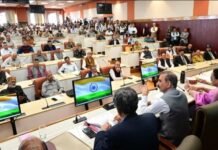

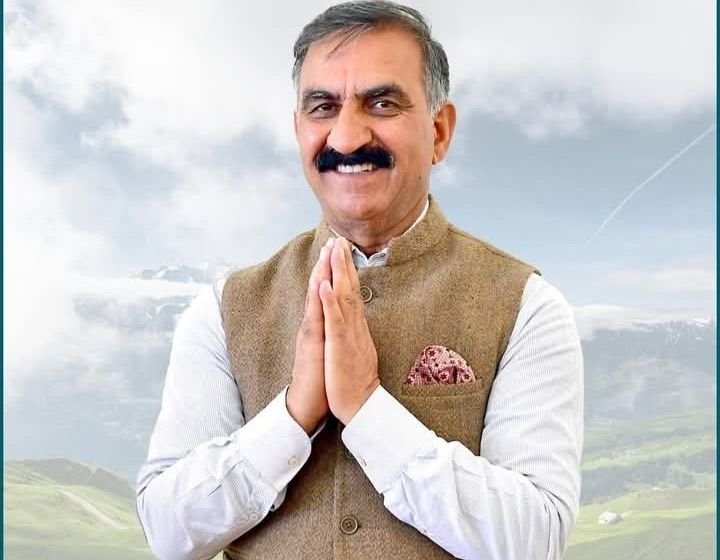
In a major policy push aimed at strengthening welfare delivery and boosting the state economy, the Himachal Pradesh government led by Chief Minister Sukhvinder Singh Sukhu has reportedly approved a series of significant decisions during a key Cabinet meeting held on Friday. The decisions are being viewed as politically and socially important, especially at a time when Panchayati Raj and Urban Local Body elections are underway across the state.
Although the government did not officially address the media due to the enforcement of the Model Code of Conduct during the elections, details emerging from government sources suggest that the Cabinet has cleared several people-centric proposals, including direct financial assistance for women and major reforms aimed at encouraging trade, tourism and employment generation.
One of the most talked-about decisions is the approval of a monthly financial assistance scheme for women belonging to economically weaker families. According to sources, women from families with an annual income below Rs 2 lakh will receive Rs 1,500 every month from the state government. The proposal had earlier been announced by Chief Minister Sukhvinder Singh Sukhu during the Budget Session, and the Cabinet has now reportedly given its formal approval.
The scheme is expected to benefit lakhs of women across Himachal Pradesh, particularly in rural and semi-urban areas where many households continue to struggle with rising inflation and limited employment opportunities. Political observers believe the move could strengthen the government’s image among women voters and economically weaker sections by providing direct economic support and promoting financial independence.
Government insiders say the scheme is also being projected as part of the Congress government’s broader welfare-oriented governance model, which focuses on social security, inclusive development and targeted relief for vulnerable sections of society.
In another major development, the Cabinet is also understood to have approved a policy allowing shops and commercial establishments across Himachal Pradesh to remain open round the clock. The decision is being described as a landmark reform for the state’s tourism-driven economy.
The move is expected to particularly benefit tourist destinations, urban centres and highway markets where commercial activity often continues late into the night. Traders and business groups are likely to welcome the decision as it could lead to increased business activity, better customer convenience and higher revenue generation.
Experts believe the 24-hour business model could create new employment opportunities for youth, especially in hospitality, food services, transport and retail sectors. Tourism stakeholders have also indicated that the decision could improve the overall visitor experience in Himachal Pradesh, where tourism remains one of the largest contributors to the economy.
The latest Cabinet decisions come at a politically crucial time for the ruling Congress government. With local body elections currently in focus, both the Congress and the BJP are attempting to consolidate public support through governance narratives and welfare promises. The Congress leadership is expected to highlight these decisions as evidence of its commitment to social welfare, economic revival and public-centric governance.
At the same time, the Opposition BJP has questioned the timing of the announcements, alleging that the government is attempting to influence voters ahead of elections. BJP leaders have reportedly accused the Congress government of making populist announcements for political gain.
Despite the political criticism, the decisions have generated widespread discussion across Himachal Pradesh, particularly among women, traders, small business owners and young job seekers. Many residents see the welfare measures as an attempt by the Sukhu government to balance economic challenges with social support initiatives.
Political analysts believe that the success of these announcements will ultimately depend on how effectively the government implements them on the ground in the coming months.