

Senior Officials Transferred as Court Comes Down Heavily on Administrative Failure in Kullu
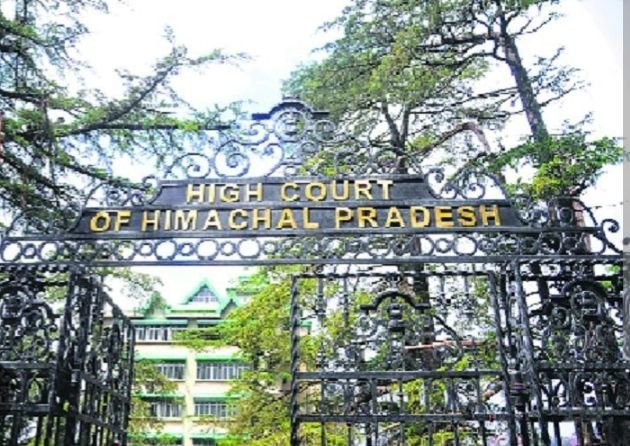
Shimla: In one of its strongest interventions against alleged administrative negligence in Himachal Pradesh’s tourism belt, the Himachal Pradesh High Court has ordered the registration of criminal cases, the constitution of a Special Investigation Team (SIT) and departmental proceedings against officials over the organisation of illegal rave parties in Kasol, Kullu district.
The Division Bench of Chief Justice G.S. Sandhawalia and Justice Ranjan Sharma also directed the immediate transfer of the Kullu Superintendent of Police (SP), Deputy Commissioner (DC) and the Sub-Divisional Magistrate (SDM), holding that the district administration had failed in its primary responsibility of maintaining law and order and preventing unlawful activities in one of the state’s most prominent tourist destinations.
The court’s observations came while hearing a matter relating to large-scale rave parties allegedly organised in forest areas around Kasol between June 7 and June 11. The Bench expressed concern that instead of preventing illegal gatherings, the local administration appeared to have facilitated them by granting permissions without exercising adequate oversight.
According to findings placed before the court by the District Legal Services Authority (DLSA), the parties were organised in a secluded forest area nearly six kilometres from Kasol market. Around 50 camping tents had been erected at the venue, along with nearly ten temporary toilets. The site was reportedly capable of accommodating between 4,000 and 5,000 people, raising serious questions about how such a large event escaped effective monitoring by district authorities.
The inspection report further stated that entry tickets were allegedly priced between Rs 4,000 and Rs 8,000, attracting participants from several major Indian cities, including Delhi, Chandigarh, Mumbai, Bengaluru, Goa and Hyderabad, as well as foreign nationals. The event was reportedly promoted aggressively through online platforms.
During the inspection, officials allegedly recovered a large quantity of empty liquor bottles, cigarette butts and rolling papers commonly associated with the consumption of hashish and tobacco. The report also referred to the suspected presence of narcotic substances at the venue, prompting the court to observe that such activities could not have continued without serious lapses in local supervision.
The case assumes greater significance because two tourists had earlier been arrested by the police in connection with the seizure of LSD, leading to the registration of two separate criminal cases. The DLSA inspection further noted that one foreign national had reportedly suffered a drug overdose during the event, although the parties continued until judicial intervention resulted in their cancellation.
Expressing dissatisfaction with the functioning of the district administration, the High Court observed that the authorities had failed to exercise the level of vigilance expected in an ecologically sensitive and internationally recognised tourist destination. The Bench remarked that illegal commercial events involving thousands of participants could not have been organised without substantial administrative shortcomings.
The court has directed the registration of an FIR against those responsible for organising the events and ordered the constitution of a Special Investigation Team headed by an officer of Deputy Inspector General (DIG) rank to conduct a comprehensive investigation. The SIT has been tasked with identifying the organisers, examining the flow of money, investigating the alleged narcotics network and determining whether any public officials facilitated or ignored violations of the law.
In addition to the criminal investigation, the High Court ordered departmental proceedings against the transferred officials to determine whether administrative negligence or misconduct contributed to the incident. The court observed that accountability must extend beyond organisers to include public servants entrusted with enforcing the law.
The Bench also instructed the Secretary of the District Legal Services Authority to conduct a fresh inspection of the site and submit a detailed compliance report. The state government has been asked to ensure stricter monitoring of large gatherings in ecologically sensitive tourist destinations and to strengthen coordination among police, civil administration and forest authorities.
Kasol, located in the Parvati Valley, has long been regarded as one of India’s most popular backpacking destinations. Over the years, however, concerns have repeatedly been raised over illegal rave parties, drug trafficking and unregulated tourism activities in the region. Successive governments have announced enforcement drives, but law enforcement agencies have continued to face allegations that illegal gatherings periodically re-emerge during the peak tourist season.
Legal experts believe the High Court’s directions could become a landmark precedent for regulating commercial events in environmentally sensitive areas. By ordering simultaneous criminal prosecution, administrative action and an independent investigation, the court has signalled that failures of governance in matters affecting public safety, narcotics control and environmental protection will invite strict judicial scrutiny.
With an SIT now set to investigate the alleged network behind the Kasol rave parties, the inquiry is expected to examine not only the organisers but also the role of officials responsible for granting permissions, maintaining law and order and ensuring compliance with tourism, forest and narcotics regulations. The findings of the investigation could have far-reaching implications for the regulation of tourism and accountability within the state’s administrative machinery.