
Shimla:
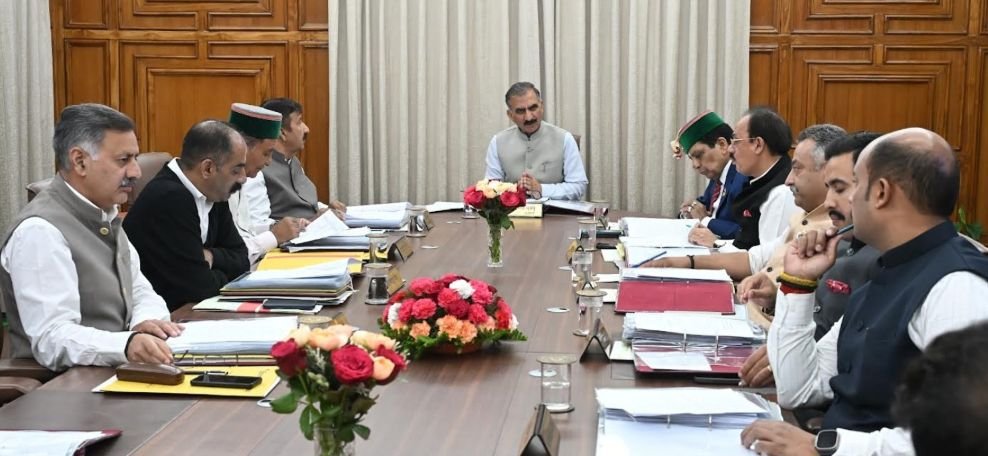
In one of its most comprehensive meetings in recent years, the Himachal Pradesh Cabinet, chaired by Chief Minister Thakur Sukhvinder Singh Sukhu, approved a wide-ranging package of policy decisions spanning healthcare, education, employment, infrastructure, social welfare, agriculture, fisheries, tourism, law enforcement and administrative reforms. The decisions are expected to impact thousands of government employees, students, farmers, fishermen, healthcare professionals and rural households while reinforcing the state’s focus on strengthening public services and expanding employment opportunities.
A major highlight of the meeting was the Cabinet’s emphasis on improving the healthcare ecosystem. It approved the grant of Non-Practising Allowance (NPA) to super-specialist faculty members possessing recognised DM, M.Ch. and DrNB qualifications serving under the Department of Medical Education and Research, a move aimed at attracting and retaining highly qualified specialists in government medical institutions.
The Cabinet also approved a substantial increase in stipends for postgraduate medical students. Under the revised structure, first-year postgraduate students will now receive Rs. 50,000 per month instead of Rs. 40,000, while second-year students will receive Rs. 60,000 and third-year students Rs. 65,000 per month. The government believes the enhanced financial support will encourage more young doctors to pursue higher medical education within the state.
Further strengthening medical education, the Cabinet introduced B.Sc. Medical Technology (Radiotherapy Technologist) and Bachelor of Radiation Therapy Technology courses with 30 seats each at Indira Gandhi Medical College (IGMC), Shimla, and Dr. Rajendra Prasad Government Medical College, Tanda. It also approved important amendments to the Post Graduate and Super-Speciality Policy, allowing General Duty Officers and direct candidates serving as Senior Residents at Atal Institute of Medical Super Specialities (AIMSS), Chamiyana, and in Radiodiagnosis departments of selected state medical colleges to receive exemption from mandatory field postings, with such service being treated as equivalent field experience for the next six years.
In another significant healthcare initiative, the Cabinet approved procurement of advanced medical equipment for five Critical Care Blocks across major government health institutions, besides creating dialysis technician posts in multiple medical colleges and establishing a new Department of Gastrointestinal Surgery at Dr. Rajendra Prasad Government Medical College, Tanda.
The education sector also received considerable attention. The Cabinet substantially enhanced cash awards for teachers receiving national and state honours. National Award-winning teachers will now receive Rs. 1.5 lakh instead of Rs. 60,000, while State Award recipients will receive Rs. 1 lakh instead of Rs. 40,000. However, it simultaneously decided to discontinue the practice of granting service extensions to award-winning teachers, signalling a shift towards recognising excellence without extending tenure.
Strengthening school infrastructure and human resources, the Cabinet approved engagement of 3,950 personnel, including one Chowkidar and one Multi-Task Worker each, across 1,975 Government Senior Secondary Schools. It also approved recruitment of 200 Junior Office Assistant (Library) posts in the Education Department and amended the Chief Minister Bal Paushtik Aahar Yojana to provide either a boiled egg or a seasonal fruit twice every week to students from Nursery to Class VIII studying in government schools under the Mid-Day Meal Scheme.
Employment generation emerged as another key focus of the meeting. The Cabinet approved filling 400 Multi-Task Worker posts in Gram Panchayats, engagement of 280 Job Trainee Technical Assistants through Zila Parishads and creation of numerous positions across departments, including Police, Panchayati Raj, Fisheries, Planning, Economics and Statistics, Tribal Development, Fire Services, Sports, Small Savings and Health. These decisions are expected to strengthen public service delivery while creating fresh employment opportunities across the state.
Rural governance and grassroots administration also received a boost. The monthly honorarium of Nambardars has been increased from Rs. 4,500 to Rs. 5,000, while part-time Panchayat Chowkidars completing 12 years or more of continuous service during the specified period will now be placed on daily-wage remuneration instead of receiving fixed monthly honorariums.
The Cabinet also announced a significant increase in honorarium for Accredited Social Health Activists (ASHA workers). Their monthly remuneration has been enhanced by Rs. 1,000, taking it from Rs. 5,800 to Rs. 6,800 with retrospective effect from April 1, 2026, recognising their vital contribution to public healthcare delivery.
Tourism, entrepreneurship and infrastructure development also featured prominently. The Cabinet approved raising the upper age limit under the E-Taxi component of the Rajiv Gandhi Swarozgar Start-up Yojana from 45 years to 50 years, thereby enabling a larger section of aspiring entrepreneurs to benefit from the scheme.
To strengthen urban development and investment, approval was granted for the construction of a Multipurpose Commercial Complex at Vikasnagar in Shimla through a Public-Private Partnership model under HIMUDA. The Cabinet also authorised development of the ambitious Jathia Devi Mountain City project in the Shimla Hills, signalling continued emphasis on planned urban expansion.
Agriculture and allied sectors received multiple policy interventions. The Cabinet approved establishment of an Integrated Aqua Park at Nadaun in Hamirpur district, introduction of the Chief Minister Machhuara Samman Nidhi Scheme providing financial assistance of Rs. 3,500 to eligible reservoir fishermen families during the annual fishing ban period, besides approving subsidies for fishing boats, fishing nets, cold storage units, refrigerated vans and freeze-dry facilities through the Direct Benefit Transfer mechanism.
The Cabinet further approved establishment of an All India Institute of Ayurveda at Dhaneta in Hamirpur district, for which around 75 acres of land has already been identified. It also upgraded Community Health Centre Koti in Shimla district into a 10-bedded health institution and upgraded the Ayurvedic Health Centre at Rait in Kangra district into a sub-divisional Ayush Medical Office.
Road safety and public infrastructure also remained on the agenda. The Cabinet approved a comprehensive Road Safety Audit Policy to improve safety standards on both new and existing roads and sanctioned the relocation of Himachal Pradesh Public Works Department Division No. 2 from Bilaspur to Jagatkhana to improve administrative efficiency. It also approved a monthly allowance of Rs. 1,000 for nearly 900 Field Junior Engineers to facilitate effective implementation of the Works and Accounts Management Information System (WAMIS).
In the field of law and public administration, approval was granted for establishing Permanent Lok Adalats at Shimla, Mandi, Dharamshala and Una along with creation of the required judicial and administrative posts. Legal Volunteers will also be empanelled at police stations to monitor cases involving missing children, strengthening institutional mechanisms for child protection.
The Cabinet also approved one-time relaxation of one year in the upper age limit for recruitment to 800 Constable posts in the Police Department, while simultaneously sanctioning additional police infrastructure and manpower, including creation of posts for the newly constituted Police District Nurpur and Police Post Galore in Hamirpur district.
Several decisions aimed at improving sports infrastructure were also taken, including procurement of equipment worth Rs. 12.89 crore for the State Sports Centre of Excellence at Kharidi in Hamirpur district, creation of additional technical and coaching posts and strengthening sports schools and hostels across the state.
Among other important decisions, the Cabinet enhanced the War Jagir Grant from Rs. 7,000 to Rs. 10,000, approved amendments concerning CBSE schools, adopted the Energy Service Company (ESCO) model for improving energy efficiency in water supply and irrigation systems, empowered Rogi Kalyan Samitis to utilise diagnostic income for improving healthcare facilities and approved revised fee structures for the Multi-Purpose Health Worker Course.
Collectively, the Cabinet’s decisions reflect the Sukhu government’s strategy of combining administrative reforms with targeted welfare measures, institutional strengthening and employment generation. By simultaneously addressing healthcare, education, rural governance, entrepreneurship, infrastructure and social welfare, the government has outlined a broad policy framework aimed at improving public services while supporting inclusive economic growth across Himachal Pradesh.
Web Generated News Report.