
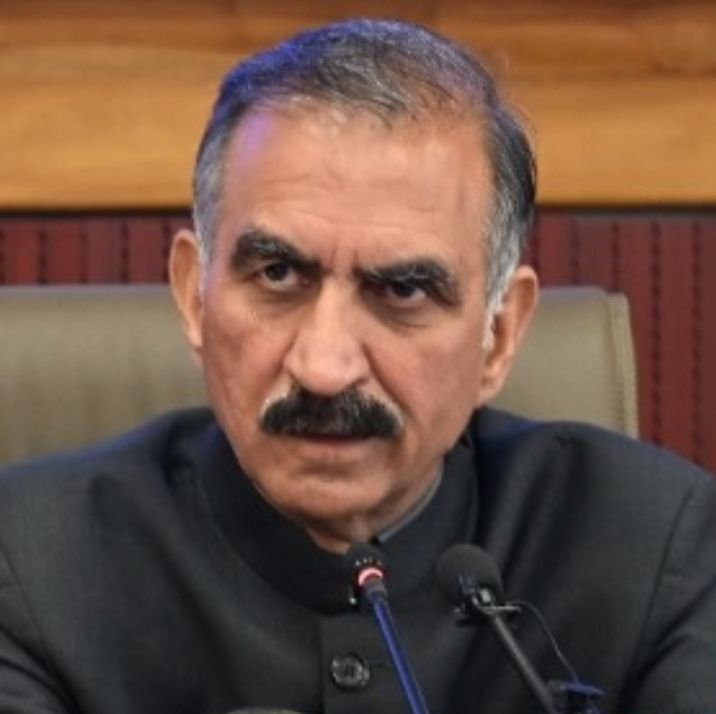
SHIMLA, November 6: Himachal Pradesh has secured a significant breakthrough in its nearly six-decade-old struggle to obtain its legitimate share in the power generated through Bhakra Beas Management Board (BBMB) projects, with the Supreme Court ruling in favour of a settlement that will enable the hill state to receive 11,973 million units of electricity over the next 20 years. The decision marks an important step towards resolving a dispute that had remained unsettled despite the Supreme Court’s September 2011 decree recognising Himachal Pradesh’s entitlement to a 7.19 per cent share in BBMB projects. The dispute arose following the reorganisation of Punjab in 1966, when Himachal Pradesh asserted its right to a share in the benefits of the Bhakra, Dehar and Pong projects. Although the state’s 7.19 per cent entitlement had been recognised by the apex court, the corresponding electricity benefits and financial dues remained a matter of prolonged contention. Himachal had approached the Supreme Court in 1996, seeking its legitimate share as a successor state. The latest development provides a way forward through an energy-based settlement rather than a direct cash payment. Under the arrangement reported following the court’s decision, Punjab and Haryana will provide Himachal Pradesh with 11,973 million units of electricity over the coming 20 years. The Centre had proposed this cashless mechanism to resolve the long-standing disagreement over the rate at which the outstanding electricity dues should be calculated. The settlement also takes into account an adjustment of approximately ₹420 crore towards Himachal Pradesh’s share of the capital cost, as reported during the earlier proceedings. The significance of the ruling lies not merely in the quantity of electricity involved but in the economic opportunity it creates for a state that has long maintained that its natural resources and contribution to major hydropower projects must translate into tangible benefits for its people. Chief Minister Thakur Sukhvinder Singh Sukhu, while addressing a gathering at Mehla in Chamba district, described the development as a major victory for Himachal Pradesh and credited the government’s sustained efforts to protect the state’s statutory and financial interests. He said the outcome demonstrated that determined leadership, legal persistence and a clear commitment to the state’s rights could help resolve even longstanding disputes. Sukhu also expressed gratitude to his Cabinet colleagues, government officials and the legal team that represented Himachal Pradesh before the Supreme Court. The Chief Minister estimated that the electricity accruing to the state could generate annual revenue of around ₹500 crore if sold at approximately ₹6 per unit, while the potential income could rise to nearly ₹1,000 crore at a rate of ₹15.50 per unit, depending on market conditions and the terms of sale or supply agreements. These figures represent the state’s projected earning potential rather than a guaranteed annual receipt. The additional electricity could strengthen Himachal Pradesh’s financial position, create greater flexibility in managing its power requirements and provide resources for development and public welfare. At a time when the state is seeking to expand its infrastructure and meet growing expenditure commitments, the ability to monetise its rightful power share could become an important source of recurring revenue over the settlement period. The Chief Minister has repeatedly raised the issue with the Centre and pursued both legal and administrative measures to secure the outstanding benefits. In July 2026, Sukhu held discussions with Union Power Minister Manohar Lal Khattar, seeking central intervention to ensure that Himachal received its statutory dues. He had also made it clear that the state could not be expected to extend cooperation on new inter-state projects while its existing legitimate claims remained unresolved. The government had earlier put the outstanding financial claim at approximately ₹4,200 crore, linked to 13,066 million units of electricity that Himachal said it had been denied. The final energy-based settlement of 11,973 million units reflects the formula accepted in the latest proceedings and should not be confused with the original claim. Sukhu has placed the BBMB dispute among four major matters in which his government has sought to safeguard Himachal’s interests, alongside the Wildflower Hall issue, the JSW matter and the Kishau multipurpose project. The BBMB outcome is particularly important because it concerns the state’s long-standing rights arising from projects located in and associated with the region’s river systems. For Himachal Pradesh, the ruling is therefore more than the resolution of an inter-state electricity dispute: it offers a potential long-term revenue stream and reinforces the principle that the state’s legally recognised share in shared national resources must be honoured.