

Congress minister’s sharp attack on defence procurement and India’s handling of Pakistan draws BJP’s ire; heated exchange exposes an increasingly confrontational political atmosphere in the House
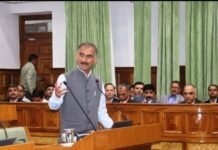
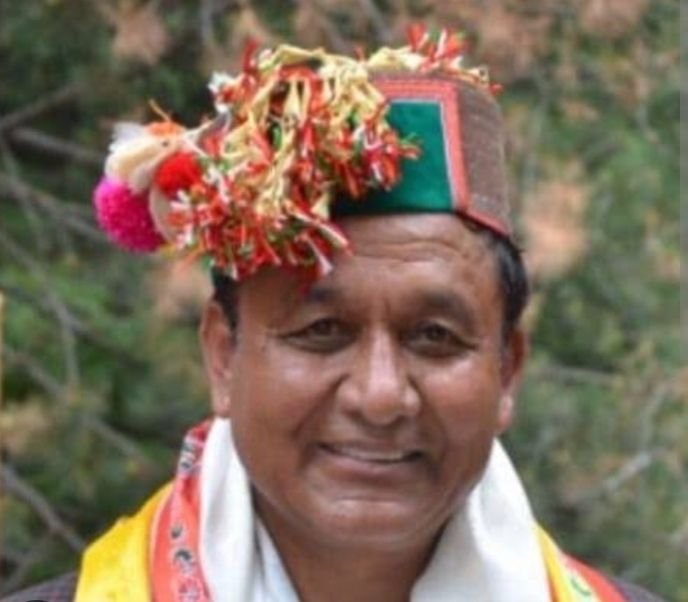
Dharamshala: The political temperature in the Himachal Pradesh Legislative Assembly rose sharply after Revenue Minister Jagat Singh Negi triggered a controversy by questioning India’s Rafale fighter jet procurement and making remarks about the country’s handling of Pakistan during Operation Sindoor. His comments drew an immediate and strong reaction from the BJP opposition, turning an Assembly discussion into another confrontation between the ruling Congress and the principal opposition party.
The controversy unfolded during the ongoing Winter Session at Tapovan, Dharamshala, when the BJP moved an adjournment motion seeking a discussion on corruption. However, the proceedings soon acquired a wider political dimension as Negi launched a counterattack on the BJP-led Union government, raising questions about defence procurement, the cost of Rafale aircraft and India’s military preparedness.
The Congress minister alleged that India had paid approximately Rs 2,300 crore for each Rafale fighter jet against an estimated price of Rs 700 crore. He questioned the financial aspects of the deal and went further by describing the aircraft as ineffective in the context of Operation Sindoor. Referring to India’s military engagement with Pakistan, he remarked that the country had faced a difficult situation in dealing with its neighbour.
These remarks provoked strong objections from BJP legislators, who viewed the minister’s statement as an attempt to undermine India’s military capabilities and the armed forces. The opposition took particular exception to the linking of Rafale aircraft with the country’s military experience during Operation Sindoor.
Congress takes the political battle to BJP’s doorstep
Negi’s intervention reflects the increasingly aggressive political approach being adopted by the Congress leadership in Himachal Pradesh against the BJP, particularly when the opposition attempts to corner the state government on corruption and governance issues.
The BJP has frequently used the Assembly platform to target the Sukhu government, questioning its decisions, administrative functioning and handling of corruption-related allegations. However, the ruling party has increasingly sought to turn the spotlight towards the BJP’s own political record and the policies of the Narendra Modi government at the Centre.
Negi’s remarks can be seen in this wider context of political retaliation. Rather than allowing the BJP to dominate the narrative through repeated accusations against the Congress government, the minister chose to counter the opposition by raising uncomfortable questions about the Centre’s defence procurement decisions and its claims regarding national security.
The minister’s approach also reflects a growing tendency in the Assembly to respond to political attacks in the same combative language used by the opposition. The Congress appears unwilling to remain on the defensive whenever BJP legislators seek to portray the state government as failing on governance or accountability.
BJP’s objections and the question of political responsibility
The BJP, however, has its own argument. National security and the performance of the armed forces are sensitive matters that should be approached with factual precision and political responsibility. Any suggestion that India’s military equipment was ineffective or that the country was unable to deal with Pakistan requires credible evidence and careful examination.
At the same time, questions concerning defence procurement costs, transparency, contractual terms and public expenditure are legitimate subjects of democratic scrutiny. The Rafale agreement has remained a politically contested issue, with the Congress raising questions about pricing and the BJP defending the procurement process.
The opposition cannot reasonably expect the Congress to avoid questioning the Union government’s decisions simply because they concern defence procurement. Equally, political criticism should not be confused with criticism of the armed forces, whose professionalism and sacrifices deserve respect across party lines.
There is a distinction between scrutinising government decisions and questioning the capabilities of the country’s military establishment. Political leaders on both sides must recognise that distinction.
A warning for the opposition: Political attacks invite political counterattacks
The latest confrontation also highlights a larger problem in Himachal Pradesh’s legislative politics. The BJP leadership has repeatedly adopted an aggressive posture against the Congress government, often turning Assembly discussions into political confrontations. Such a strategy may help the opposition mobilise its supporters, but it also invites equally sharp responses from the ruling benches.
Negi’s remarks demonstrate that the Congress is increasingly prepared to give the BJP a taste of its own political medicine. If the opposition chooses to raise allegations and challenge the ruling party in an uncompromising manner, it must also be prepared to face questions about the performance and decisions of its own party and the Union government.
However, a tit-for-tat political culture carries risks for both sides. The Assembly is not merely a platform for scoring political points; it is an institution where public money, governance, policy decisions and matters of national importance should receive informed scrutiny.
The BJP should think carefully before making sweeping allegations against the Congress, just as Congress ministers must ensure that their counterattacks are backed by verifiable facts. Neither side benefits when serious discussions are reduced to competing political slogans.
The Rafale controversy has once again exposed the widening political divide between the Congress and BJP. While the BJP seeks to corner the Sukhu government on corruption and governance, the Congress is attempting to shift the debate towards the Centre’s record and accountability.
Ultimately, the people of Himachal Pradesh expect their elected representatives to debate substantive issues rather than allow every Assembly session to become an extension of party-level political battles. The latest confrontation may have given both sides another opportunity to attack each other, but it has also underlined the need for greater responsibility and factual accountability in legislative debate.