


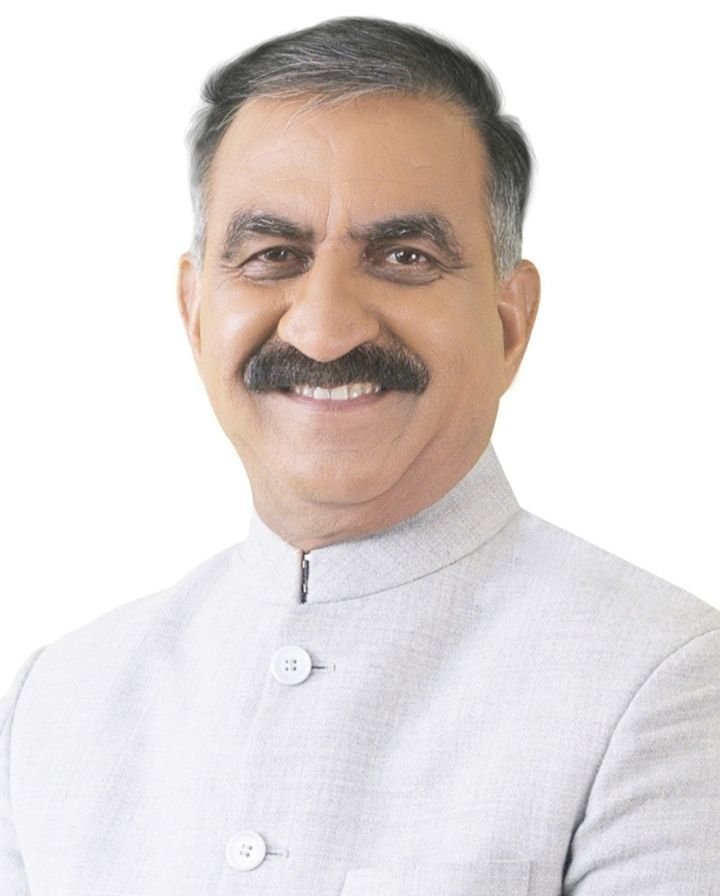
CM Sukhvinder Singh Sukhu calls for a statewide social movement against chitta; government steps up action against major trafficking networks while expanding treatment, rehabilitation and community-level monitoring
Himachal Pradesh has stepped up its campaign against drug abuse, combining tougher enforcement against traffickers with preventive measures, community participation and rehabilitation initiatives. Chief Minister Sukhvinder Singh Sukhu has called for coordinated action by government departments, law-enforcement agencies and civil society, stressing that the fight against chitta and other narcotic substances cannot be won through police intervention alone.
The state government has registered 7,950 cases under the Narcotic Drugs and Psychotropic Substances (NDPS) Act over the past four years, leading to the arrest of 12,302 accused persons. During this period, enforcement agencies seized 1,384 kg of charas and 59 kg of chitta, according to figures released by the government.
The administration is also seeking to strengthen its action against the financial networks behind drug trafficking. Assets worth approximately ₹92 crore, allegedly acquired through illegal drug trade, have been seized over the past three-and-a-half years. In a significant step, property valued at ₹48 lakh linked to drug trafficking has, for the first time in the state, been transferred into government ownership.
Sukhu has directed the police and Special Task Force to move beyond action against street-level sellers and focus on the larger networks sustaining the drug trade. The emphasis, he said, must be on identifying major traffickers, their associates, supply chains, financial resources and inter-state connections. Departments and central agencies have also been asked to improve coordination and ensure greater accountability in implementing the anti-drug strategy.
Preventive detention and action against illegal assets
The government has highlighted the use of the Prevention of Illicit Traffic in Narcotic Drugs and Psychotropic Substances (PIT-NDPS) Act as another important instrument in its enforcement strategy. Since its implementation in Himachal Pradesh in 2023, 225 alleged drug traffickers have been detained under the legislation, including 159 during 2026 alone. The state claims to rank second nationally in preventive detentions under the Act.
Alongside financial investigations, the administration has begun identifying properties allegedly linked to NDPS accused persons through encroachments and unauthorised construction on government land. A total of 86 such properties have been identified, with demolition and eviction proceedings completed in 22 cases. The government plans to nominate a dedicated revenue officer to accelerate action in the remaining matters.
These measures indicate an attempt to make anti-drug enforcement more comprehensive by targeting not only the movement of narcotics but also the assets and infrastructure associated with trafficking. Their effectiveness will depend on sustained investigations, legally sound proceedings and the ability to secure convictions.
246 vulnerable panchayats placed under special watch
The campaign is increasingly being extended to the grassroots, with 246 panchayats identified as highly affected by drug abuse and placed under special monitoring.
At the village level, individuals affected by substance abuse and those suspected of involvement in drug trafficking are being classified under a Red, Yellow and Green category system. The government says approximately 12,000 individuals have been identified so that people requiring assistance can be connected with treatment and rehabilitation, while enforcement agencies pursue those involved in trafficking.
The approach is intended to distinguish between people who need medical and social support and those engaged in the illegal supply of drugs. Such differentiation is important because addiction requires treatment and sustained rehabilitation, whereas trafficking demands investigation and legal action.
Rehabilitation moves alongside enforcement
The government has also sought to expand facilities for people affected by addiction. A police-operated de-addiction and rehabilitation centre for women has been established at Mashobra in Shimla district. Directions have also been issued to bring the management of the de-addiction centres at Tanda and Bilaspur under police administration.
Further steps include strengthening counselling services, standardising outpatient treatment facilities and expanding access to rehabilitation. The government is also considering drug testing during recruitment to state government services.
The emphasis on treatment is particularly relevant for women and vulnerable groups, who may face additional social barriers in seeking help. However, the success of the initiative will depend on qualified medical staff, confidentiality, follow-up care and adequate rehabilitation support.
Government employees under scrutiny
The state has adopted a zero-tolerance approach towards government employees allegedly involved in drug-related activities. According to the figures released by the government, cases have been registered against 168 employees. Of these, 30 state government employees and 21 police personnel have been dismissed from service, while departmental proceedings against others are continuing.
The action sends a strong message that public servants are expected to uphold the law and cannot be shielded from accountability. At the same time, disciplinary proceedings and criminal cases will need to follow due process and establish individual responsibility.
Schools and communities brought into the campaign
The government is also seeking to strengthen prevention through educational institutions and community organisations. Anti-Drug Clubs, Prahari Clubs and the Saathi Shiksha Programme are being reinforced to raise awareness among students and encourage early intervention.
Between June and August 2026, police officers adopted 158 schools, while awareness programmes were organised in 332 educational institutions. The government has further reported that approximately 9,677 educational institutions have been declared tobacco-free. Himachal Pradesh has been recognised as the best-performing state under the Tobacco-Free Youth Campaign 3.0.
To improve public reporting, the government is preparing to introduce a dedicated WhatsApp chatbot through which citizens will be able to share information about drug trafficking while keeping their identities confidential. The platform is also expected to provide information about treatment, counselling and rehabilitation to affected individuals and their families.
Sukhu seeks wider public participation
Calling for a collective response, the Chief Minister said the government and police could not tackle the drug menace without active participation from society. He appealed to young people, panchayat representatives, Mahila Mandals, Yuvak Mandals, teachers, parents, voluntary organisations and citizens to turn the Anti