
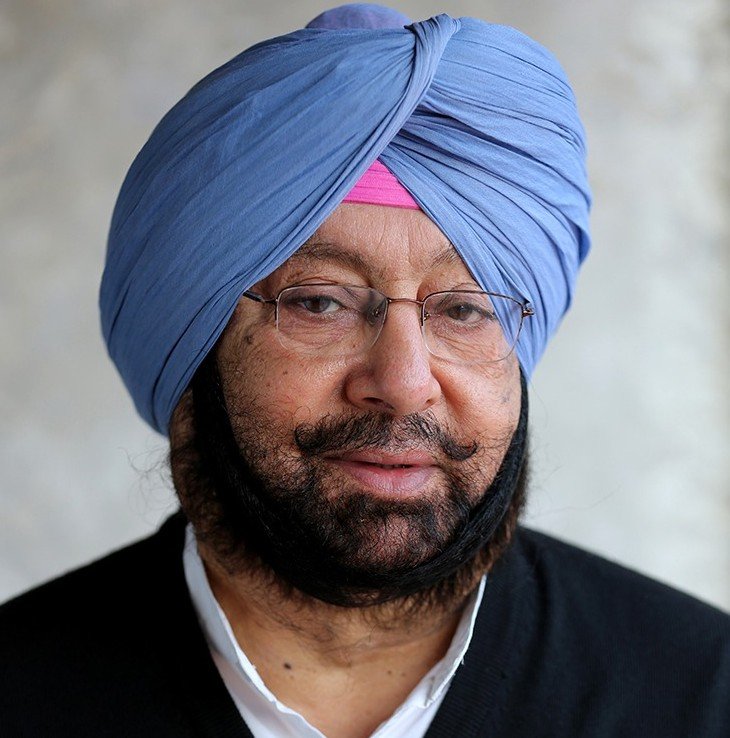
Captain Amarinder Singh, one of Punjab’s most influential political figures and a former two-time Chief Minister, has once again found himself at the centre of political speculation after making candid remarks on the functioning of the Bharatiya Janata Party. His comments comparing the BJP’s decision-making style with that of the Congress have triggered fresh debate in Punjab’s political circles, especially with the 2027 Assembly elections still some distance away but already shaping conversations across parties.
To understand the significance of Captain Amarinder Singh’s statement, it is important to revisit his long and complex association with the Congress. A veteran leader with decades of experience, Captain Amarinder served as Punjab Chief Minister twice under the Congress banner and was once considered one of the party’s strongest regional faces. However, his relationship with the central Congress leadership, particularly Rahul Gandhi, gradually became strained. Differences over governance style, internal party management, and leadership authority widened over time.
The turning point came in 2021, when the Congress high command asked Captain Amarinder Singh to step down as Chief Minister amid internal dissent within the party. Soon after his resignation, Charanjit Singh Channi was appointed as the new Chief Minister of Punjab. The move marked a dramatic political shift and effectively ended Captain Amarinder’s long innings as the Congress’s principal leader in the state. Feeling sidelined and disrespected, he later quit the Congress, formed his own outfit, the Punjab Lok Congress, and eventually merged it with the BJP in 2022.
Now a senior leader within the BJP fold, Captain Amarinder Singh’s latest remarks have drawn attention because of their critical tone toward his current party’s internal functioning. Speaking to the media, he pointed out that politics in Punjab operates differently from many other parts of the country and requires constant engagement with leaders who understand ground realities. He suggested that decisions taken without sufficient consultation with grassroots leaders often fail to resonate with the people of the state.
Referring indirectly to the BJP’s limited electoral success in Punjab, Captain Amarinder noted that while the party has expanded significantly in several regions of India, it has struggled to emerge as a strong political force in Punjab. According to him, one of the key reasons is the absence of a culture of broad-based consultation before taking major decisions. He argued that leaders who have worked closely with people on the ground must be heard if the party wants to build credibility in a state like Punjab.
In contrast, Captain Amarinder spoke about his experience in the Congress, highlighting that although decisions were ultimately taken at the top, there was a wider process of discussion. He said that legislators, Members of Parliament, and senior leaders were usually consulted, and their experience was given importance. This consultative approach, he remarked, allowed flexibility in policy and political strategy, something he feels is less visible in the BJP’s current structure.
When asked directly whether he misses the Congress, Captain Amarinder made a careful distinction. He clarified that it is not the Congress party itself that he feels nostalgic about, but the system that once existed within it. According to him, the Congress had a more inclusive mechanism for debate and valued experience, whereas the BJP’s approach appears more rigid. He described the BJP as relatively strict in its decision-making style, while calling the Congress more adaptable in terms of ideas and political thinking.
These remarks have inevitably fueled speculation about Captain Amarinder Singh’s political future. With Punjab heading toward Assembly elections in 2027 and the BJP working to strengthen its presence in the state, his comments are being viewed as both a critique and a warning. Some see them as a signal for internal reflection within the BJP, while others interpret them as an expression of lingering dissatisfaction.
For now, Captain Amarinder Singh remains with the BJP, but his words underline a deeper challenge the party faces in Punjab. The state’s politics has traditionally been shaped by strong regional leaders, local issues, and a demand for constant dialogue between leadership and cadre. As the electoral battle lines slowly begin to form, Captain Amarinder’s observations serve as a reminder that in Punjab, political success often depends less on centralized authority and more on listening to voices from the ground.