
The Haryana Vidhan Sabha on Monday turned into a battleground of slogans, adjournments and walkouts as a motion to discuss the “situation arising out of the ongoing electoral reforms relating to the preparation of electoral rolls” triggered sharp confrontation between the ruling BJP and the Congress-led Opposition. What was scheduled as a structured two-hour debate instead unfolded as a politically charged standoff, reflecting deeper mistrust over electoral processes, institutional authority and the deteriorating tone of legislative discourse.
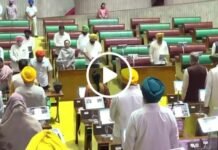
The disruption began soon after Speaker Harvinder Kalyan admitted the motion, moved by BJP legislators Ram Kumar Kashyap and Yoginder Rana. As Kashyap attempted to initiate the discussion, Congress MLAs rose from their seats, raising slogans and questioning the very legitimacy of the debate. The uproar forced the Speaker to adjourn the House for 15 minutes, setting the tone for a day marked by repeated interruptions.
When proceedings resumed, the atmosphere remained tense. Several Congress legislators — including Kuldeep Vats, Induraj Narwal, Balram Dangi, Vikas Saharan and Jassi Petwar — who had been expelled from the House on Friday for unruly conduct, again raised slogans, effectively paralysing the functioning of the Assembly. The Opposition argued that electoral reforms and the preparation of electoral rolls fall under the Union List, placing the subject outside the jurisdiction of a state legislature.
Citing this constitutional position, Congress members staged their first walkout of the day. However, the walkout did little to de-escalate tensions. When the Congress MLAs returned, sloganeering resumed, accompanied by fresh allegations that Industries and Commerce Minister Vipul Goel had made objectionable and unparliamentary remarks against Opposition members during the commotion.
Minister Vipul Goel denied using any unparliamentary language but offered a conditional apology, stating that if any member felt offended, he expressed regret. The Opposition, however, remained unconvinced and staged a second walkout, accusing the government of encouraging an increasingly abrasive political culture inside the House.
The controversy over language added a broader political dimension to the day’s events. Congress leaders argued that the incident was part of a growing pattern in which senior BJP leaders, both at the Centre and in states, were normalising aggressive and demeaning rhetoric inside legislative forums. They drew parallels with recent controversies in Parliament, alleging that such conduct was now filtering down into state assemblies, further eroding the dignity of democratic institutions.
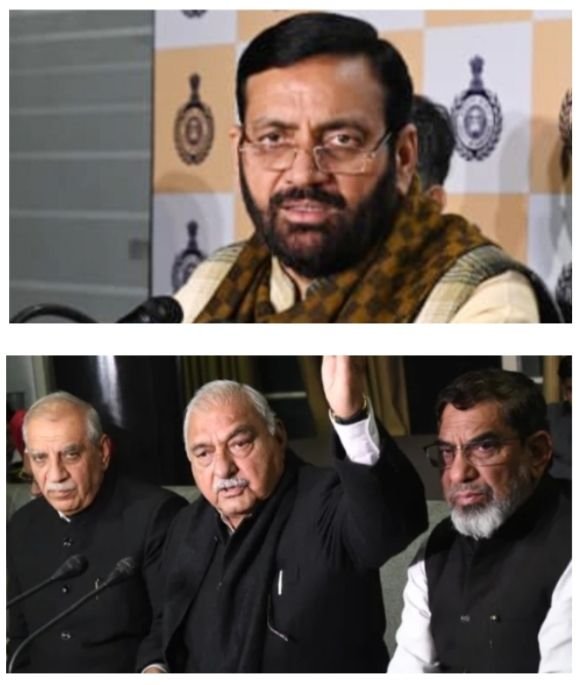
Earlier in the day, as the Speaker allocated two hours for discussion on the motion, Leader of Opposition Bhupinder Singh Hooda questioned the intent behind raising the issue in the Assembly. He said he could not understand the objective of debating electoral reforms at the state level when the constitutional framework clearly assigns such matters to the Union government and the Election Commission of India.
Parliamentary Affairs Minister Mahipal Dhanda countered this argument, accusing the Congress of deliberately avoiding debate. He alleged that the Opposition had been levelling serious accusations of “vote chori” and electoral manipulation outside the House, but was unwilling to face a structured discussion on the floor of the Assembly. According to Dhanda, the motion was meant to provide clarity to the people of Haryana and to rebut what he described as misinformation being spread by the Congress.
Congress MLA BB Batra formally objected to the motion, asking under which rules it had been admitted. Speaker Kalyan responded firmly, stating that the motion had been admitted strictly as per the Assembly’s rules and that its admissibility could not be challenged once approved by the Chair.
Chief Minister Nayab Singh Saini took a strong stand during the proceedings, accusing the Congress of deliberately creating confusion about the electoral process to undermine public faith in democratic institutions. He referred to repeated allegations of “vote chori” made by Congress leaders, including Rahul Gandhi, and said that such claims necessitated a serious debate in the Assembly so that the truth could be placed before the people.
Describing the Election Commission as a constitutional authority, the Chief Minister warned against casting aspersions on its integrity. He argued that questioning such institutions without evidence was not only irresponsible but also harmful to democracy. According to Saini, the Opposition’s refusal to participate in the debate exposed its reluctance to engage with facts.
Former Speaker and senior Congress MLA Raghuvir Singh Kadian reiterated the Opposition’s position, maintaining that electoral reforms were not part of the Concurrent List and therefore could not be discussed in the Assembly. In response, Speaker Kalyan emphasised that the debate was not about legislative competence but about addressing public concerns. He said that if the people of Haryana were seeking clarity on an issue, it was the responsibility of the House to facilitate that discussion.
Despite repeated appeals from the Speaker and the Chief Minister, Congress members did not return to their seats. In their absence, the House passed a resolution condemning the Opposition’s conduct, accusing it of disrupting proceedings and refusing to engage in discussion on a matter of public importance.
Monday’s session once again highlighted a troubling trend in legislative politics — shrinking space for debate, rising confrontation and an increasingly coarse tone of discourse. While the ruling party accused the Opposition of running away from discussion, the Congress maintained that constitutional limits were being ignored. Caught between these claims, the Assembly witnessed another day where political posturing overshadowed deliberation, leaving critical questions about democratic functioning unanswered.