
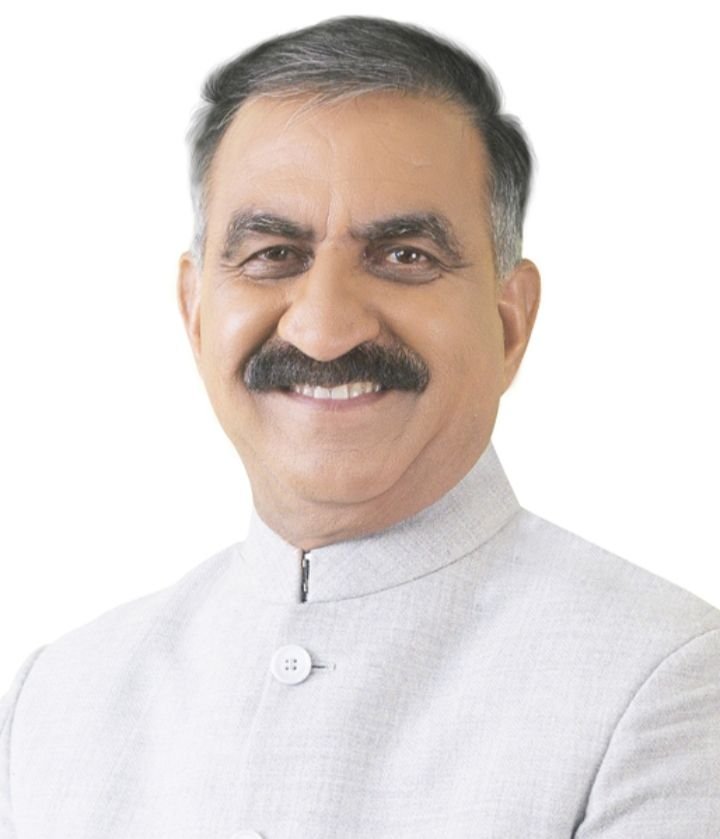
Shimla/New Delhi: Himachal Pradesh Chief Minister Sukhvinder Singh Sukhu has stepped in to defuse a growing political and administrative controversy triggered by recent remarks made by Public Works Department Minister Vikramaditya Singh regarding the functioning of officers posted in the state from outside cadres.
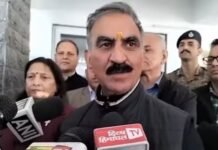
Addressing mediapersons in Delhi, the Chief Minister firmly downplayed the issue, asserting that there is no controversy at all and that officers across departments are performing their duties efficiently in the interest of Himachal Pradesh. Emphasising national unity over regional distinctions, Sukhu said that the country comes first and that all officers, irrespective of their state of origin, are working sincerely for the welfare of the state.
The controversy arose after comments questioning the role and integrity of IAS and IPS officers from Uttar Pradesh and Bihar who are currently serving in Himachal Pradesh. These remarks sparked criticism and concern within administrative and political circles, prompting senior leaders in the Sukhu cabinet to distance themselves from the statement.
The Chief Minister stated that it was unnecessary to overstate or amplify such remarks, reiterating that the state government has consistently taken strong positions to safeguard Himachal Pradesh’s interests, including resolving long-pending issues that remained unsettled for decades. He cited examples of successful legal outcomes secured by the state, including significant revenue recovery from the Wild Flower Hall property and royalty gains from a major power company, to underline the effectiveness of governance and administration.
Meanwhile, Education Minister Rohit Thakur became the fourth minister in the current cabinet to publicly dissociate himself from Vikramaditya Singh’s sweeping remarks. Thakur cautioned against generalising the performance or intentions of officers posted from outside the state, stating that such an approach would be unfair and counterproductive.
He acknowledged that officers from other states, including members of the IAS, IPS and Indian Forest Service, have made notable contributions to Himachal Pradesh over the years. At the same time, he emphasised that officers belonging to the state cadre also shoulder moral and administrative responsibility in serving public interest. According to him, negative perceptions should not be limited to officers from outside the state, as similar challenges may exist across the system, regardless of origin.
Thakur further observed that governance requires collective responsibility and mutual trust between political leadership and the bureaucracy. Targeting any group based on geography, he said, risks weakening institutional harmony and undermining administrative morale.
With multiple senior leaders publicly clarifying their stance, the state leadership appears keen to contain the issue and prevent it from escalating into a larger confrontation between the political executive and the bureaucracy. The Chief Minister’s intervention signals an effort to restore balance, reinforce confidence in the administrative machinery, and project a message of unity and stability within the government.