
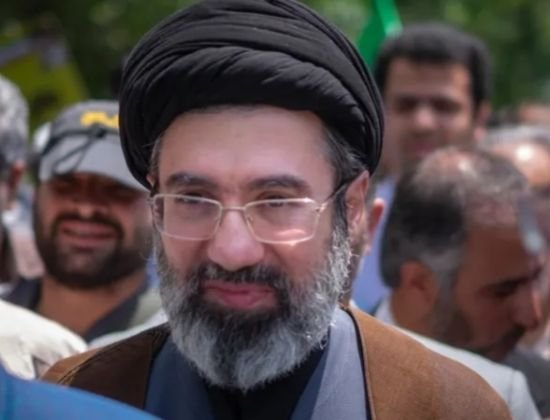
Iran has entered a historic and highly volatile phase after the country’s clerical establishment appointed Mojtaba Khamenei as the new Supreme Leader, following the assassination of his father, Ayatollah Ali Khamenei. The leadership transition comes amid an escalating regional war involving Iran, the United States and Israel, marking one of the most dramatic political developments in the Islamic Republic since its founding in 1979.
Ayatollah Ali Khamenei, who had ruled Iran as Supreme Leader since 1989, was killed on February 28, 2026 during coordinated airstrikes around Tehran carried out as part of a joint United States–Israel military operation targeting Iranian leadership and strategic facilities. Iranian authorities later confirmed his death and declared a nationwide mourning period.
The assassination triggered an immediate constitutional process to select a successor. Under Iran’s political system, the authority to appoint the Supreme Leader lies with the Assembly of Experts, an influential body of senior clerics. Following days of emergency consultations and closed-door deliberations, the assembly formally selected Mojtaba Khamenei as the country’s next Supreme Leader on March 8, 2026.
Mojtaba Khamenei, aged 56, is the second son of the late leader and a cleric who has long been regarded as a powerful but discreet figure within Iran’s political structure. Although he has never held elected office, analysts say he wielded considerable influence behind the scenes for years through his close connections with conservative religious networks and the Islamic Revolutionary Guard Corps (IRGC).
His elevation to the country’s highest authority is widely seen as a move by Iran’s ruling establishment to ensure continuity during a time of war and political uncertainty. The decision also signals the dominance of hardline factions within the Iranian power structure, which appear determined to maintain the ideological direction set during Ali Khamenei’s long rule.
The appointment has drawn global attention because it represents an unprecedented moment in Iran’s modern political history. Critics argue that passing the leadership from father to son resembles a dynastic transfer of power, something the Islamic Republic originally sought to avoid after overthrowing Iran’s monarchy in 1979.
The announcement comes as the broader conflict in the Middle East intensifies. Military confrontations between Iran and a coalition led by the United States and Israel have expanded over the past week, with missile exchanges, airstrikes and attacks on strategic energy infrastructure reported across the region. The ongoing war has heightened fears of a prolonged and destabilizing conflict affecting global security and energy markets.
Within Iran, the country’s political and military leadership quickly pledged allegiance to Mojtaba Khamenei after his appointment. Senior officials, members of the Revolutionary Guard and key government figures publicly declared support for the new leader in an effort to project unity during the national crisis.
At the same time, the transition has triggered intense international reactions. The United States and Israel have criticized the appointment, warning that Iran’s new leadership could adopt a more confrontational approach. Some Western officials argue that Mojtaba Khamenei’s close ties to security institutions may signal a harder line in Iran’s domestic and foreign policies.
Observers say Mojtaba Khamenei now faces the most severe leadership test in the country’s recent history. Iran is dealing simultaneously with war, economic pressure from international sanctions, internal political tensions and growing uncertainty across the Middle East.
As the Islamic Republic enters this new chapter, the decisions taken by its newly appointed Supreme Leader will likely shape the future of Iran’s political system, its regional alliances and the course of the ongoing conflict. Analysts warn that the coming months could determine whether the crisis escalates further or moves toward a fragile diplomatic settlement.