
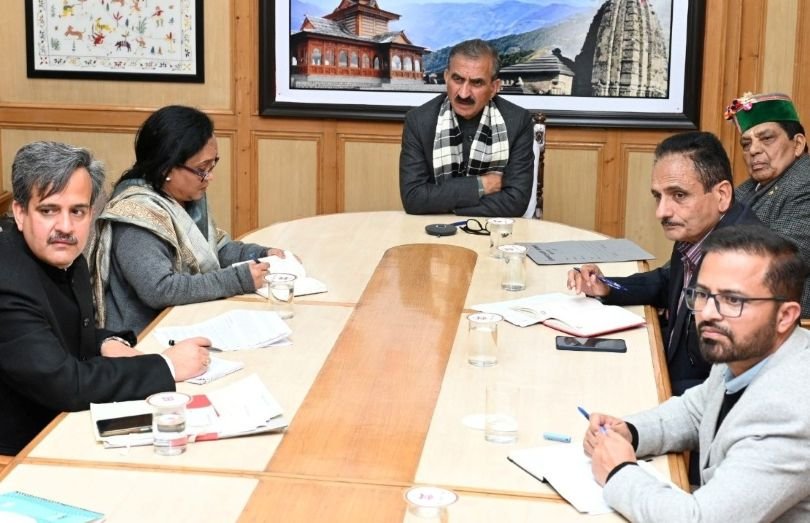
In a significant push to strengthen public healthcare delivery, Sukhvinder Singh Sukhu chaired a high-level review meeting of the Medical Education Department in Himachal Pradesh, outlining a comprehensive roadmap aimed at improving medical infrastructure, addressing staff shortages, and expanding access to quality treatment across the state.
Emphasising the government’s commitment to accessible and efficient healthcare, the Chief Minister directed officials to ensure that all medical colleges deliver consistent and patient-centric services. He underlined that the state administration is working steadily to reduce the need for patients to seek treatment outside Himachal by upgrading facilities within the state itself.
A major highlight of the meeting was the announcement of a substantial increase in postgraduate medical seats across key institutions. According to the plan, additional PG seats will be introduced in several medical colleges, including 57 at Dr. Rajendra Prasad Government Medical College (Tanda), 29 in Mandi, 32 in Nahan, 33 in Chamba, 67 in Hamirpur, and 96 at Indira Gandhi Medical College, Shimla. This expansion is expected to not only enhance academic capacity but also strengthen clinical services by increasing the availability of trained specialists.
Addressing the persistent shortage of experienced faculty, particularly in newer medical institutions, the Chief Minister approved a temporary extension of the retirement age for professors to 65 years for a period of three years. He clarified that this measure would not disrupt promotional opportunities within the system. In parallel, the government is also working on rationalising faculty positions by appropriately designating Assistant and Associate Professors to ensure optimal utilisation of available human resources.
The issue of staffing shortages, especially in nursing and technical roles, also received focused attention. Sukhu announced that all vacant nursing posts in medical colleges would be filled by November, alongside the recruitment of adequate technical personnel to support diagnostic and clinical services. Strengthening diagnostic infrastructure was identified as a priority area, given its critical role in timely and accurate treatment.
In a major financial commitment, the state government has earmarked approximately ₹3,000 crore for the procurement of advanced medical equipment and modern machinery. This investment is expected to significantly upgrade healthcare facilities across hospitals and medical colleges, aligning them with contemporary standards of care.
Looking ahead, the Chief Minister outlined plans for the expansion of key medical institutions. Phase II of the Chamba Medical College project is set to commence soon, backed by an allocation of ₹192 crore. Additionally, ₹500 crore has been proposed for the construction of a new medical college in Nahan, reflecting the government’s intent to decentralise healthcare access and strengthen regional infrastructure.
Sukhu reiterated that health and education remain top priorities for his administration, asserting that financial constraints would not hinder progress in these sectors. He also highlighted the state’s potential in health tourism, indicating that improved infrastructure and specialised services could position Himachal Pradesh as a preferred destination for medical care.
The meeting was attended by senior officials, including Health and Family Welfare Minister Dhani Ram Shandil, along with top bureaucrats and medical education authorities, while principals of medical colleges participated virtually. The discussions reflected a coordinated approach to addressing systemic gaps while planning long-term improvements in the healthcare ecosystem.
With these initiatives, the state government aims to create a more robust and self-reliant healthcare framework, ensuring that residents have access to high-quality medical services within Himachal Pradesh itself.