

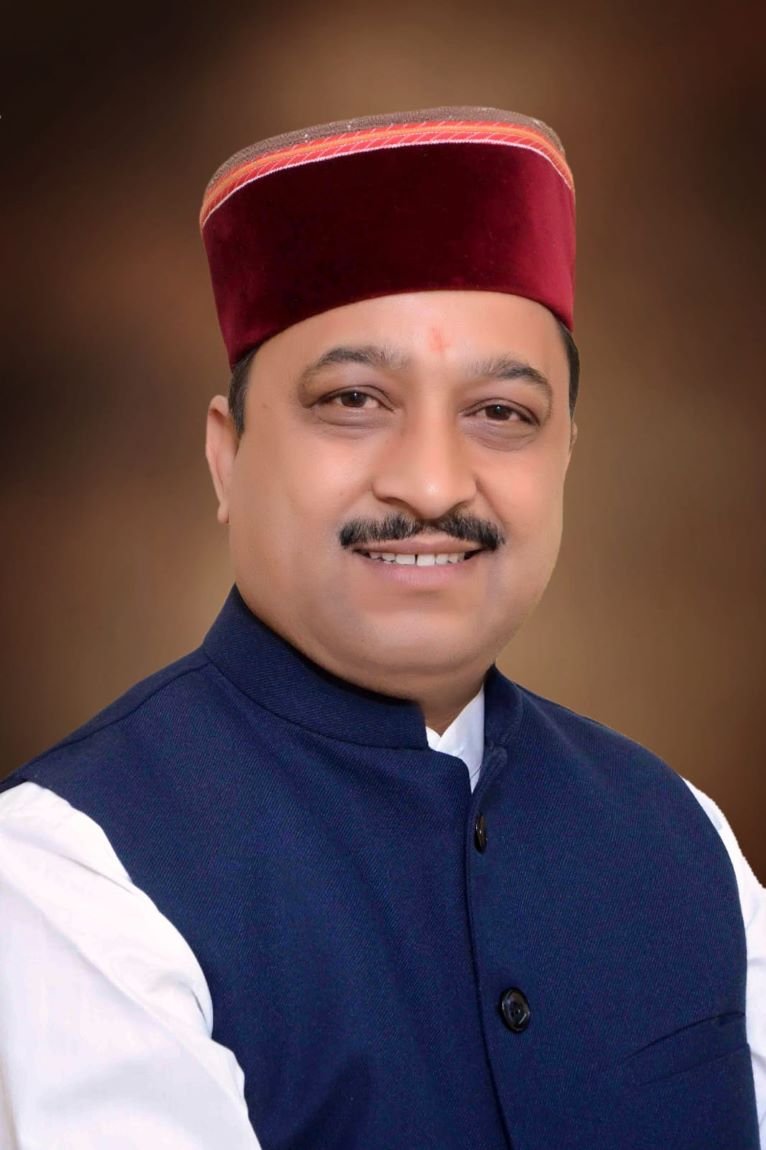
Shimla, February 7, 2026:
In a development that could significantly reshape civic governance and urban administration across Himachal Pradesh and several other states, senior BJP leader and Member of Parliament Suresh Kashyap has said that the Defence Ministry has confirmed substantial progress in the long-pending process of separating civilian areas from cantonment boards and merging them with nearby municipal bodies. The assurance has come through an official communication from Defence Minister Rajnath Singh, marking what Kashyap described as a “decisive and people-centric step” towards resolving decades-old civic challenges faced by residents of cantonment areas.
The issue holds particular importance for hill states like Himachal Pradesh, where cantonment zones often overlap with expanding urban settlements, creating administrative ambiguity and limiting access to full-fledged municipal services. According to Kashyap, the Defence Ministry’s response signals a clear intent at the Centre to streamline governance, improve service delivery, and integrate civilian populations more effectively into the mainstream urban framework.
Issue Raised in Parliament, Centre Responds with Concrete Action
Suresh Kashyap stated that he had raised the matter in the Lok Sabha under Rule 377, urging the Union Government to expedite the process of carving out civilian pockets from cantonment boards and transferring them to local urban bodies. He argued that while cantonment boards serve a vital defence function, civilian residents living within their jurisdiction often face limitations in infrastructure development, urban planning, and democratic local governance.
In his reply, Defence Minister Rajnath Singh informed that the Ministry of Defence has constituted committees for 38 cantonments across the country, involving all key stakeholders. These committees were tasked with conducting a detailed review of the modalities for separating civilian areas and merging them with adjacent municipal corporations, municipal councils, or nagar panchayats, depending on local conditions.
According to the Defence Ministry’s letter, proposals for 37 cantonments, including all six cantonments in Himachal Pradesh, have already been prepared and forwarded to the respective state governments for their consent. The next critical step now rests with state governments, whose formal approval is required to take the process to completion.
A Major Administrative Shift for Himachal Pradesh
For Himachal Pradesh, the move is being seen as a transformative administrative reform. The state has multiple cantonment areas where civilian populations have grown over decades, often outpacing the limited civic framework traditionally associated with cantonment governance. Once merged with municipal bodies, these areas are expected to come under comprehensive urban development plans, enabling better road connectivity, drainage systems, waste management, street lighting, and access to welfare schemes linked to urban local bodies.
Kashyap emphasised that this integration would allow residents to benefit directly from state and central government urban development programmes, which are often routed through municipalities. He said the move would strengthen grassroots democracy by bringing civilian residents under elected municipal councils, thereby enhancing local accountability and public participation in decision-making.
Balancing Defence Needs and Civilian Welfare
The Defence Minister’s communication also clarified that cantonment boards are currently continuing to provide essential civic services such as education, healthcare, water supply, sanitation, roads, lanes, and street lighting. Additionally, a range of online citizen services are being delivered through the e-Cantonment portal, ensuring continuity and transparency in day-to-day administration.
However, Kashyap pointed out that while these services have been functional, the structural limitations of cantonment governance often restrict long-term urban planning and large-scale infrastructure investment. The proposed separation, he said, would strike a more effective balance between national security imperatives and civilian welfare, allowing the armed forces to focus on their core responsibilities while local governments manage civic administration.
Political and Economic Implications
Politically, the development reflects the Centre’s responsiveness to long-standing demands from MPs, local representatives, and residents’ associations in cantonment areas. It also aligns with the broader governance narrative of reducing overlapping jurisdictions and simplifying administrative structures. For the BJP, the move reinforces its emphasis on administrative reforms and citizen-focused governance, particularly in states like Himachal Pradesh where urban expansion is steadily increasing.
Economically, the merger of civilian areas into municipal limits could unlock new avenues for planned urban growth. Municipal inclusion often leads to improved property regulation, better access to development funds, and enhanced scope for local economic activity. Urban infrastructure projects, tourism-related development, and small business growth are expected to receive a boost once these areas are fully integrated into city planning frameworks.
Long-Pending Demand Nears Resolution
Suresh Kashyap described the Defence Ministry’s initiative as a “positive and concrete step” towards addressing grievances that cantonment residents have raised for years. Issues ranging from building permissions and civic amenities to taxation and representation have frequently featured in public discourse around cantonment governance.
“With this initiative, the legitimate demands of citizens living in cantonment areas are finally being addressed in a structured manner,” Kashyap said, adding that the move would bring lasting benefits not only to Himachal Pradesh but to cantonment regions across the country.
As state governments examine and process the proposals sent by the Defence Ministry, all eyes will now be on the pace of approvals and implementation. If executed efficiently, the reform could mark a significant shift in India’s urban governance landscape, delivering tangible administrative, economic, and democratic gains to thousands of families living in cantonment civilian areas.
This is an auto web-generated news web story.