

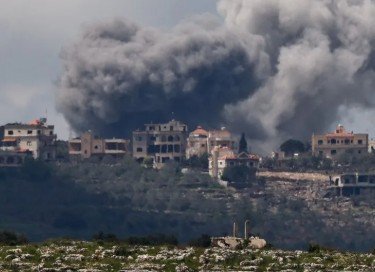
Tensions along the volatile Israel–Lebanon frontier have entered a more dangerous phase as the Israel Defense Forces (IDF) has expanded its ground operations in southern Lebanon, particularly in the strategically sensitive Bint Jbeil region. The latest military push signals a calibrated yet forceful escalation in the ongoing confrontation with Hezbollah, raising fresh concerns about a broader regional conflict.
In an official update, the IDF confirmed that elite units from its 98th Division—including paratroopers, commando forces, and the Givati Brigade—have encircled key Hezbollah strongholds and initiated what it described as “targeted ground actions.” These operations, according to Israeli military sources, are aimed at dismantling militant infrastructure and reinforcing Israel’s forward defensive posture along its northern border.
The military campaign over the past week has reportedly involved a combination of close-range engagements and precision airstrikes. Israeli officials claim that more than 100 Hezbollah fighters have been killed during these operations, alongside the destruction of multiple operational sites believed to be used for planning and executing attacks. The IDF further stated that a substantial cache of weapons was recovered, some of which were allegedly concealed within civilian areas—a recurring allegation in Israel’s narrative of the conflict.
One of the most significant developments cited by the IDF was the discovery and neutralisation of an underground tunnel system. According to the military, the tunnel had been used by Hezbollah to coordinate cross-border operations. Its dismantling is being projected as a tactical success in Israel’s effort to disrupt the group’s operational capabilities and prevent infiltration or surprise attacks.
The Bint Jbeil area, long regarded as a Hezbollah stronghold, has historically been a flashpoint in Israel–Lebanon hostilities. Its proximity to the border and its symbolic importance in past conflicts make the current operations particularly sensitive. Military analysts suggest that Israel’s decision to intensify ground activity in this region reflects both strategic necessity and a message of deterrence.
While the IDF maintains that its actions are defensive and aimed at safeguarding Israeli civilians, the scale and intensity of the operations indicate a broader objective of degrading Hezbollah’s military infrastructure in southern Lebanon. Israeli officials have reiterated that operations will continue as long as threats persist, underscoring a long-term posture rather than a short, limited engagement.
On the other side, Hezbollah has not remained passive, with intermittent cross-border exchanges continuing to fuel instability. Although detailed casualty figures from the Lebanese side remain contested and difficult to independently verify, the pattern of escalation suggests a cycle that risks spiraling beyond localized confrontation.
The evolving situation has drawn international attention, with concerns mounting over the possibility of a wider conflict involving regional actors. The Israel–Lebanon border has historically been one of the most fragile fault lines in the Middle East, and any sustained military engagement carries the risk of unintended escalation.
Humanitarian concerns are also growing, particularly regarding the impact of military operations on civilian populations in southern Lebanon. Allegations of militant infrastructure being embedded within civilian areas complicate the operational environment and raise questions about collateral damage, a recurring issue in asymmetric conflicts.
For now, the situation remains fluid, with both sides maintaining a posture of readiness. Israel’s intensified operations suggest a shift toward a more aggressive containment strategy, while Hezbollah’s responses indicate that the confrontation is far from over.
As diplomatic channels struggle to keep pace with developments on the ground, the coming days will be critical in determining whether this phase of escalation remains contained or evolves into a broader regional crisis.
This is a web generated news report