
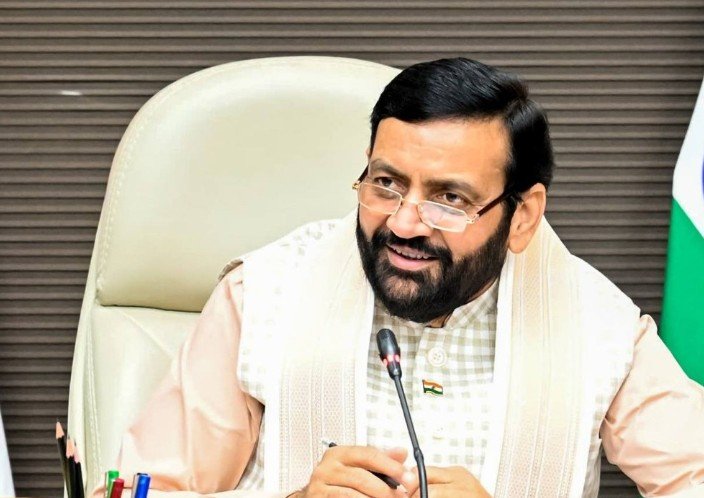
Chandigarh: The Haryana government has taken a series of significant administrative and infrastructure decisions aimed at strengthening public utilities, power infrastructure, and urban development across the state while simultaneously assuring citizens that supplies of essential petroleum products remain stable. In a high-level meeting chaired by Chief Minister Nayab Singh Saini, the High Power Purchase Committee approved multiple procurement proposals and development projects worth hundreds of crores, reflecting the government’s ongoing push to modernise infrastructure and improve service delivery across northern India’s rapidly developing state.
During the meeting, which reviewed procurement and infrastructure proposals from several departments including Public Health Engineering, Public Works, Urban Local Bodies, Agriculture, and state power utilities, a total of 15 agenda items amounting to ₹675.82 crore were placed before the committee. After negotiations and cost rationalisation, the projects were cleared at ₹657.82 crore, resulting in estimated savings of approximately ₹68.13 crore for the state exchequer. Officials said the savings were achieved through competitive negotiations and stricter scrutiny of project costs.
The Chief Minister emphasised that financial prudence must go hand in hand with infrastructure expansion. He directed officials to regularly monitor all approved projects to ensure that development works are completed within stipulated timelines. Stressing accountability in governance, Saini warned that delays or compromises in quality would not be tolerated. He also instructed departments to complete tendering procedures within the prescribed timeframe, adding that negligence in project execution or procurement processes would invite strict administrative action.
Among the major approvals discussed during the meeting were key upgrades in the state’s power infrastructure. The committee reviewed and finalised processes related to automated coal supply and maintenance systems for thermal power plants in Yamunanagar and Panipat, both of which are critical components of Haryana’s power generation network serving large parts of northern India. Additionally, procurement processes were finalised for electricity transformers of 220 kV and 33/11 kV capacity for the state utility Dakshin Haryana Bijli Vitran Nigam Limited, a move aimed at improving electricity distribution reliability and reducing load-related disruptions in rapidly growing urban and rural areas.
Further strengthening the state’s power infrastructure, the committee approved the installation of 400 kV substations in several locations including Dhanoda village in Mahendragarh district, Navada village in Faridabad district, and Kirodi village in Hisar district. Transformers to be installed at these substations are expected to cost around ₹157 crore and will significantly enhance electricity transmission capacity. Officials indicated that higher capacity transformers will also be deployed in areas where electricity demand has increased substantially due to industrial expansion, urbanisation, and rising residential consumption.
Urban infrastructure projects also featured prominently in the meeting agenda. The Chief Minister approved a major water pipeline project in Gurugram that will connect Basai Water Works to Sector 25 through a pipeline passing beneath Railway Line No. 2. The pipeline, ranging between 1600 mm and 600 mm in diameter, will be laid at an estimated cost of around ₹55 crore. Saini directed officials to ensure that construction begins immediately and is completed before the onset of the monsoon season to avoid potential flooding or water supply disruptions.
Another water infrastructure project approved in Gurugram involves the laying of a pipeline linked to the boosting station in Sector 16, aimed at strengthening water distribution networks in the city. Additionally, the government cleared construction of a reinforced concrete master drain to facilitate stormwater drainage from Ashok Vihar to the Bhimgarh Khedi railway culvert. This drainage project, estimated at ₹17.60 crore, is expected to significantly improve flood management in vulnerable urban pockets.
In Faridabad, the committee completed the tender process for the construction of a 20-MLD sewage treatment plant, a project estimated to cost approximately ₹41.84 crore. The plant is expected to improve wastewater management and support the region’s environmental sustainability goals by reducing untreated sewage discharge.
The meeting also approved completion of the tender process for the construction of a new judicial complex in Bawal at an estimated cost of ₹18 crore. Officials said the project will strengthen judicial infrastructure and improve access to justice for residents of the region.
In addition, the committee cleared a project to channel treated water from the Kalanwali sewage treatment plant into the Rori Ghaggar drain, part of a broader initiative to improve water management and drainage systems in the state. Procurement of furniture for the Shaheed Memorial currently under construction in Ambala was also authorised, with the Commissioner and Secretary of the Information, Public Relations and Languages Department empowered to complete the process.
While infrastructure and procurement decisions dominated the agenda, the state government also addressed concerns related to fuel supply and LPG availability. Amid rumours circulating about potential disruptions in LPG supply due to tensions and conflict-like conditions in the Middle East, the Chief Minister convened a separate review meeting with senior officials from the Food, Civil Supplies and Consumer Affairs Department along with representatives from oil marketing companies.
Officials informed the Chief Minister that the supply of petrol, diesel and domestic LPG in Haryana remains completely normal and that oil companies currently have adequate stocks to meet demand. They also stated that LPG supply is continuing to arrive regularly across distribution networks. The review meeting referred to directions issued by the Union Ministry of Petroleum and Natural Gas on March 9, which instructed states to ensure uninterrupted supply and equitable distribution of domestic LPG, particularly in priority sectors.
According to officials, while domestic LPG supply remains stable, there have been temporary logistical constraints affecting commercial LPG cylinders. In such cases, priority is being given to essential institutions such as hospitals and educational establishments. Oil companies are reportedly making continuous efforts to stabilise commercial supply chains as well.
To prevent hoarding or black marketing, the Haryana government has issued instructions to all Deputy Commissioners, Superintendents of Police, and district-level food and supply officers to strictly monitor LPG distribution networks. Authorities have been directed to take immediate action against any attempts at illegal storage or manipulation of supply.
The state government has also appealed to the public not to believe rumours circulating on social media or other platforms regarding shortages of LPG or fuel. Officials emphasised that petroleum product supplies remain stable across Haryana and that there is no reason for panic buying or unnecessary stockpiling.
The high-level meetings were attended by Revenue and Disaster Management Minister Vipul Goel, Agriculture and Farmers’ Welfare Minister Shyam Singh Rana, Public Health Engineering Minister Ranbir Singh Gangwa, Additional Chief Secretary Raja Shekhar Vundru, and several senior administrative officials including departmental secretaries and technical experts.
Observers note that the combination of infrastructure approvals and supply assurances reflects the Haryana government’s effort to maintain economic momentum while safeguarding essential services. As northern India continues to witness rapid urban growth and rising energy demand, such policy decisions are expected to play a critical role in sustaining development and ensuring public confidence in governance.