
A sharp contrast has emerged in Himachal Pradesh between the issues taken up inside the Assembly and the demands raised outside it. While employees’ organisations continue their agitation over salary revisions, allowances and long-pending service-related concerns, the government and the Opposition appear united on a very different matter — amendments to the salary and allowances of ministers and MLAs.
According to the schedule of business for the ongoing Tenth Session of the Fourteenth Himachal Pradesh Legislative Assembly, a proposal tabled under the Himachal Pradesh Ministers’ Salaries and Allowances (Amendment) Rules, 2025 has been officially placed on the House table for consideration. The document, submitted by the Chief Minister under statutory provisions, outlines revisions in remuneration and related benefits for ministers and legislators.
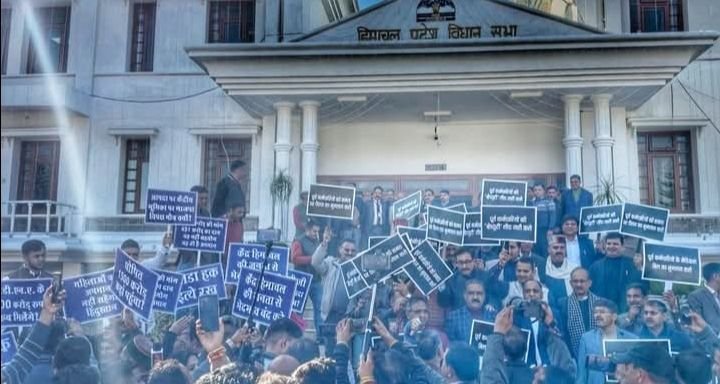
The prioritisation of this proposal inside the House stands in stark contrast to the situation outside the Assembly complex, where employees’ unions continue protests demanding fair wages, revised allowances, regularisation policies and justice in service conditions. Their memorandum to the media and public has highlighted a sense of neglect, as their issues remain unaddressed despite repeated assurances.
Employee leaders argue that while their demands have been consistently deferred, the proposal related to MLAs’ allowances has been brought to the Assembly table without delay. They point out that both the ruling party and the Opposition, otherwise divided on most policy issues, appear aligned when it comes to revisions of their own benefits.
This unusual unanimity among political parties has amplified public criticism. Employees’ bodies say that when it comes to decisions affecting thousands of workers across departments, the government often cites procedural delays or financial constraints. However, when the matter concerns the remuneration of elected representatives, urgency suddenly becomes the norm.
Public sentiment reflects similar frustration. Citizens and state employees observe that essential workers, from teachers to health staff, have been struggling for years for timely pay revisions, regularisation, and relief from financial pressures. Yet, proposals concerning MLAs’ financial privileges receive immediate legislative attention.
The development has reignited debate on political accountability, transparency in governance and the priorities of public institutions. Employees’ organisations have announced that they will intensify their campaign in the coming days, demanding that their issues be given the same seriousness and legislative space that lawmakers reserve for themselves.
The Assembly’s proceedings are expected to continue through the week, and all eyes will be on whether the government responds to the growing pressure from employees and the wider public calling for equitable treatment of their demands.