
Himachal Congress Hits Reset: Rahul Gandhi’s New Social-Justice Politics Meets Old Power Realities
Himachal Congress has finally crossed the Rubicon. With Vinay Kumar’s elevation as the new PCC chief, the party has signaled a disruptive shift—one that blends Rahul Gandhi’s social-justice politics with Sukhvinder Singh Sukhu’s assertive governance style. But beneath the surface, the move has triggered a quiet churn that will test Congress far beyond 2024–25.
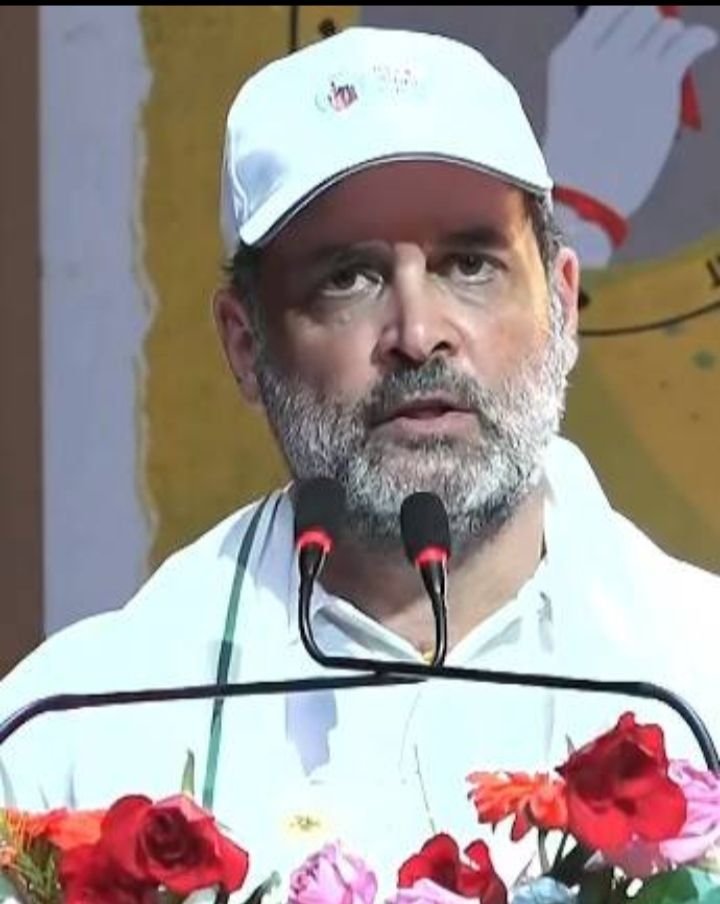
Rahul Gandhi’s message is loud: representation is not symbolic anymore; it must reshape power. After nearly three and a half decades, the state Congress has handed command to a leader from the Scheduled Caste community. This is not simply an organisational shuffle; it is a direct attempt to rewrite the political sociology of Himachal’s Congress.
But the road ahead is jagged. Vinay Kumar inherits an organisation fractured between Sukhu’s centralised authority and the residual might of the late Virbhadra Singh’s loyalist camp. For decades, the Congress in Himachal ran on the gravitational force of Raja Virbhadra Singh, who operated with his own political grammar and personal authority. After his passing, his legacy lived on through Pratibha Singh’s presidency and a strong bloc of MLAs who still believe that Congress in the hills carries the imprint of his politics.
Rahul Gandhi’s decision essentially resets the old order. But it also throws Vinay Kumar into the middle of a long-standing tug-of-war that he did not create.
Within the party, murmurs are already growing: Can a first-time president counter Sukhu’s unilateral style? Can he manage the expectations of a powerful SC community while calming the insecurities of upper-caste loyalists? And can he unify a party whose internal wounds are still raw from rebellions, cross-voting, and public dissent?
Sukhu, too, faces a different kind of test. He has consolidated power aggressively since becoming chief minister, often sidelining rivals with what his critics call arrogance and what his supporters describe as clarity. But governance and political arithmetic are two different terrains. A new PCC chief with a new mandate means new equations. Sukhu will have to negotiate, not dictate.
The more worrying part for Congress is the external threat. If the internal fault lines widen, the BJP will not just watch—it will move. Its strategy has always been simple: look for cracks and drive wedges. The rumours around Vikramaditya Singh switching sides earlier this year were not fiction; they were political smoke from a very real fire.
And now, the BJP has another wildcard: Captain Amarinder Singh. The former Punjab CM, now with the BJP, understands Congress’s internal dynamics like few others. If the BJP decides to engineer a political coup in Himachal, he could become an important behind-the-scenes strategist.
If Congress does not close ranks quickly, Himachal could see an attempted toppling—something the BJP has perfected across states.
Vinay Kumar’s appointment is symbolic, bold, and overdue. But symbolism does not run a party. Strategy does. Cohesion does. Leadership does.
The next few months will reveal whether Himachal Congress has genuinely entered a new era—or whether it has simply rearranged its internal contradictions. Rahul Gandhi has taken a calculated risk. Now it is up to Sukhu and Vinay Kumar to prove that this reset is not just a headline, but the beginning of a new Congress imagination.
#HimachalPolitics #CongressLeadership #RahulGandhi #VinayKumar #SukhuGovernment #PoliticalEditorial #IndianPolitics #HimachalCongress #PowerShift #OpinionPiece**