
Facing a mounting financial crunch, the Himachal Pradesh government led by Sukhvinder Singh Sukhu is actively exploring new avenues to strengthen its revenue base. In recent days, the state has already moved to increase toll charges for entry into Himachal Pradesh, and now, in a significant policy shift, the government has proposed a new welfare-linked tax on fuel.
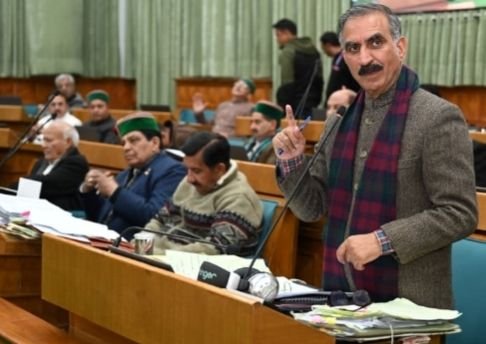
On Friday, the Chief Minister introduced the Himachal Pradesh Value Added Tax (Amendment) Bill, 2026 in the विधानसभा, outlining the framework for an “Orphan and Widow Cess” to be levied on petrol and high-speed diesel. This marks the introduction of a completely new category of cess in the state, aimed at combining revenue generation with targeted social welfare.
As per the proposal, the cess will be imposed on the first sale of petrol and diesel within the state. This means that the tax will be collected at the point when oil marketing companies sell fuel to dealers, rather than at every stage of distribution. The government has capped the cess at a maximum of ₹5 per litre, although the exact rate will be notified separately.
Officials indicate that this structure has been designed to streamline tax collection while avoiding cascading effects on pricing at multiple levels. However, it is expected that the burden may eventually be reflected, at least partially, in retail fuel prices.
The rationale behind the move lies in the state’s intent to create a dedicated and sustainable financial mechanism for vulnerable sections of society. According to the details shared in the Assembly, while Himachal Pradesh already runs multiple welfare schemes for orphans and widows, there has been a long-standing need for a permanent and ring-fenced fund to ensure uninterrupted support.
The proposed cess is expected to directly feed into such a fund, tentatively referred to as an Orphan and Widow Welfare Fund. All proceeds generated through this levy will be deposited into this dedicated corpus, which will then be utilised exclusively for financial assistance, rehabilitation, and social security measures for orphaned children and widows across the state.
Government sources suggest that this initiative reflects a dual strategy—addressing fiscal stress while reinforcing social welfare commitments. Himachal Pradesh, like several other hill states, has been grappling with limited internal revenue generation, high dependency on central assistance, and increasing expenditure obligations, particularly in sectors like salaries, pensions, and subsidies.
In this backdrop, the Sukhu government’s recent policy decisions—including revised toll structures and now the proposed fuel cess—indicate a calibrated attempt to widen the revenue base without directly imposing broad-based taxation measures on the general public.
However, the move is likely to trigger political debate. Opposition parties may question the timing of the cess, especially when fuel prices remain a sensitive issue for consumers. There could also be concerns about inflationary spillover effects, particularly in transport and logistics.
Despite these concerns, the government is expected to defend the proposal as a socially responsible measure, emphasizing that the funds collected will be strictly used for the welfare of some of the most vulnerable sections of society.
As the bill moves forward for discussion and approval in the Assembly, it is set to become a key talking point in Himachal’s evolving fiscal and policy landscape—highlighting how states are increasingly innovating at the intersection of taxation and targeted welfare.