
Bharatiya Janata Party (BJP) MP Kangana Ranaut has once again found herself at the centre of a political controversy, with the Congress accusing her of making remarks that have embarrassed not only her party but also the state she represents. The latest row has reignited a familiar political challenge for the BJP, which has repeatedly been forced to respond to or distance itself from controversial statements made by the actor-turned-politician.
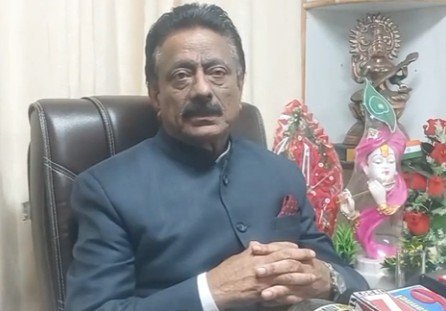
Addressing a press conference in Shimla on Wednesday, All India Congress Committee (AICC) spokesperson Kuldeep Rathore launched a sharp attack on Kangana Ranaut, describing her reported comments against members of Generation Z and protesters at Delhi’s Jantar Mantar as “shameful” and “deeply insensitive.” Rathore demanded that the BJP’s national leadership publicly clarify whether the party endorses the views expressed by its Mandi Member of Parliament.
The Congress leader argued that Kangana’s repeated public statements have become a political liability for the BJP, often generating controversies that shift attention away from substantive public issues and place the party in an uncomfortable position. According to Rathore, every fresh controversy compels BJP leaders to either defend her remarks or remain silent, both of which carry political costs.
Rathore alleged that the language reportedly used by Kangana against young protesters, particularly women participating in demonstrations, had hurt the sentiments of people across the country. He said public representatives were expected to exercise restraint and responsibility, especially while speaking about students and young citizens expressing democratic dissent.
Questioning the BJP’s position, Rathore said the party owed an explanation to the public. “If these comments do not reflect the BJP’s official thinking, then the party should make its position clear and take appropriate disciplinary action. Silence will only strengthen the perception that such statements are being tacitly accepted,” he said.
The Congress spokesperson further claimed that Kangana’s repeated controversial interventions have increasingly become a source of political embarrassment for the BJP. He maintained that while political disagreements are part of democracy, the use of language perceived as derogatory or dismissive towards young people risks damaging public discourse and undermining the dignity expected from elected representatives.
Rathore also linked the controversy to the ongoing political debate surrounding alleged irregularities in the NEET examination process. Referring to the nationwide student protests over the issue, he said the Centre had come under sustained public pressure after demonstrations spread across different parts of the country.
Without elaborating on specific developments, Rathore remarked that political leaders who had earlier dismissed calls for accountability were eventually compelled to respond to growing public sentiment. He argued that sustained student mobilisation had ensured that concerns over examination integrity remained at the centre of the national political conversation.
The controversy adds another chapter to Kangana Ranaut’s eventful political journey since entering Parliament from Himachal Pradesh’s Mandi constituency. Known for her outspoken style long before joining electoral politics, the first-time MP has frequently generated national headlines through her comments on political, social and cultural issues. While her supporters describe her as a fearless voice unwilling to conform to political correctness, critics argue that many of her remarks create avoidable controversies and often overshadow policy debates.
For the BJP, the situation presents a familiar political balancing act. The party has often benefited from Kangana’s popularity and direct communication style, yet several of her statements have also triggered fierce reactions from opposition parties, placing the BJP under pressure to clarify its position. Opposition leaders have repeatedly attempted to portray such episodes as reflective of a broader political culture within the ruling party, an allegation the BJP has consistently rejected.
With Himachal Pradesh remaining an important political battleground and Parliament witnessing increasingly sharp exchanges over issues ranging from education to governance, the latest controversy is expected to intensify the war of words between the Congress and the BJP. Whether the BJP leadership formally responds to the Congress’ demand for clarification remains to be seen, but the episode has once again demonstrated how individual political statements can quickly evolve into a larger national debate, particularly when they come from high-profile public figures.