

At Jagraon’s Lok Milni programme, Chief Minister outlines government’s employment, education, healthcare and rural development agenda; hands over ₹51 lakh grant for Kamalpura village
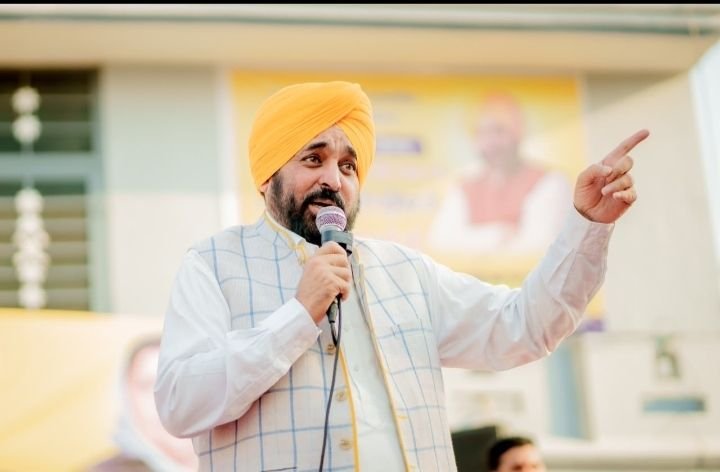
Jagraon : Punjab Chief Minister Bhagwant Singh Mann on Thursday said his government’s efforts to expand employment opportunities within the state were beginning to change the aspirations of young people, who earlier felt compelled to move abroad in search of a better future. Highlighting the recruitment of more than 70,000 government employees, improvements in public education and investment in village infrastructure, Mann said the government was working to create conditions in which Punjab’s youth could build their careers at home.
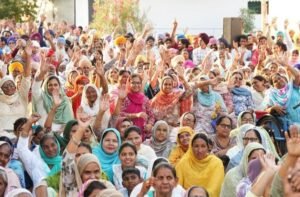
Addressing a Lok Milni programme at Kamalpura village in the Jagraon Assembly constituency of Ludhiana district, the Chief Minister said the trend of young people seeking passports and opportunities overseas was declining because employment prospects within Punjab had improved. He linked the change to the state government’s recruitment drive and claimed that appointments were being made on merit, without political recommendations or payment of money.
During the programme, Mann handed over a cheque of ₹51 lakh to the village sarpanch for comprehensive development works. He said the government was directing public resources towards villages so that rural communities could benefit from better infrastructure and essential facilities.
Employment and education at the centre of government’s agenda
Emphasising his government’s employment record, Mann said more than 70,000 government jobs had been provided since the Aam Aadmi Party came to power. He maintained that recruitment was conducted through transparent procedures and that candidates were selected on merit.
According to the Chief Minister, the situation was different in the past, when young people often had to look beyond Punjab because of limited employment opportunities. He alleged that access to government jobs was influenced by money and political connections under previous administrations. His government, he said, was seeking to break that pattern by providing equal opportunities to eligible candidates.
Mann also cited the performance of students from government schools in the National Eligibility-cum-Entrance Test (NEET) as evidence of improvements in public education. He said 882 students from government schools had qualified in the examination this year, compared with just 80 in 2021.
Describing education as a long-term instrument for reducing poverty and expanding social mobility, the Chief Minister said children from ordinary families should have the same opportunities to pursue medical and professional careers as students studying in expensive private institutions. He said public funds were being invested in improving school infrastructure and the quality of education rather than relying solely on short-term welfare measures.
Village development, electricity and agricultural support
The Chief Minister said rural development remained a major priority and that substantial funds were being made available for infrastructure improvements across Punjab. Referring to his own background in a farming family, he said he understood the difficulties faced by cultivators and highlighted the government’s decision to provide daytime electricity for agricultural tube wells.
He said the change had reduced the difficulties farmers faced when they had to operate irrigation pumps at night. Mann also stated that more than 90 per cent of households in Punjab were receiving free electricity under the government’s policy.
On irrigation, the Chief Minister said canal water had been extended to the agricultural fields of 1,587 villages that previously did not have access to this facility. He claimed that the government had spent ₹7,200 crore on expanding canal irrigation infrastructure.
According to the figures presented by him, the area covered by canal irrigation had increased from 26 per cent to more than 80 per cent. The area receiving canal water, he said, had grown from 20.89 lakh acres in 2022 to 60.30 lakh acres.
Mann further said approximately 45,000 kilometres of roads were being renovated to improve connectivity and facilitate the movement of people and agricultural produce.
Healthcare and financial assistance for women
Highlighting the government’s healthcare initiatives, Mann referred to the Mukh Mantri Sehat Yojana, under which eligible families are being provided cashless treatment coverage of up to ₹10 lakh per family. He said the scheme was intended to reduce the financial burden of medical emergencies and prevent families from falling into debt because of treatment expenses.
The Chief Minister also spoke about the Mawan Dhiyan Satkar Scheme, under which eligible women aged 18 and above are to receive monthly financial assistance. He said the proposed benefit would be ₹1,000 per month for eligible women and ₹1,500 for women belonging to Scheduled Castes. Existing beneficiaries of social security pensions would also be eligible, according to his statement.
Mann said the scheme was expected to cover around 97 per cent of women in Punjab and that the state budget had earmarked ₹9,300 crore for its implementation. He urged women to keep their bank accounts operational and ensure that the required documents were ready so that payments could be transferred without difficulty.
He also reiterated that the government was committed to farmers, women and economically weaker sections, arguing that welfare measures should be accompanied by improvements in public services and opportunities for sustainable livelihoods.
Sports infrastructure as part of anti-drug strategy
Addressing the issue of drug abuse, Mann said Punjab should not be defined by the problem of narcotics and that those responsible for damaging the lives of young people must be held accountable.
He referred to the government’s plan to construct 3,100 sports stadiums across the state, saying that better sporting facilities would encourage young people to participate in physical activities, identify their talent and pursue opportunities in sports. The initiative, he said, was also intended to provide rural youth with constructive alternatives and keep them away from drugs.
The Chief Minister also launched a sharp political attack on the opposition over the drug issue. Referring to the chargesheet filed against Shiromani Akali Dal leader Bikram Singh Majithia, he said a document running into approximately 40,000 pages had been submitted against the alleged principal accused. Mann accused previous political establishments of allowing drug networks to flourish and said those responsible would have to answer for their actions.
These remarks reflect the Chief Minister’s allegations; the charges and the legal proceedings will be determined through the judicial process.
Political attack on Congress and Akali leadership
Mann accused Congress and Shiromani Akali Dal leaders of focusing more on internal power struggles and political positions than on Punjab’s development. He alleged that leaders of rival parties were united in their opposition to his government despite their public differences.
Referring to the Congress, he said its internal competition for leadership and the Chief Minister’s post had weakened its ability to focus on public concerns. He also criticised the Akali leadership, questioning its understanding of Punjab’s language, culture and ground realities.
The Chief Minister further referred to the previous Congress government led by Captain Amarinder Singh, alleging that it had failed to address the everyday problems of ordinary people. He said political authority should be used for public service rather than personal influence or wealth accumulation.
Mann maintained that his government’s priorities remained employment, education, healthcare, agriculture and rural infrastructure, while accusing opposition parties of attempting to divert attention from these issues.
Public money and development
Defending the government’s approach to public spending, Mann said revenue collected through taxes belonged to the people and should return to them through better schools, hospitals, roads, electricity and other public facilities.
He also claimed that the closure of toll plazas had resulted in daily savings of approximately ₹70 lakh for commuters. According to him, the government was working to reduce the financial burden on ordinary families while expanding public infrastructure and essential services.
Concluding his address, Mann said the government’s development agenda was focused on improving living standards and strengthening Punjab’s economic and social foundations. He expressed confidence that continued investment in employment, education, healthcare, agriculture and village development would create more opportunities for the state’s people.
The Kamalpura programme was part of the government’s public outreach exercise, through which the Chief Minister interacted with residents and highlighted the administration’s development priorities. The key political message from the event was that the government wants to make employment and better public services within Punjab central to its case before voters ahead of the next Assembly elections.