

Shimla — In a significant step towards planned rural development and sustainable land use management, the Himachal Pradesh government has moved closer to introducing a structured framework for regulating construction activities across the state’s villages. A Cabinet Sub-Committee constituted to examine the issue has approved a model plan aimed at bringing greater clarity, accountability and environmental sensitivity to rural construction practices.
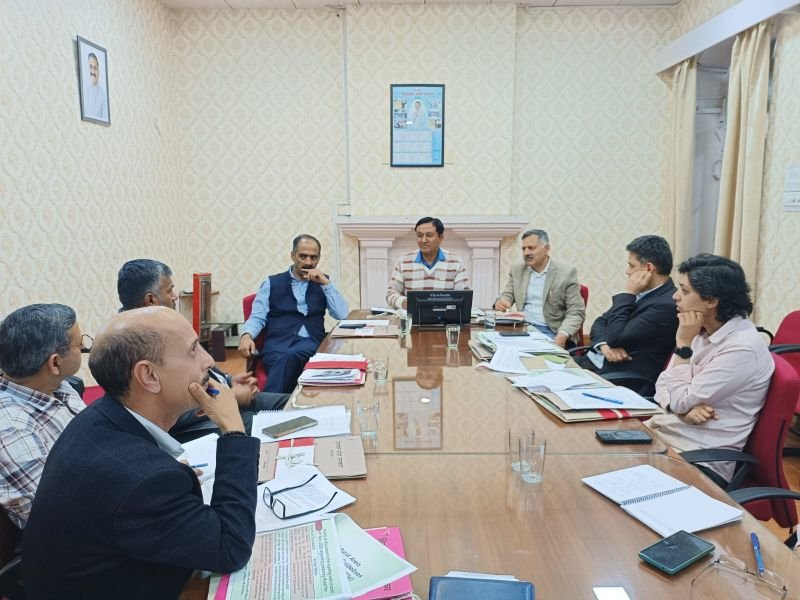
The decision was taken during a meeting of the Cabinet Sub-Committee chaired by Revenue, Horticulture and Tribal Development Minister Jagat Singh Negi. The meeting was also attended by Technical Education and Town and Country Planning Minister Rajesh Dharmani and Rural Development and Panchayati Raj Minister Anirudh Singh, reflecting the multi-departmental importance of the proposed policy.
The approved model framework will now be presented before the state Cabinet in its forthcoming meeting for final consideration and approval, marking the next crucial stage in the government’s efforts to balance development needs with environmental protection and rural planning requirements.
The move comes at a time when Himachal Pradesh is witnessing rapid changes in its rural landscape. Improved connectivity, tourism-led economic activity, expanding residential construction and increasing commercial investments in villages have transformed many rural areas over the past decade. While these developments have generated economic opportunities, they have also raised concerns regarding unregulated construction, pressure on natural resources, land-use changes and the long-term sustainability of fragile hill ecosystems.
Officials familiar with the deliberations indicated that the proposed model plan seeks to establish a uniform regulatory mechanism that can guide construction activities in rural regions while taking into account local geographical conditions, environmental sensitivities and infrastructure requirements. The objective is not only to streamline development but also to prevent haphazard growth patterns that can lead to ecological degradation and increased disaster risks in mountainous areas.
For a hill state like Himachal Pradesh, where villages are often located in geologically sensitive zones, construction regulation has become an increasingly important policy issue. Experts have repeatedly highlighted that unplanned development, slope cutting and inadequate building standards can contribute to landslides, soil erosion and vulnerability during extreme weather events. The state has witnessed several incidents in recent years where heavy rainfall and natural disasters have exposed the risks associated with unregulated construction.
The government’s initiative is therefore being viewed as part of a broader strategy to introduce scientific planning principles into rural development. By creating a standard framework, authorities hope to ensure that future construction activities align with safety norms, environmental considerations and local development priorities.
The presence of ministers handling revenue, town planning and rural development portfolios underscores the cross-sectoral nature of the challenge. Rural construction regulation intersects with land ownership issues, village governance, infrastructure development, environmental protection and local economic growth. Policymakers believe that a coordinated approach will be essential for achieving long-term and sustainable outcomes.
The proposed framework is also expected to provide clearer guidelines to Panchayati Raj institutions and local authorities, which often face difficulties in dealing with construction-related issues due to the absence of comprehensive and uniform regulations. A standardised model could help improve transparency, reduce ambiguities and strengthen local-level governance mechanisms.
Government officials have maintained that the intent of the policy is not to restrict development but to ensure that growth takes place in an organised and environmentally responsible manner. As Himachal continues to modernise its rural economy and improve infrastructure in remote regions, balancing developmental aspirations with ecological preservation remains one of the state’s foremost policy challenges.
Senior officials including Secretary, Rural Development and Panchayati Raj, C. Palrasu, and Director, Town and Country Planning, Hemis Negi, were also present during the meeting and participated in discussions related to the proposed framework.
With the Cabinet Sub-Committee now having endorsed the model plan, attention will shift to the state Cabinet, whose approval could pave the way for one of the most significant rural planning reforms undertaken in Himachal Pradesh in recent years. If implemented effectively, the policy has the potential to shape the future character of rural development in the state, ensuring that growth remains orderly, resilient and compatible with the unique environmental realities of the Himalayan region.
#HimachalPradesh #RuralDevelopment #ConstructionPolicy #JagatSinghNegi #RajeshDharmani #AnirudhSingh #TownPlanning #VillageDevelopment #SustainableGrowth #Infrastructure #EnvironmentalProtection #RuralGovernance #HimalayanDevelopment #CabinetDecision #Shimla
This is an auto web-generated news web story.