
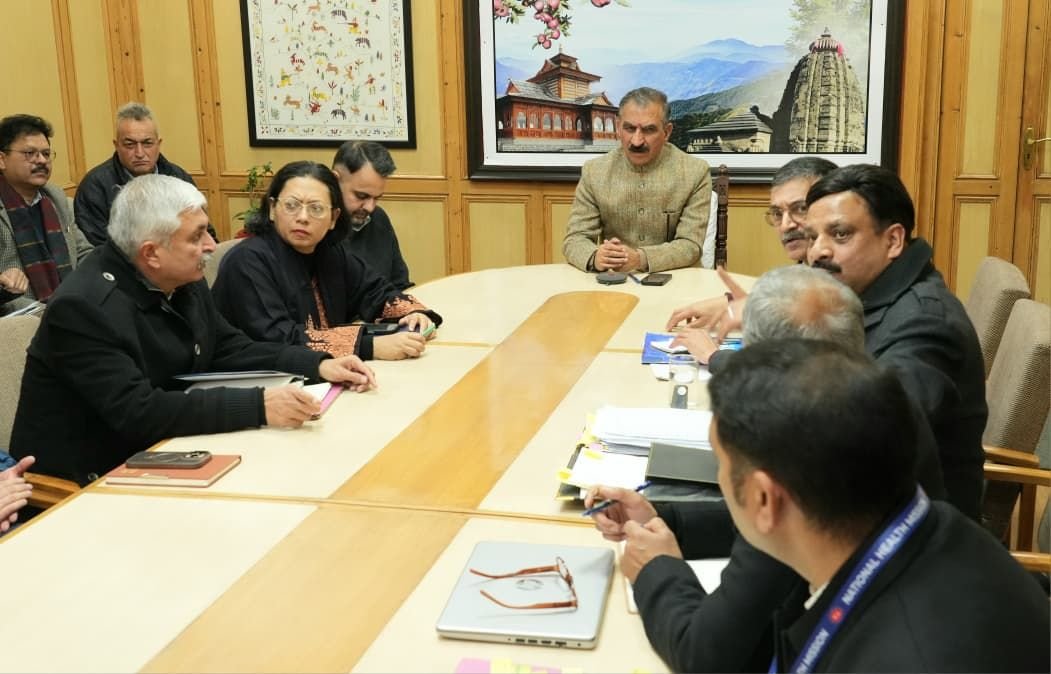
The Himachal Pradesh government has decided to strengthen emergency response and community healthcare services across the state, with a clear focus on accessibility, quality, and long-term public welfare. Chief Minister Thakur Sukhvinder Singh Sukhu, while chairing a review meeting of the National Health Mission, outlined a series of measures aimed at improving healthcare delivery, especially for vulnerable groups such as pregnant women, senior citizens, children, and youth struggling with substance abuse.
One of the key decisions taken in the meeting was the replacement of ageing Janani Suraksha drop-back ambulances. The Chief Minister directed officials to replace 125 ambulances to ensure timely and reliable transport services for patients, particularly expectant mothers in remote and hilly areas. The replacement project will involve an estimated expenditure of around Rs. 10.68 crore. The move is expected to significantly improve emergency response times and reduce risks associated with delayed medical attention, which remains a major challenge in difficult terrains.
The Chief Minister stressed that ambulance services are not just vehicles but a vital link between people and life-saving medical care. Ensuring that these services are efficient, well-equipped, and dependable is central to building trust in the public health system, especially in rural regions where access to hospitals is limited.
Another major focus of the meeting was elderly and palliative care. The state government plans to invest nearly Rs. 20 crore in a comprehensive programme aimed at improving healthcare services for senior citizens and chronically ill patients. Under this initiative, bedridden patients will receive medical examinations and treatment at home. Dedicated teams consisting of doctors, paramedical staff, and support workers will be deployed and connected with 70 model health institutions across the state.
This doorstep healthcare approach is expected to reduce the burden on families and hospitals while ensuring dignity and comfort for elderly patients. The Chief Minister described the programme as a crucial step toward inclusive healthcare and a strong reflection of the government’s commitment to caring for those who often remain unseen in the system.
Special attention is also being given to maternal and child health. The government has announced free insulin pumps for children suffering from Type-1 diabetes and for expectant mothers who require them. Around Rs. 2.25 crore will be spent on this initiative. By providing advanced medical devices at no cost, the state aims to improve health outcomes and reduce long-term complications for both mothers and children.
The Chief Minister noted that investing in preventive and supportive healthcare today helps avoid serious health and financial challenges in the future. He underlined that world-class healthcare should not be limited to urban centres but must reach every child and mother, regardless of geography or income.
Addressing another pressing social issue, the Chief Minister emphasized the need for a stronger and more effective rehabilitation framework for youth affected by substance abuse. He directed officers to prepare a detailed and practical plan to strengthen rehabilitation centres across the state. According to him, treatment alone is not enough; proper counselling, follow-up care, and reintegration into society are equally important.
The meeting reflected the government’s broader approach to healthcare as a social responsibility rather than just a service. By combining emergency infrastructure upgrades, community-based care, advanced medical support, and rehabilitation services, the state aims to build a more resilient and humane health system.
Senior officials, including advisors and heads of key health departments, were present during the meeting, indicating close monitoring and coordinated implementation of these initiatives. The Chief Minister made it clear that effective execution and accountability would be essential to ensure that the intended benefits reach people on the ground.
Through these measures, the state government seeks to address both immediate healthcare gaps and long-term structural challenges, reinforcing its commitment to accessible, inclusive, and people-centric healthcare for all sections of society.