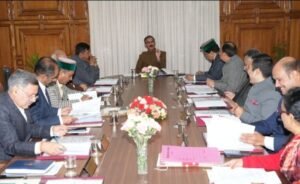

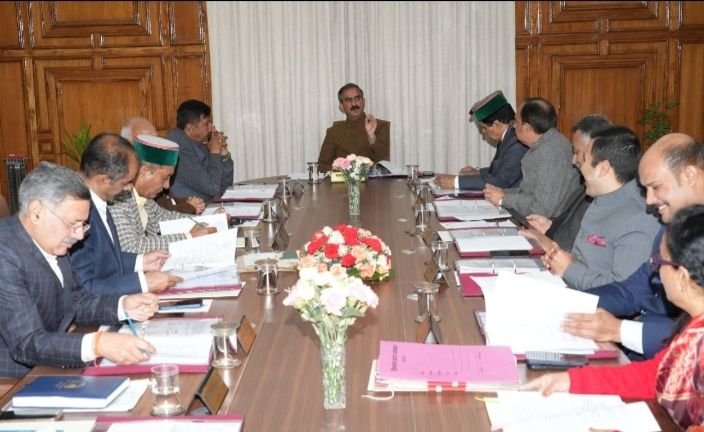
In a significant policy push aimed at strengthening governance, transparency, and public welfare, the Himachal Pradesh Cabinet led by Sukhvinder Singh Sukhu has approved a series of far-reaching decisions covering rural democracy, education, healthcare, and urban infrastructure. The decisions were taken during a cabinet meeting chaired by the Chief Minister and are being seen as part of a broader reform-oriented approach by the state government.
One of the most notable decisions is the proposed disqualification of individuals involved in drug trafficking from contesting Panchayati Raj elections. The Cabinet has decided that any person against whom charges are formally framed in cases related to “chitta” (synthetic drug) smuggling will be deemed ineligible to contest local body elections. A corresponding amendment bill will be introduced in the state assembly to give legal effect to this provision.
This move is being viewed as a strong step toward cleansing grassroots democratic institutions and sending a clear message against the growing menace of drug abuse and trafficking in the state. By linking electoral eligibility with criminal accountability in drug-related cases, the government aims to deter the entry of such elements into local governance.
In the education sector, the Cabinet approved the filling of 2,086 teaching posts across 151 CBSE-affiliated government schools. This decision is expected to significantly improve the teacher-student ratio and enhance the quality of education, particularly in rural and semi-urban areas where staff shortages have been a persistent issue.
Additionally, the Cabinet gave its nod to the introduction of the semester system in colleges, aligning higher education in the state with national academic standards and improving evaluation mechanisms. The move is aimed at bringing greater academic flexibility and continuous assessment into the system.
To strengthen healthcare education and research, the government has also decided to establish biophysics departments at major medical institutions, including IGMC Shimla, Nerchowk, and Medical College Hamirpur. These departments are expected to boost advanced medical studies and interdisciplinary research in the state.
In a bid to improve the functioning of Panchayati Raj institutions, the Cabinet has relaxed quorum norms for Gram Sabha meetings. The earlier requirement of one-fourth attendance has been revised to one-tenth, addressing the recurring issue of meetings being stalled due to lack of quorum. Similar relaxations have been extended to Panchayat Samiti and Zila Parishad meetings, ensuring smoother decision-making at all levels of local governance.
The government has also taken a progressive step by encouraging youth participation in rural development. Individuals aged 18 years and above will now be able to actively participate in Gram Sabha proceedings, enabling greater inclusivity and engagement in grassroots planning and execution of development works.
On the urban infrastructure front, the Cabinet discussed plans to introduce piped LPG supply in cities, reducing dependence on traditional gas cylinders. In the first phase, towns such as Una, Bilaspur, and Hamirpur are likely to be covered. This initiative is expected to modernize urban living standards and improve convenience for households.
The Cabinet also approved the filling of five posts in the forensic division at Dharamshala, strengthening the state’s investigative and forensic capabilities. In another кадров decision, six “Vidya Upasaks” will be regularized into the JBT category upon meeting the required qualifications, offering them career stability and addressing workforce gaps in primary education.
In a separate development discussed during the meeting, Chief Minister Sukhu held talks with Bhagwant Singh Mann regarding the issue of entry tax on vehicles coming from other states. While the matter remains under consideration, differing views have emerged within the government. Some ministers have suggested exemptions, while others indicated that neighboring states, particularly Punjab, may explore legal options, including approaching the Supreme Court.
Overall, the Cabinet decisions reflect a multi-sectoral approach focused on governance reforms, institutional strengthening, and public welfare. From curbing drug influence in local elections to enhancing education, healthcare, and urban infrastructure, the Sukhu government appears to be pushing a comprehensive agenda aimed at long-term development and administrative efficiency in Himachal Pradesh.