

In one of the most ambitious economic policy overhauls undertaken by Haryana in recent years, the state Cabinet on Sunday approved ten major industrial and sector-specific policies designed to reposition Haryana as a leading destination for manufacturing, artificial intelligence, electronics, digital infrastructure, green industry and agro-based economic growth.
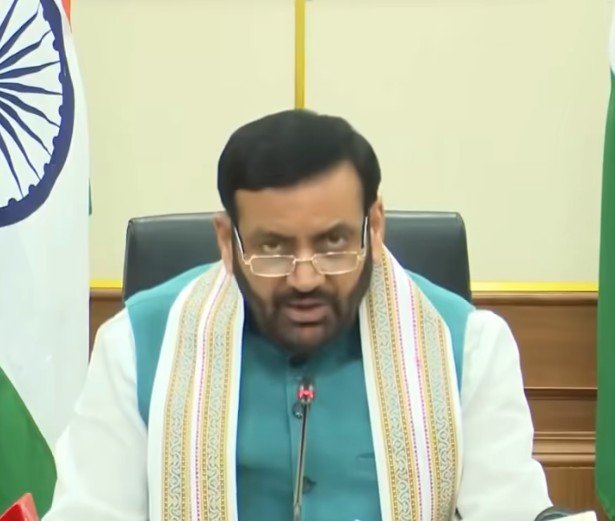
The decisions were taken during a Cabinet meeting chaired by Chief Minister Nayab Singh Saini in Chandigarh, with the government describing the move as a major step towards fulfilling commitments made in its election manifesto and the 2026–27 state budget.
The newly approved framework is expected to target investments worth ₹5 lakh crore over the next five years while creating more than 10 lakh employment opportunities across multiple sectors ranging from electronics and data centres to pharmaceuticals, agri-processing and emerging technologies.
Officials said the policies were finalised after extensive consultations with industrialists, business organisations and sectoral stakeholders. The Chief Minister himself reportedly held detailed discussions over two days with industry representatives before the policies were given final approval. The government has also aligned the framework with Prime Minister Narendra Modi’s “Make in India” and “Viksit Bharat” vision.
At the centre of the policy package is the new “Make in Haryana Industrial Policy 2026”, which will replace the earlier HEEP 2020 framework and become the state’s principal industrial policy. The policy aims to significantly expand manufacturing activity while restructuring Haryana’s industrial geography through a new classification system based on “core”, “intermediate”, “sub-prime” and “prime/focus” regions, replacing the older A, B, C and D block model.
The state government has introduced a broad incentive architecture under the policy. Large industrial units will receive SGST reimbursement benefits for seven years, mega projects for ten years and ultra-mega projects for up to twelve years under special packages. Capital subsidies ranging from 5 to 30 percent have also been approved depending on project scale and location. Stamp duty reimbursements ranging from 30 to 100 percent will further support investors.
One of the policy’s most significant features is its employment-linked incentive structure. To encourage local hiring, industries employing Haryana residents through the Haryana Kaushal Rozgar Nigam portal will receive employment generation subsidies of up to ₹1 lakh per employee annually for ten years. For women, Scheduled Castes, differently-abled persons, Agniveers and ex-servicemen, the subsidy will rise to ₹1.2 lakh per employee annually.
The government has also attempted to address long-standing industry concerns regarding delays in approvals and payments. Under the new framework, eligible incentives will partly be released within seven working days, while delayed government payments beyond April 1, 2026 will attract an annual interest rate of 8 percent.
In a major administrative reform, investors will receive clarity on land ownership, land-use status, encumbrances and permissions through a “Land Feasibility Certificate” within 45 working days — a measure expected to reduce procedural uncertainty for new projects.
Beyond manufacturing, the policy package reflects Haryana’s attempt to position itself at the forefront of emerging technologies and digital infrastructure.
The Cabinet approved the Haryana IT/ITES, AI and Emerging Technologies Policy 2026, aimed at strengthening investments in artificial intelligence, cybersecurity, blockchain, cloud services and Internet of Things technologies. Haryana already hosts an IT and IT-enabled services sector valued at more than ₹1.55 lakh crore, and the government now wants to transform the state into a major AI and advanced computing hub.
As part of this effort, a Global Artificial Intelligence Centre will be established in Gurugram, while Panchkula will host an advanced computing facility. More than 50,000 professionals are expected to receive skill training under the initiative. Centres of excellence in AI, blockchain, cybersecurity and IoT will also be established with significant capital and operational support.
In another major digital infrastructure push, the Cabinet approved the New Haryana Data Centre Policy 2026. The policy seeks to attract large-scale investments in cloud infrastructure, 5G-enabled services and AI-driven digital ecosystems. Haryana plans to leverage its proximity to the National Capital Region, stable power infrastructure and policy incentives to attract hyperscale data centres and data parks.
The electronics sector received special focus through the Haryana Electronics System Design and Manufacturing Policy 2026. A 500-acre Electronics Manufacturing Cluster is already being developed at IMT Sohna, while the policy aims to attract investments linked to electronics components and semiconductor ecosystems. The government indicated that a separate semiconductor policy is also under preparation.
The Cabinet also approved dedicated policies for pharmaceutical and medical devices manufacturing, toy and sports equipment manufacturing, e-waste recycling, global capability centres and the AVGC-XR sector covering animation, visual effects, gaming, comics and extended reality technologies.
The pharmaceutical and medical devices policy is intended to strengthen domestic manufacturing capacity in healthcare products following lessons learned during the Covid-19 pandemic. Provisions have also been introduced to facilitate quicker approvals for pharmaceutical formulations and permit women to work night shifts under regulated conditions.
The toy and sports equipment manufacturing policy seeks to tap into India’s growing export potential in educational toys, eco-friendly products and high-value sports equipment. The state expects investments worth ₹5,000 crore and around 25,000 jobs under this sector alone.
Meanwhile, Haryana’s E-Waste Recycling Policy 2026 aims to formalise the rapidly expanding electronic waste sector by encouraging organised recycling infrastructure. Officials said India currently generates nearly 17.5 lakh metric tonnes of e-waste annually, much of which is processed in the unorganised sector. Haryana now intends to convert that environmental challenge into a green industrial opportunity.
The government has also introduced the Haryana Global Capability Centres Policy 2026 to attract multinational back-office and research operations. With more than 270 GCCs already functioning in the state, Haryana now aims to bring over 100 additional centres, particularly in Gurugram and adjoining regions.
Perhaps most politically significant is the Haryana Agri-Business and Agro Processing Policy 2026, which attempts to link industrial expansion with rural economic growth. The policy seeks to strengthen food processing units, cold-chain infrastructure, packaging systems, food parks and incubation centres to improve value addition in agriculture and reduce post-harvest losses.
The state aims to attract over ₹5,000 crore in agro-processing investments and create nearly 30,000 jobs under this framework. Special incentives have been proposed for women entrepreneurs, Scheduled Castes, ex-servicemen, export-oriented units and foreign joint ventures.
Across the first nine policies, the government has adopted a common incentive structure designed to reward local employment, facilitate industrial relocation and support long-term operational sustainability.
Taken together, the policy package reflects Haryana’s attempt to move beyond traditional manufacturing and position itself as a future-ready industrial and digital economy. The emphasis on AI, semiconductors, green industries, advanced manufacturing, data infrastructure and rural value chains suggests the government is seeking to build a diversified economic model capable of competing both nationally and globally.
Whether these ambitious targets translate into actual investments and employment on the ground will depend on execution, infrastructure delivery and administrative consistency. But politically and economically, the scale of the policy shift signals one of Haryana’s most aggressive industrial expansion strategies in recent years.