
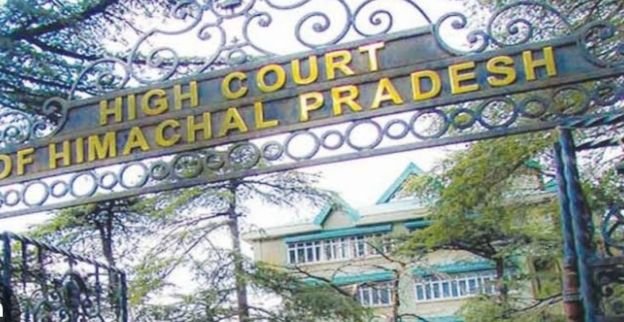
Shimla. The Himachal Pradesh High Court has taken a strict view of the allocation and continued occupation of government residences in the state, directing the government to provide detailed information about houses allotted to journalists while also seeking an explanation over special treatment allegedly extended to six former Chief Parliamentary Secretaries (CPSs).
The issue has come up in proceedings arising from the court’s examination of government accommodation and alleged occupation contrary to the applicable rules. The latest directions have widened the scope of scrutiny to include not only former CPSs but also government residences occupied by members of the media.
A Division Bench headed by Chief Justice Gurmeet Singh Sandhawalia, along with Justice Jiya Lal Bhardwaj, has directed the state government to file a fresh affidavit setting out the complete details of government houses allotted to journalists.
The government has been asked to disclose how many government residences are currently occupied by journalists, the legal or administrative provision under which each allotment was made, the dates on which the houses were allotted and the type or category of accommodation provided.
The court has fixed October 28 for the next hearing and expects the state to place the required information on record by then.
The court’s intervention is significant because government accommodation in Himachal Pradesh is generally governed by the Himachal Pradesh Allotment of Government Residences (General Pool) Rules, 1994. According to the state government’s own Directorate of Estates information, general-pool accommodation is administered by the government and allotments are normally made according to eligibility and priority under the prescribed rules.
The government’s official accommodation system also provides for specific circumstances in which an occupant may seek permission to retain a residence. Such retention requires an application and supporting documentation, while unauthorised occupation after the permitted period can lead to cancellation, recovery of damages and eviction proceedings under the applicable law.
Former CPSs remain at the centre of the dispute
The court’s scrutiny of government accommodation began with the continued occupation of official residences by six former CPSs whose appointments had earlier been set aside.
The six former CPSs were Mohan Lal Brakta, Ashish Butail, Ram Kumar Chaudhary, Kishori Lal, Sanjay Awasthi and Sunder Singh Thakur. Their appointments, made by the Congress government in January 2023, were quashed by the High Court in November 2024.
Despite the cancellation of their appointments, questions subsequently arose over their continued occupation of government residences.
In earlier proceedings, the High Court sought information about the occupants, the period for which they had remained in the residences after their appointments were quashed, whether they were paying licence fees and under what authority they were permitted to continue occupying the properties. The court also noted that some of these houses were situated close to the High Court and could otherwise be used as official accommodation for serving constitutional authorities, including judges.
The issue became more complicated after the state government retrospectively regularised the occupation of the six former CPSs from November 14, 2024, invoking Rule 24 of the 1994 General Pool Rules. According to the court proceedings reported in August, the decision was taken on May 4, 2026, and allowed occupation on payment of the normal licence fee.
The High Court questioned why such special relaxation had been granted without applications from the former CPSs and asked the Chief Secretary to explain whether similar relaxations had ever been extended to other government employees.
The court also sought details of the penal rent payable by the occupants and questioned whether the exercise of power could be regarded as arbitrary or beyond the authority provided under the rules.
Why the journalist accommodation issue matters
The latest order brings another category of occupants under judicial scrutiny.
Journalists and media organisations have historically been provided access to government accommodation in some circumstances, but the High Court has now asked the state to identify the precise legal basis for such allotments rather than relying on general practice.
The court’s questions are therefore focused on facts: how many journalists have government residences, what category of houses they occupy, when the allotments were made and under which rule or administrative decision.
That information could help establish whether such allotments have been made consistently and within the framework governing the state’s general pool accommodation.
The court has not, at this stage, declared that all such allotments to journalists are illegal. Its direction is for the government to provide the underlying records and explain the basis on which the residences were allotted.
A wider question over public property
The proceedings raise a broader issue concerning the use of government-owned residential properties in Shimla, where official accommodation is limited and demand from serving officials is substantial.
Under the state’s accommodation framework, residences are allotted according to eligibility and priority, while special retention is permitted only in specified circumstances and subject to prescribed conditions. If an allotment is cancelled and the authorised period of retention expires, the government’s rules provide for recovery of damages and eviction proceedings.
This makes the court’s demand for a complete record particularly relevant. The government will now have to place before the court the factual basis for the allotments and retentions under scrutiny.
The case also illustrates how questions over public accommodation can become a matter of institutional accountability when exceptions are allegedly made outside the normal process.
For the former CPSs, the court is examining whether the retrospective regularisation and continued occupation received treatment that was not ordinarily available to other government employees. For journalists, the court is seeking a comprehensive picture of how and under what authority government houses have been allotted to members of the media.
The next hearing on October 28 is therefore expected to provide a clearer picture of the government’s records and the legal basis cited for the different categories of accommodation.
At the heart of the proceedings is a relatively simple question with wider implications: when government property is limited, the rules governing who can occupy it, for how long and under what authority must be capable of being clearly explained and consistently applied.