



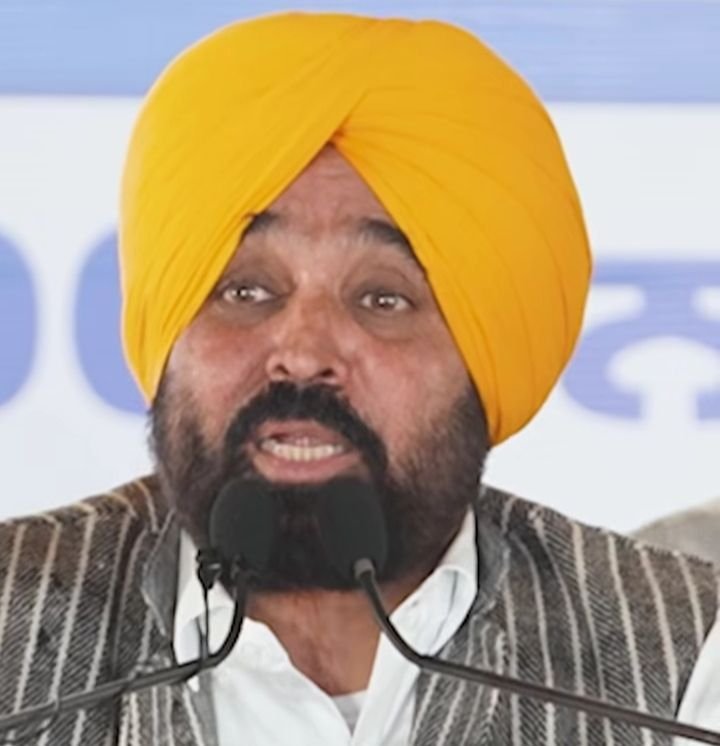
Punjab is taking steps towards modernising its rural electricity infrastructure, with an underground cabling initiative that aims to reduce dependence on overhead power lines, improve public safety and protect agricultural fields from damage caused by broken wires and electrical sparks. The model, which began in Chief Minister Bhagwant Singh Mann’s native village of Satoj, is being projected as a potential blueprint for wider implementation across the state.
The initiative reflects a development approach that places rural infrastructure, farmers’ concerns and everyday public convenience at the centre of governance. For villages where electricity wires pass over agricultural land, roads and residential areas, underground cabling could offer an important long-term solution to recurring problems associated with exposed and ageing power lines.
Satoj to Set the Blueprint for a Wire-Free Punjab
The pilot project, launched on May 19, 2026, carries an estimated investment of ₹8 crore. Under the plan, 384 electricity poles in Satoj will be removed, with the entire overhead distribution network shifted underground. The project covers seven kilometres of high-tension lines, 9.5 kilometres of low-tension lines and 41 kilometres of service cables connecting approximately 800 households.
The underground network will connect the 66-KV Satoj Grid through three 11-KV feeders and 28 transformers. Electricity connections from the transformers to meter boxes, and from meter boxes to individual households, will also be brought underground.
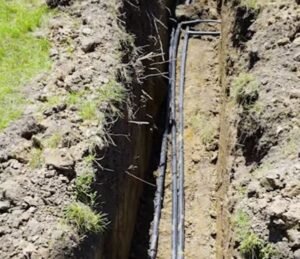
One of the important features of the initiative is the use of trenchless drilling technology. Instead of extensively digging up village roads, specialised machines will create underground passages for protective pipes, reportedly at a depth of around three feet. The cables will be placed inside high-density polyethylene (HDPE) conduits, designed to protect the network from external damage. According to the Chief Minister, the work was expected to be completed within 45 days, while the cables being used were stated to carry a 50-year warranty.
Relief for Farmers: Reducing Crop Fires and Electrical Accidents
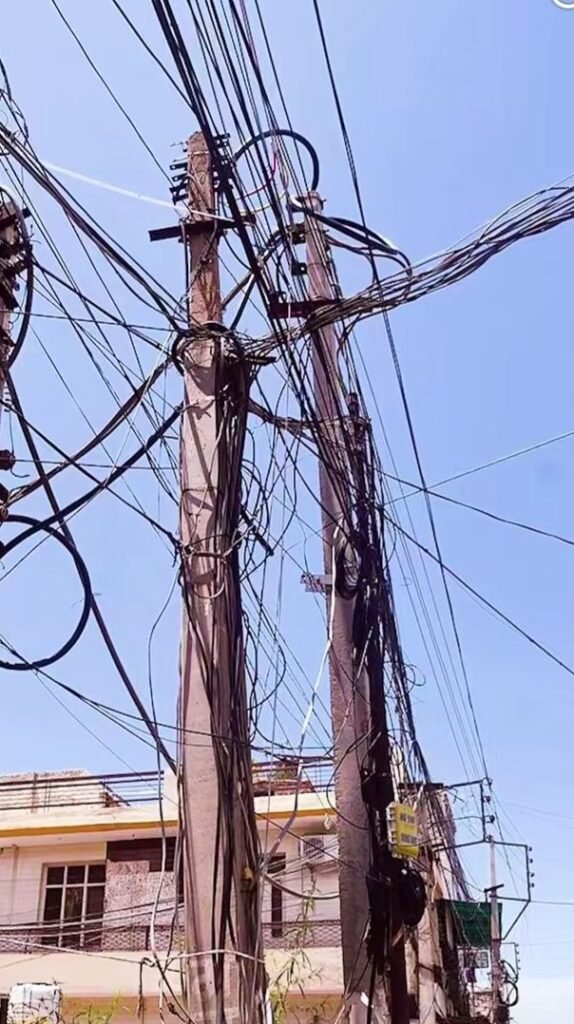
For Punjab’s farming community, the proposed shift has implications beyond the removal of electricity poles. Overhead wires passing through agricultural fields can become a serious hazard during sowing and harvesting operations. Tractors, combine harvesters and other farm machinery sometimes come dangerously close to electrical lines, creating risks of electrocution, equipment damage and fires.
Loose connections, damaged wires and electrical sparking during storms, heavy rain and strong winds can also ignite standing crops or harvested produce. Such incidents can cause substantial financial losses to farmers, particularly when they occur during the harvesting season.
Underground cabling is intended to reduce these risks by removing exposed electrical lines from fields and public spaces. It can also reduce weather-related damage to the distribution network and help minimise interruptions caused by falling poles and broken wires.
The Chief Minister has attached a deeply personal dimension to the initiative. Recalling the deaths of three young men from Satoj in electrocution incidents involving combine harvesters, Mann said the project was intended to prevent similar tragedies. He described the initiative as a tribute to those who lost their lives and stressed that farmers and their families should not have to face such avoidable dangers.
Modern Infrastructure and Better Living Conditions in Villages
The project also seeks to address a longstanding rural infrastructure problem: the network of electricity poles, support structures and tangled wires that occupies space along village roads and agricultural land.
Removing these structures could improve the appearance of villages, reduce obstructions and make public spaces safer. Underground cables are also less exposed to accidental contact, weather damage and certain types of electrical faults.
The government has projected additional benefits in terms of reducing electricity leakage and transmission and distribution losses. However, the actual improvement in supply reliability and technical losses will need to be assessed after the system becomes operational and performance data is available.
For ordinary residents, the intended benefits include safer streets, fewer exposed wires near homes, reduced disruption during storms and a more organised electricity distribution network.
From Satoj to the Wider State: The Road Ahead
By choosing his native village as the starting point, Chief Minister Bhagwant Mann has sought to demonstrate the feasibility of a different approach to rural electricity infrastructure. The government has presented the Satoj initiative as a pilot that can be replicated in other villages and urban areas across Punjab.
The larger challenge will be to take the model beyond the initial project. Punjab has thousands of villages, and extending underground cabling across the state would require substantial investment, detailed technical planning, coordination with the power distribution system and a phased implementation strategy.
The success of the Satoj experiment will therefore be important in determining how quickly and effectively the model can be expanded. Its performance will need to be judged on measurable outcomes, including electrical safety, reliability of supply, maintenance costs and protection of agricultural land.
For the Mann government, the initiative represents an attempt to link development with the everyday concerns of people. Rather than limiting rural infrastructure improvements to roads, buildings and conventional electricity connections, the project focuses on making the existing power network safer and more compatible with the needs of modern agriculture.
The underground electricity project in Satoj was formally launched in May 2026 as an ₹8-crore pilot. The technical details and proposed benefits above are based on the launch coverage and the Chief Minister’s statements. I could verify the launch and the stated intention to replicate the model, but not an official statewide implementation schedule or confirmation that the entire Satoj project has since been completed. Therefore, the claim that the initiative is already being extended successfully across Punjab should be treated as a government objective rather than a completed achievement.