


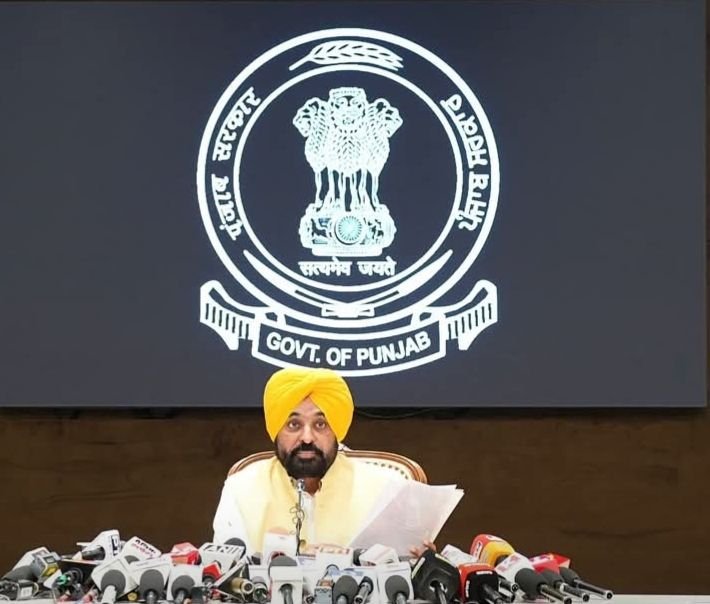
Saptrishi Soni : Chandigarh, In an initiative combining youth engagement, knowledge, Punjabi identity and a major cash incentive, Chief Minister Bhagwant Singh Mann is set to introduce the Punjab government’s ambitious ‘Punjab Da Crorepati’ competition, offering a prize of ₹1 crore to the winner. The initiative aims to bring young people closer to Punjab’s history, language, culture and heritage while giving them a platform to demonstrate their knowledge and abilities.
A dedicated government portal, [punjabdacrorepati.punjab.gov.in](https://punjabdacrorepati.punjab.gov.in), has been made available for the initiative. The competition is expected to attract considerable interest among students and young people across the state, particularly those who have a strong understanding of Punjabiyat, its historical legacy and its contribution to the country.
According to reports published on November 14, the competition will be open to participants between 15 and 30 years of age. Questions will focus on Punjab, the Punjabi language, the state’s history, traditions and cultural heritage. The ₹1-crore prize is expected to make it one of the most high-profile knowledge-based competitions introduced by the state government.
A knowledge platform with Punjabiyat at its heart
The central idea behind ‘Punjab Da Crorepati’ is to make knowledge of Punjab an opportunity for young people. The competition seeks to encourage participants to explore the state’s historical journey, its language, literature, cultural traditions, personalities and contributions to India’s social and national life.
Punjab has a rich legacy shaped by its freedom fighters, reformers, spiritual traditions, writers, poets, farmers, soldiers and cultural icons. Connecting the younger generation with this heritage is particularly important at a time when rapid social and technological changes are influencing the interests and aspirations of young people.
By placing Punjab’s identity and knowledge at the centre of a high-value competition, the Mann government is seeking to make learning more engaging and accessible to a wider section of youth.
Digital platform to manage registration and competition
Preparations for the competition have also involved developing a digital mechanism for registration and administration. A report published earlier this month said the Good Governance and Information Technology Department had been assigned responsibility for developing the mobile application and web portal infrastructure.
The proposed system includes online registration, document verification, a secure question-bank management facility, online and offline competition rounds, automated scoring, monitoring dashboards and an online grievance-redressal mechanism. The system is intended to ensure that questions are verified, participation is properly recorded and the different stages of the competition can be monitored.
The dedicated portal is an important part of this framework. However, the detailed competition rules, registration deadlines, selection criteria, round-wise structure, prize-distribution conditions and other participation guidelines should be treated as pending official confirmation unless specifically published on the portal or announced by the government.
A political opportunity for Mann government ahead of 2027 elections
The launch also comes at a politically significant time for Punjab. With the 2027 Assembly elections approaching, the Bhagwant Mann government is increasingly placing youth engagement, public outreach, welfare initiatives and development programmes at the centre of its governance narrative.
For the Aam Aadmi Party, young voters represent an important constituency. Employment opportunities, education, migration, entrepreneurship and the future of Punjab remain among the issues that are likely to shape the political debate in the state.
In this context, ‘Punjab Da Crorepati’ gives the Mann government an opportunity to reach young people through a programme that is not limited to conventional political messaging. It connects the government with students and aspiring participants through education, competition and regional identity.
The initiative may also help the ruling party communicate a broader message that Punjab’s development must include investment in the intellectual, cultural and creative potential of its younger generation.
However, the competition should be assessed primarily on its implementation, transparency and opportunities offered to participants. Its timing before the Assembly elections gives it political relevance, but there is no verified evidence that it has been designed as an election-specific programme.
The real test will be equal opportunity and transparent selection
The announcement of a ₹1-crore prize is certain to generate excitement, but the credibility of the initiative will ultimately depend on how fairly and transparently it is conducted.
Young people from villages, smaller towns, government schools, colleges and economically weaker backgrounds must have a genuine opportunity to participate. The digital registration system should be simple, accessible and supported by adequate assistance for those who face connectivity or technical difficulties.
The question bank, eligibility conditions, evaluation process, selection of finalists and final results will need to follow clearly defined rules. Special attention will also be necessary for participants aged 15 to 17, with appropriate safeguards and consent requirements for minors.
For Chief Minister Bhagwant Mann, the initiative offers an opportunity to turn the state’s cultural and historical knowledge into a platform for youth participation. If implemented with fairness and wide outreach, it could become more than a prize competition: a state-wide movement encouraging young Punjabis to learn about their roots, take pride in their identity and engage more actively with the future of their state.
The larger message is significant: Punjab’s youth should not be viewed merely as a vote bank or a workforce seeking opportunities outside the state. They are also the custodians of its language, heritage, knowledge and future. Whether ‘Punjab Da Crorepati’ can translate that message into a meaningful and inclusive public programme will be judged by its execution in the coming months.