

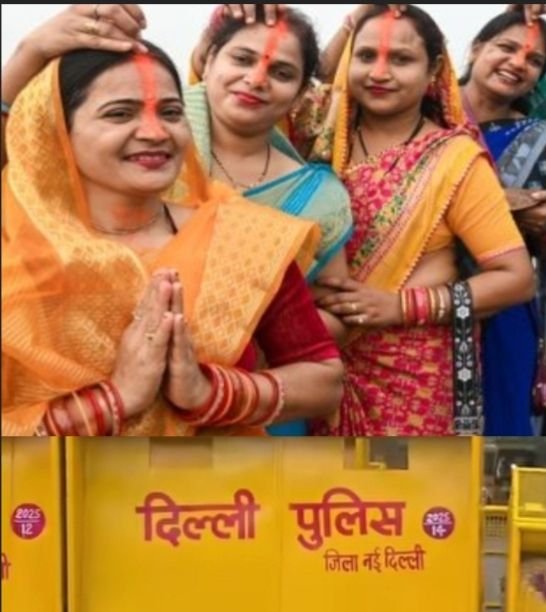
New Delhi : Delhi Traffic Police has announced traffic restrictions and regulated movement on several roads leading to and surrounding the Yamuna river ghats from 2 PM on Sunday until 8 AM on Monday in view of the large gatherings expected for Chhath Puja celebrations.
The arrangements have been made to facilitate the movement of devotees who will assemble along the Yamuna banks on November 15 and 16 to offer prayers to the Sun God. With thousands of people expected to visit designated riverfront locations, traffic movement will be managed according to crowd density and prevailing road conditions to ensure public safety and prevent congestion.
Among the locations expected to witness substantial gatherings are Ram Ghat, Soor Ghat and Bajrangi Ghat in the Wazirabad area, along with Vasudev Ghat near ISBT and Hathi Ghat in the I.P. Estate area.
The traffic restrictions are likely to affect Bundh Road, Wazirabad Road, Vikas Marg, roads around I.P. Estate and connecting routes leading towards the Yamuna ghats. Traffic movement on these stretches will be regulated whenever required, depending on the arrival and movement of devotees.
Delhi Traffic Police has urged motorists to remain patient, follow instructions issued by traffic personnel and avoid unnecessary travel through the affected areas during the restricted period. Commuters have also been advised to allow additional time for their journeys and cooperate with police teams deployed to manage the crowds.
Chhath Puja: A festival of faith, nature and gratitude to the Sun God
The traffic arrangements coincide with one of the most significant traditional festivals observed by communities from Bihar, Jharkhand, eastern Uttar Pradesh and other parts of the country. Chhath Puja is dedicated to Surya, the Sun God, and Chhathi Maiya, and is celebrated with deep devotion, discipline and a strong connection to nature.
The festival is particularly associated with gratitude for the Sun’s role in sustaining life, providing energy and supporting agriculture and human existence. Unlike many other Hindu festivals, Chhath involves a distinctive form of worship in which devotees offer prayers directly to the setting and rising Sun, usually standing in rivers, ponds or other water bodies.
The principal rituals include offering Arghya to the setting Sun during the evening and again to the rising Sun the following morning. Devotees, especially women, observe rigorous fasting, often without food and water, as an expression of faith, devotion and thanksgiving. Families prepare traditional offerings, including thekua, seasonal fruits and other items, which are presented in bamboo baskets during the prayers.
Chhath is observed over four days, beginning with Nahay Khay, followed by Kharna, the evening offering known as Sandhya Arghya, and concluding with Usha Arghya at sunrise. The festival brings families and communities together, with riverbanks and water bodies transformed into centres of collective worship.
In Delhi, where a large population from Bihar, eastern Uttar Pradesh and Jharkhand celebrates Chhath, the Yamuna ghats become important gathering points. The administration’s traffic arrangements are therefore aimed at allowing devotees to perform their rituals safely while keeping essential road movement manageable.
As the celebrations draw large crowds, authorities have appealed to visitors to maintain cleanliness around the ghats, follow safety instructions and cooperate with the arrangements made by local administration and traffic personnel.
This is a web-generated news report based on the supplied traffic advisory and general information about Chhath Puja, rewritten and structured for digital news publication.