
The concluding day of the Haryana Vidhan Sabha’s budget session witnessed intense political confrontation, sharp exchanges, and repeated disruptions, reflecting the deepening divide between the ruling government led by Nayab Singh Saini and the opposition spearheaded by Bhupinder Singh Hooda. What was expected to be a routine closure of legislative proceedings instead turned into a high-voltage political battleground, largely dominated by the fallout of the recent Rajya Sabha elections.
From the very beginning of the day, the tone inside and outside the House remained charged. Opposition legislators raised slogans and targeted the government over alleged “subversion of democratic norms” during the Rajya Sabha polls, while treasury benches strongly rejected these claims. The debate soon escalated into a broader political narrative, with both sides accusing each other of undermining democratic values.
The Rajya Sabha election controversy remained the central flashpoint. Congress leaders alleged manipulation, cross-voting inducements, and irregularities, while the government maintained that the election process was transparent and democratic. Chief Minister Saini categorically denied that the ruling party had backed any independent candidate, asserting that such claims were politically motivated and aimed at deflecting attention from the opposition’s internal divisions.
The House witnessed frequent disruptions, slogan-shouting, and even a walkout by Congress MLAs, underlining the intensity of the political confrontation. The absence and silence of some legislators linked to cross-voting further added to the tension, with the opposition demanding accountability within and outside the House.
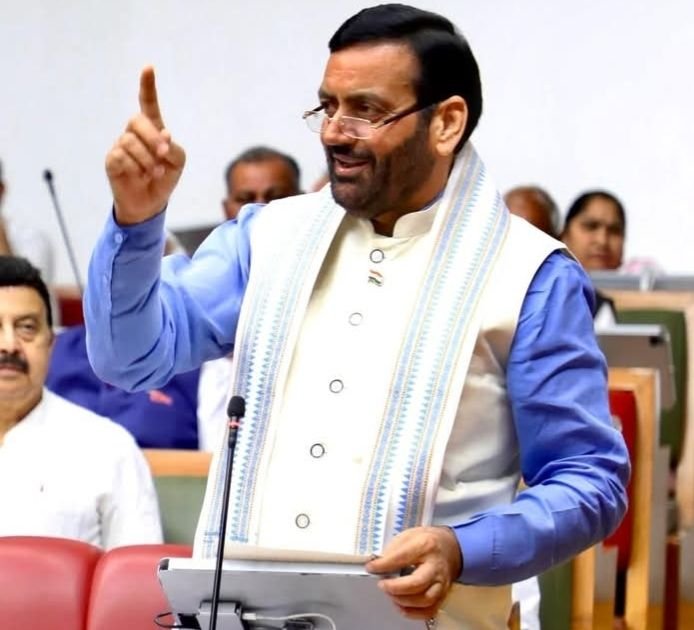
Despite the chaos, Chief Minister Saini used the platform to mount a strong counterattack against the opposition. He accused them of indulging in “headline politics” and failing to engage constructively on key governance issues such as the budget, development policies, and welfare initiatives. According to him, the opposition was more focused on creating noise rather than participating in meaningful legislative debate.
Throughout the session, the government highlighted its achievements and policy direction. Saini defended the state’s economic position, citing comparative fiscal indicators and ongoing development projects. He also pointed to initiatives in employment generation, infrastructure, irrigation, and law enforcement, asserting that the government remains committed to long-term growth and stability.
On the other hand, the opposition continued to question the government’s claims, raising concerns over unemployment, debt levels, law and order, and implementation gaps in welfare schemes. The Leader of Opposition and Congress legislators repeatedly accused the government of making announcements without delivering results on the ground. The tone of the debate suggested that the Assembly session had effectively become a precursor to larger political battles ahead.
One of the key takeaways from the session was the growing centrality of the Rajya Sabha election outcome in Haryana’s political discourse. The closely contested election, marked by cross-voting and invalid votes, has left both sides politically defensive and aggressive at the same time. While the Congress managed to secure a seat, the narrow margin and internal dissent have become major talking points, even as the BJP projected the outcome as a reflection of opposition disunity.
Amid the political noise, legislative business did continue, with several bills being passed before the House was adjourned sine die. However, the overshadowing political confrontation ensured that governance discussions remained secondary to the ongoing war of narratives.
The final day proceedings also reflected a broader shift in Haryana politics, where legislative forums are increasingly becoming arenas for direct political messaging. The aggressive stance adopted by both the ruling party and the opposition indicates that political polarization is likely to intensify in the coming months.
As the curtain falls on this budget session, the takeaway is clear: the Haryana Assembly has moved beyond routine governance debates into a phase of heightened political contestation. For Chief Minister Nayab Singh Saini, the session offered an opportunity to assert leadership and defend his government’s record. For the opposition, it served as a platform to challenge the government and consolidate its narrative.
With the echoes of the Rajya Sabha controversy still resonating, the political temperature in Haryana remains high, and the developments inside the Assembly are expected to have a lasting impact on the state’s political trajectory in the months ahead.