
Shimla: The Himachal Pradesh government has announced a major expansion of professional healthcare education with the establishment of a new Allied and Healthcare College in Hamirpur, offering 330 seats across six specialised courses. The initiative, aimed at creating a larger pool of trained healthcare professionals within the state, is expected to strengthen medical services while opening new career opportunities for young people.
The new institution will offer undergraduate and technical programmes in key allied healthcare disciplines. These will include 60 seats each in B.Sc. Laboratory Sciences, B.Sc. Radiology, B.Sc. Anesthesia, B.Sc. Optometry and B.Sc. Physiotherapy, along with 30 seats for the Dialysis Technician programme.
The state government has sanctioned Rs. 6.87 crore for the purchase of machinery, equipment and other essential infrastructure required to make the Hamirpur college operational. The institution is intended to provide students with access to specialised professional training within Himachal Pradesh, reducing the need for aspiring healthcare professionals to move outside the state for education.
The expansion comes at a time when hospitals are increasingly dependent on trained technical and allied healthcare personnel to support doctors and specialists in delivering modern medical care. Professionals in areas such as laboratory sciences, radiology, anesthesia, physiotherapy, optometry and dialysis play an important role in diagnosis, treatment and patient care.
Radiation Therapy Technology Courses at Shimla and Tanda
In another significant step, the government has decided to introduce the Bachelor of Radiation Therapy Technology programme at two of Himachal Pradesh’s leading government medical institutions — Indira Gandhi Medical College (IGMC), Shimla, and Dr. Rajendra Prasad Government Medical College (Dr. RPGMC), Tanda.
The new course will begin from the academic session 2026-27, with 30 seats being offered annually at each institution.
The introduction of radiation therapy training is particularly significant because of the growing need for specialised professionals involved in cancer treatment. Radiation therapy is a highly technical field requiring trained personnel to operate sophisticated equipment and assist in the delivery of precise treatment.
By introducing the programme within the state, the government aims to build specialised human resources locally while expanding the range of healthcare education available to students in Himachal Pradesh.
Building on Earlier Expansion
The latest decisions are part of a broader effort by the state government to increase the capacity of allied healthcare education.
In 2025, the government had already substantially enhanced the intake of several professional courses at IGMC Shimla and Dr. RPGMC Tanda.
At IGMC Shimla, the number of seats in B.Sc. Medical Laboratory Technique, B.Sc. Radio and Imaging, and B.Sc. Anaesthesia and Operation Theatre Technique was increased from 10 to 50 seats in each course.
Similarly, at Dr. RPGMC Tanda, the intake capacity for B.Sc. Medical Laboratory Technique, B.Sc. Radiology and Imaging, and B.Sc. Anaesthesia and Operation Theatre Technique was raised from 18 to 50 seats each.
The latest expansion therefore represents another phase in the state’s effort to create a stronger educational ecosystem for allied and technical healthcare professionals.
Focus on Skilled Healthcare Workforce
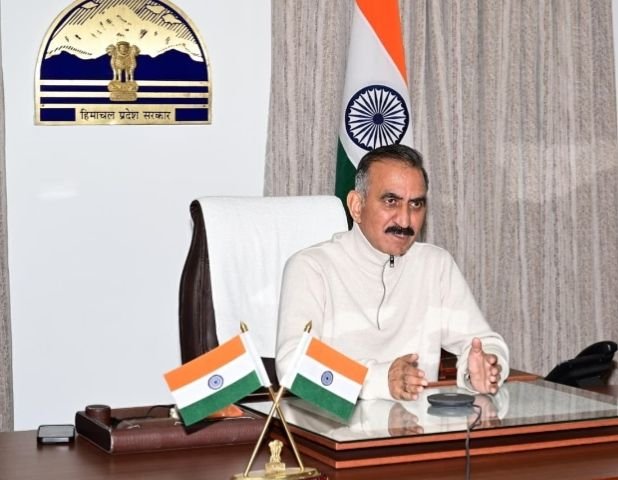
Chief Minister Thakur Sukhvinder Singh Sukhu said the government was committed to improving the quality and availability of specialised healthcare services while simultaneously creating new avenues of professional education and employment for the state’s youth.
He emphasised that allied and healthcare professionals form an essential part of the modern healthcare system and provide critical support to doctors, surgeons and other medical specialists.
According to the Chief Minister, the new college at Hamirpur and the radiation therapy programmes at IGMC Shimla and Dr. RPGMC Tanda will significantly widen access to specialised training within Himachal Pradesh.
The government’s approach, he said, was not limited to expanding medical infrastructure but also focused on developing the skilled workforce required to operate and sustain modern healthcare facilities.
Keeping Students and Patients Closer to Home
One of the key advantages of expanding allied healthcare education within Himachal Pradesh will be the opportunity for students to pursue specialised professional courses without having to leave the state.
For families, this could mean lower education and living costs compared with sending students to institutions outside Himachal Pradesh. For the healthcare system, locally trained professionals could help address shortages in specialised technical manpower.
The government also expects the expansion to contribute to employment generation, particularly for young people seeking professional careers in the rapidly evolving healthcare sector.
For patients, the availability of a trained workforce is equally important. Modern hospitals increasingly require specialists and technical personnel in diagnostic imaging, laboratory services, anesthesia, dialysis, physiotherapy, optometry and radiation therapy. Strengthening training capacity in these areas could ultimately improve the availability and efficiency of specialised services within the state.
A Wider Healthcare Education Strategy
The Hamirpur college, with its 330 seats, will significantly increase the number of students who can enter allied healthcare professions through government-supported education in the state. Combined with the expansion of existing programmes at IGMC Shimla and Dr. RPGMC Tanda, the move signals a broader strategy to align healthcare education with the changing needs of hospitals and patients.
For the Sukhu government, the policy has a dual objective: strengthening Himachal Pradesh’s healthcare delivery system and creating new professional pathways for its youth.
The Chief Minister said the government would continue investing in medical education infrastructure and developing skilled manpower in emerging healthcare disciplines. The long-term objective, he said, was to ensure that people across Himachal Pradesh have access to specialised medical services closer to their homes while young people have greater opportunities to build careers within the state.
The new initiatives thus place allied healthcare education at the centre of Himachal Pradesh’s efforts to modernise its medical infrastructure — combining professional education, employment generation and improved patient care in a single policy push.