
New beneficiaries to receive 5 kg of free wheat every month along with ‘Meri Rasoi’ food kits; widows, daily-wage workers, SC families and economically weaker sections given priority
Chandigarh : In a major initiative aimed at strengthening food security and expanding the reach of welfare schemes, Punjab Chief Minister Bhagwant Singh Mann on Monday announced the issuance of 10 lakh new smart ration cards for deserving families across the state. The cards have been issued through a transparent, technology-driven process based on the principle of ‘No Cash, No Favour’, aimed at eliminating middlemen, political recommendations and discrimination in accessing government benefits.
The newly selected beneficiaries will receive five kilograms of free wheat every month, along with essential food items under the state government’s ‘Meri Rasoi’ scheme. The ration kits will include pulses, sugar, salt, turmeric and mustard oil, providing additional support to economically vulnerable households.
Announcing the decision, Mann said the government would deliver the new smart ration cards directly to beneficiaries’ homes, ensuring that eligible families do not have to make repeated visits to government offices or face unnecessary procedural difficulties.
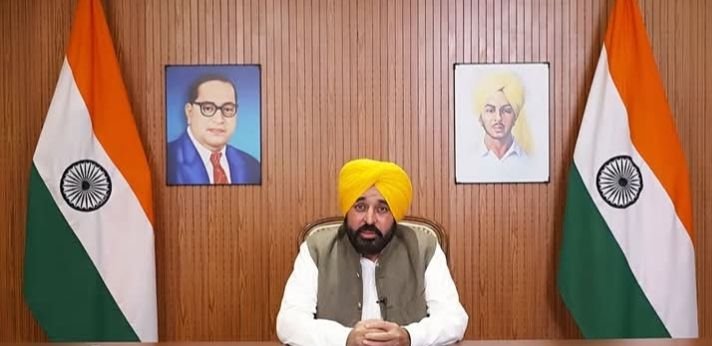
In a post on social media platform X, the Chief Minister described the initiative as a major step towards ensuring that welfare benefits reach those who genuinely need them. He urged beneficiaries to collect their ‘Meri Rasoi’ kits from designated ration depots by showing the SMS received on their mobile phones. He also advised them to complete their e-KYC formalities to continue receiving the monthly free wheat entitlement.
Mann reiterated that his government was committed to ensuring that no deserving family in Punjab remained deprived of food security and essential government assistance.
Explaining the circumstances behind the decision, the Chief Minister said that obtaining ration cards had become a difficult process for ordinary people under the previous system, with many genuine beneficiaries losing their entitlements. Out of the 1.48 crore ration cards allocated to Punjab by the Union Government, approximately 10 lakh cards had been deleted for various reasons.
To address the situation and restore benefits to eligible households, the state government decided to issue 10 lakh fresh smart ration cards.
According to Mann, the selection process has particularly focused on vulnerable sections, including widowed women, daily-wage earners, Scheduled Caste families and households belonging to economically weaker sections. He alleged that the earlier system often favoured politically connected individuals, leaving many genuinely needy families struggling to secure ration cards.
The Chief Minister said the new selection mechanism was designed to ensure that benefits were extended strictly on the basis of eligibility rather than political influence or personal recommendations. A significant proportion of the newly selected beneficiaries belong to Scheduled Caste communities, while around four lakh of the 10 lakh beneficiaries are labourers.
Opportunity for 1.25 lakh applicants to correct address details
In a further relief measure, the government has decided to provide an opportunity to approximately 1.25 lakh applicants whose applications contained incorrect address details to rectify their information.
Mann said the correction facility would help the authorities verify their eligibility and ensure that genuine applicants were not excluded merely because of errors in their submitted details.
He also appealed to eligible families to review and complete their application formalities so that their ration cards could be issued without further complications.
Digital selection process to eliminate middlemen
The government said the latest exercise follows a fully digital ration card initiative launched in July 2026, through which the application and beneficiary-selection mechanism was redesigned.
For the first time, the entire exercise was conducted without intermediaries. Applications were received online as well as through Sewa Kendras and Common Service Centres. The process included SMS-based approval notifications, door-to-door verification by district administrations and a scoring-based selection mechanism.
According to the government, these measures were introduced to improve transparency, ensure fair selection and minimise the possibility of political interference in the distribution of welfare benefits.
The administration has also maintained a waiting list of families who could not meet the required scoring criteria during the first phase. These applicants will be considered in the second phase, indicating that the government intends to extend the scheme’s coverage further.
‘Meri Rasoi’ scheme to cover 48 lakh families
The expansion of the smart ration card network is also expected to strengthen the state’s ‘Meri Rasoi’ food security initiative.
The scheme is already benefiting approximately 38 lakh families, and the addition of another 10 lakh beneficiaries will take its coverage to nearly 48 lakh households.
Under the expanded arrangement, eligible families will receive essential food commodities through monthly ration kits in addition to five kilograms of free wheat. The government believes that this assistance will help reduce household expenditure and improve access to basic nutritional requirements, particularly for children and vulnerable family members.
Four lakh labourers among new beneficiaries
The inclusion of approximately four lakh labourers among the newly selected beneficiaries reflects the government’s focus on households dependent on daily wages and irregular sources of income.
For these families, regular access to subsidised or free essential food supplies can provide meaningful financial relief, particularly amid rising household expenses.
Mann said the government’s approach was not limited to announcing welfare measures but was directed towards bringing tangible improvements to people’s everyday lives.
Emphasising the social responsibility of the state, the Chief Minister said Punjab, the sacred land of Gurus and Peers, must ensure that no individual goes hungry.
He maintained that the government would personally ensure that ration cards reached beneficiaries’ homes and that every eligible household received its rightful share of welfare assistance.
Reiterating his government’s commitment, Mann said the objective was to improve living standards rather than restrict governance to slogans. He added that the administration would continue working for all sections of society and would make every effort to ensure that no deserving family was deprived of its entitlements.