
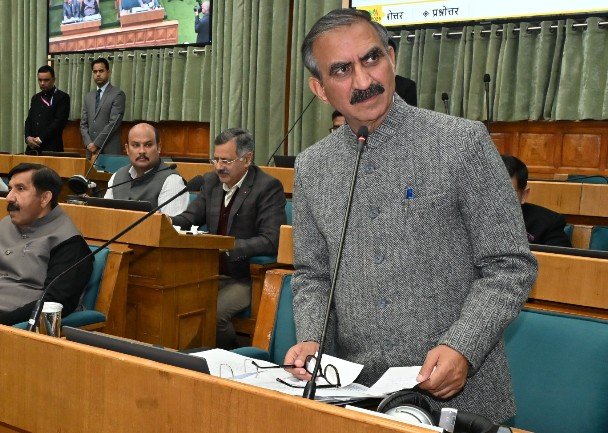
The ongoing budget session of the Himachal Pradesh Legislative Assembly has turned into a high-stakes political arena, with the proposed fuel cess emerging as the central point of confrontation between the ruling Congress government and the opposition Bharatiya Janata Party. At the centre of the debate is the government’s move to introduce a legislative provision enabling a cess on petrol and diesel, a step that has triggered intense political reactions and public scrutiny.
Chief Minister Sukhvinder Singh Sukhu has sought to clarify the government’s position, asserting that no immediate imposition of the cess has taken place. He emphasised that the amendment bill merely provides a legal framework, and the final decision regarding implementation remains pending. According to the Chief Minister, the matter is still subject to procedural approvals and will be guided by broader fiscal considerations and public interest.
However, the opposition, led by Jai Ram Thakur, has accused the government of attempting to shift financial burdens onto citizens at a time when inflationary pressures are already impacting households. The BJP has framed the proposal as a sign of fiscal mismanagement, arguing that the state government is resorting to indirect taxation rather than addressing structural inefficiencies.
The debate reflects deeper economic challenges confronting Himachal Pradesh. The hill state has been grappling with limited revenue generation capacity, rising expenditure commitments, and a perceived decline in central financial support. These constraints have forced the government to explore alternative revenue streams, including targeted levies and reforms in taxation frameworks.
In response to criticism, the Chief Minister has defended the move as part of a broader fiscal strategy aimed at sustaining welfare programs. He pointed out that the government remains committed to supporting vulnerable sections, including widows, orphans, and economically weaker households, and that additional revenue sources are essential to maintain these commitments without compromising development priorities.
Beyond the fuel cess controversy, the Assembly session has also seen discussions on governance reforms and environmental targets. The government has reiterated its commitment to increasing forest cover and improving legislative efficiency through performance-based initiatives. The high volume of questions and debates during the session indicates an active legislative environment, with both sides preparing for future electoral battles.
Political observers note that the intensity of the debate signals the beginning of a prolonged political contest in the state. With both the Congress and the BJP seeking to consolidate their narratives, issues such as taxation, welfare delivery, and fiscal management are likely to dominate the political discourse in the coming months.
The fuel cess debate, therefore, is not merely a policy issue but a reflection of the broader economic and political dynamics shaping Himachal Pradesh. As the government navigates fiscal constraints while attempting to maintain public trust, the outcome of this debate could have far-reaching implications for both governance and electoral politics in the state.