
CM Bhagwant Mann says new services will benefit rural residents and students, generate jobs for 150 youth; buses to operate across nine depots
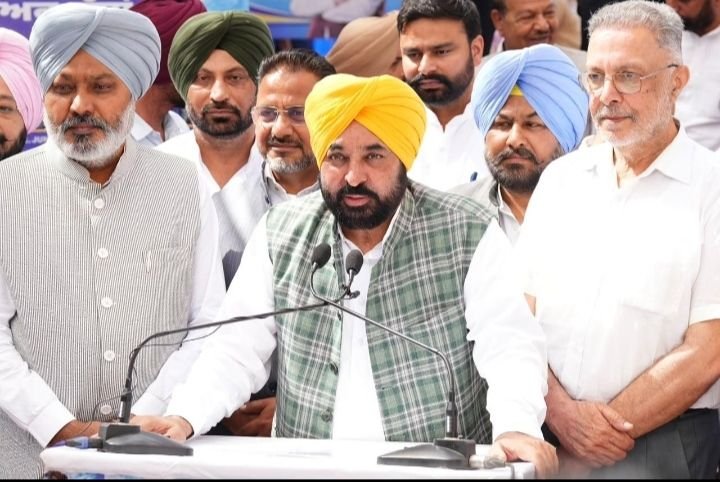
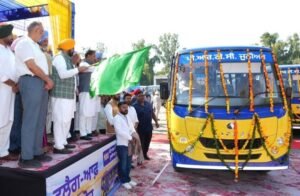
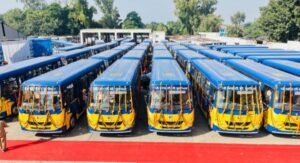
PATIALA, Punjab Chief Minister Bhagwant Singh Mann on Monday flagged off 100 new 29-seater mini buses in Patiala, announcing a fresh push to improve public transport in rural areas and strengthen links between villages, towns and cities. He also announced that another 309 full-size buses would be inducted into the fleet next month.
Positioning the initiative as part of the state government’s broader rural development agenda, Mann said reliable bus services were essential for ensuring that residents of villages could access education, employment, healthcare, markets and other essential services without facing transport difficulties.
Drawing a parallel with the government’s efforts to extend canal water to agricultural fields, the Chief Minister said his administration wanted to ensure that public transport reached every village in Punjab. Development, he maintained, should benefit people in rural and urban areas alike.
Mann criticised previous governments for discontinuing bus services on several village-to-city routes, saying the resulting gaps had made everyday travel difficult for residents. He said the present government was working to improve rural connectivity so that a person’s place of residence did not become an obstacle to opportunity.
“Public transport is more than a means of travelling. For rural communities, it is a vital link to education, work and essential services,” the Chief Minister said, highlighting the importance of dependable services for students, workers, small traders and families.
Nine depots to operate the new mini buses
The 100 new mini buses will be deployed on rural and small-town routes through nine depots of the Pepsu Road Transport Corporation (PRTC), according to the government’s announcement. The allocation is intended to extend services across different parts of the state and improve access to larger urban centres.
The depot-wise distribution is as follows:
- Patiala: 25 buses
- Bathinda: 15 buses
- Chandigarh: 15 buses
- Sangrur: 10 buses
- Barnala: 9 buses
- Budhlada: 8 buses
- Kapurthala: 7 buses
- Faridkot: 6 buses
- Ludhiana: 5 buses
The new services are expected to make daily commuting more convenient for people travelling from villages to nearby towns and cities. Students attending schools and colleges, in particular, stand to benefit from improved transport availability, while workers and small business owners will have additional options for reaching workplaces and markets.
Mann also pointed out that around 3,000 privately operated mini buses were already serving routes connecting Punjab’s villages, towns and cities. The addition of the new vehicles, alongside the planned induction of larger buses, is intended to further expand the state’s public transport network.
Transport expansion linked to employment generation
The Chief Minister said the induction of the 100 mini buses would create employment opportunities for approximately 150 drivers and conductors. At the Patiala event, offer letters were also handed over to 15 young people selected for jobs in the transport department.
He said public infrastructure investment should deliver benefits beyond the services it provides, including employment and livelihood opportunities. The planned addition of 309 full-size buses next month, he added, would further strengthen the fleet and expand transport capacity.
In a message posted on X, Mann said the new mini buses were being introduced specifically to improve village-to-city connectivity. He also reiterated the plan to add 309 larger buses in the coming month.
Focus on rural access and balanced development
The Chief Minister said stronger transport links could support Punjab’s rural economy by helping residents reach workplaces, educational institutions, markets and essential facilities more easily. Better connectivity, he argued, was an important part of ensuring that rural communities remained connected to the state’s wider economic growth.
He said development should not be judged solely by the infrastructure created in major cities, but also by whether it improves everyday life for people in villages and smaller towns.
The government’s latest transport initiative places rural mobility and public access at the centre of its expansion plans. Its impact will depend on how effectively the buses are deployed, how well the services match local travel needs and whether regular operations are maintained on the designated routes.
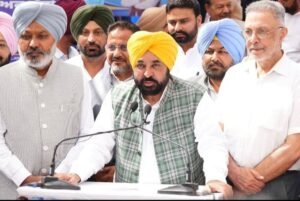
Transport Minister Harpal Singh Cheema, Health Minister Dr Balbir Singh and other officials were present at the flag-off ceremony in Patiala.
Mann reiterated that the government would continue working to expand public transport and improve connectivity across Punjab, with the stated aim of ensuring that residents in rural areas have better access to education, employment and essential services.