
Praveen Soni:
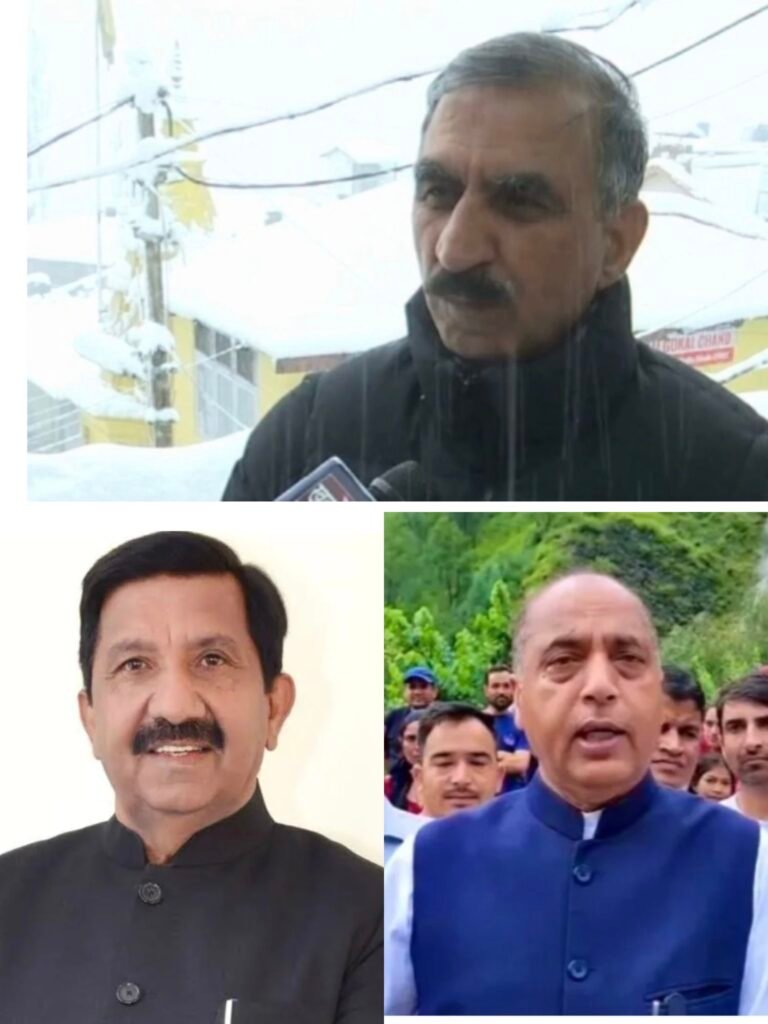
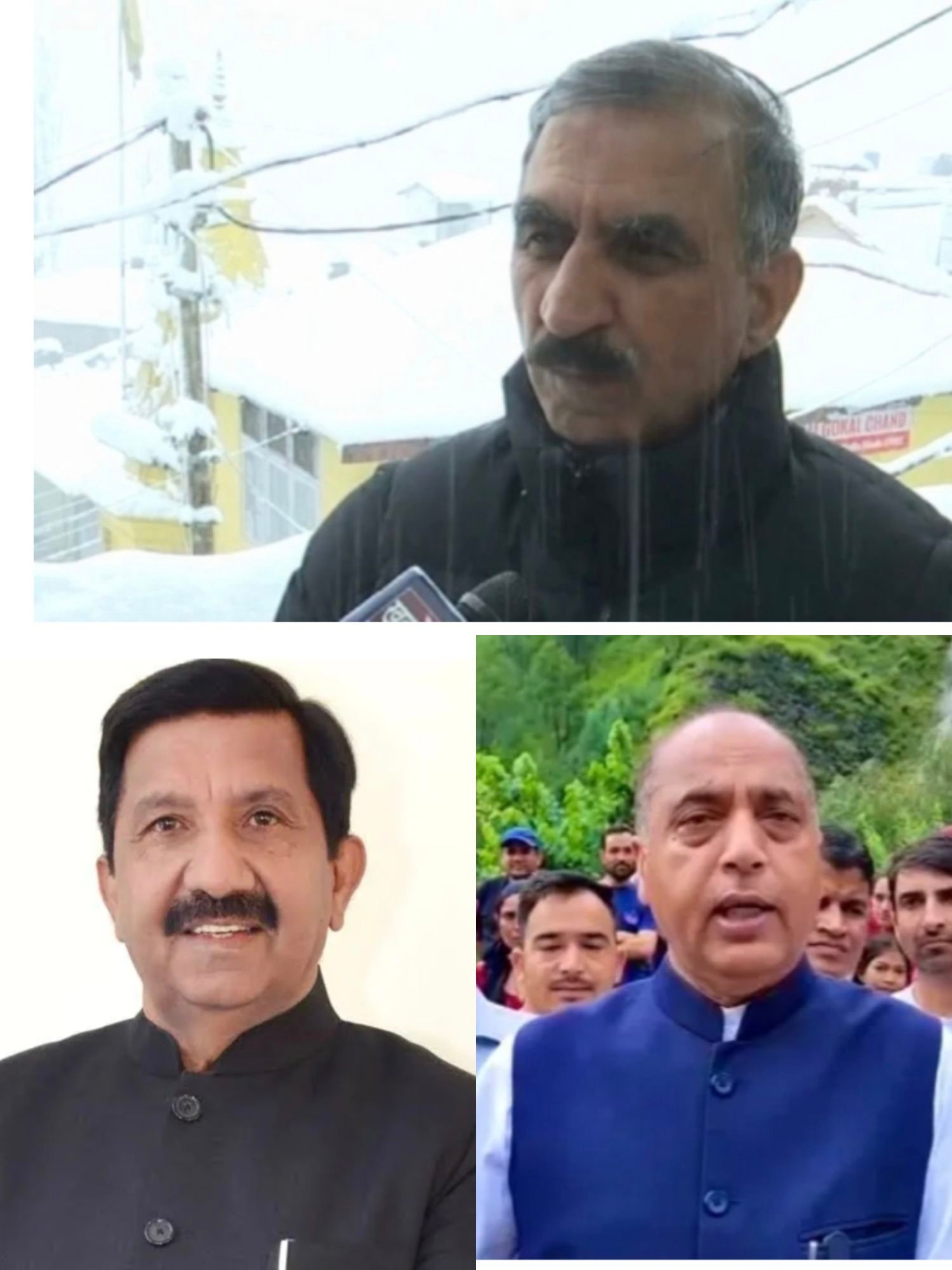
Himachal Pradesh’s political landscape has once again been stirred by a wave of allegations, counter-allegations and speculation, placing Deputy Chief Minister Mukesh Agnihotri at the centre of a renewed political storm. What began as a statement by former Chief Minister and Leader of Opposition Jai Ram Thakur has now expanded into a broader debate—one that is not limited to opposition versus government, but also touches upon perceived internal fault lines within the ruling Congress itself.
In recent weeks, the opposition BJP has intensified its rhetoric against Mukesh Agnihotri, alleging impropriety and hinting at internal discord within the Congress government. Jai Ram Thakur’s claim during a rally in Mandi—that Chief Minister Sukhvinder Singh Sukhu had ordered a vigilance inquiry against his own deputy and later suppressed it—sent ripples across political circles. The allegation was dramatic enough to capture public attention, yet conspicuously light on documentary proof or official corroboration.
As the issue gained traction, the Chief Minister was compelled to address the matter directly. Sukhvinder Singh Sukhu categorically dismissed the claim as misleading and politically motivated, stating unequivocally that no vigilance or any other form of inquiry had ever been ordered against Mukesh Agnihotri. He further clarified that while complaints against public representatives are routinely received by the government, only those backed by substantive facts and evidence are taken forward. Frivolous or unsubstantiated complaints, he said, are dealt with strictly as per established norms and quietly closed.
This clear rebuttal blunted the immediate impact of the opposition’s charge. Yet, in the realm of politics, perception often travels faster than proof. Even in the absence of concrete evidence, the allegation has succeeded in generating debate—not just about Agnihotri’s position, but about the internal dynamics of the Congress government in Himachal Pradesh.
Adding complexity to the narrative is the long-discussed issue of factionalism within the state Congress. Political observers have long noted the existence of two broad camps: one aligned with Chief Minister Sukhvinder Singh Sukhu, and the other traditionally associated with the legacy of the late Virbhadra Singh, often referred to as the Raja Virbhadra Singh group. Mukesh Agnihotri, by virtue of his political journey and regional influence, is widely perceived to have strong roots in the latter camp, even as he serves as Deputy Chief Minister in Sukhu’s cabinet.
This perceived duality has fuelled speculation about an underlying rift between the Chief Minister and his deputy. While both leaders have publicly projected unity and denied any internal discord, opposition leaders have repeatedly attempted to exploit these supposed cracks. The narrative being pushed suggests a power struggle within the Congress, with rival groups vying for influence, control and political future in the state.
However, a closer look at the government’s functioning tells a more nuanced story. During times of crisis—particularly natural disasters—the coordination between the Chief Minister and Deputy Chief Minister has been visible and, at times, publicly acknowledged even by opposition members on the floor of the Assembly. Mukesh Agnihotri’s role during such periods has previously drawn praise across party lines, making the sudden escalation of allegations appear politically timed rather than evidence-driven.
From the BJP’s perspective, the strategy appears twofold. On the surface, it aims to corner a senior Congress leader through allegations. Beneath that, it seeks to amplify any hint of internal division within the ruling party, hoping to weaken the government’s cohesion and credibility in the eyes of the public. By invoking the idea of a suppressed vigilance inquiry, the opposition attempted to project not only alleged wrongdoing but also mistrust and infighting at the highest levels of the government.
For the Congress, the challenge lies in managing both the external attack and the internal perceptions. While the Chief Minister’s firm denial has closed the immediate chapter on the alleged inquiry, the broader issue of factional balance remains a sensitive one. The legacy of Raja Virbhadra Singh continues to shape Congress politics in Himachal Pradesh, and the Sukhu leadership is still in the process of consolidating authority across all sections of the party.
Political analysts point out that such episodes are not uncommon in states where strong regional leaders coexist within the same party structure. Allegations, even when unproven, are often used as tools to test alliances, shift narratives and gauge public response ahead of future electoral battles.
As of now, the allegations against Mukesh Agnihotri remain exactly what the Chief Minister described them as—claims without substantiated proof. Yet, the political storm they have generated underscores a deeper reality: Himachal Pradesh politics is as much about managing perceptions and power equations as it is about governance. Whether the opposition can translate rhetoric into credible action, or whether the ruling Congress can maintain internal equilibrium amid constant pressure, will shape the state’s political discourse in the months to come.