
Praveen Soni।
Beyond Condolences: What a Single Bus Tragedy Reveals About Governance, Accountability in Himachal Pradesh
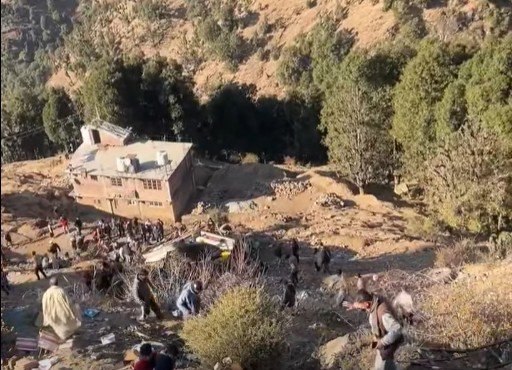
The recent fatal bus accident in Himachal Pradesh is not merely a story of road failure or administrative oversight. It has emerged as a defining moment that brings together multiple fault lines in the state’s governance—uneven development, weak accountability mechanisms, fragile healthcare delivery in remote regions, and the larger political struggle between the state and the Centre. While public grief has been intense, the tragedy has also triggered uncomfortable but necessary questions about how governance is practiced on the ground.
The Sukhvinder Singh Sukhu government has repeatedly positioned itself as a government committed to the upliftment of the common citizen. Several welfare schemes, fiscal corrections, and reform-oriented decisions indicate intent. However, intent alone is no longer sufficient. The scale of systemic challenges exposed by this incident demands faster execution, wider coverage, and more uniform development across all regions of the state.
Development Cannot Be Selective
One of the core issues highlighted by the tragedy is regional imbalance. Infrastructure development, healthcare access, and public transport availability vary sharply across Himachal Pradesh. Remote and hilly areas continue to lag behind urban and semi-urban centres. Government schemes exist on paper, but their reach remains uneven.
True upliftment of the masses requires that benefits of state-run schemes, road projects, transport services, and health facilities reach the last village with the same seriousness as they do district headquarters. Development cannot remain selective or budget-driven alone; it must be need-driven. Roads that people fear to walk on and hospitals that cannot handle emergencies undermine every welfare claim made from the corridors of power.
The Sukhu government’s efforts are visible, but the ground reality suggests they need stronger emphasis, deeper penetration, and faster outcomes.
Accountability Is the Missing Link
Another critical aspect emerging from this tragedy is the absence of a strong check-and-balance mechanism. When failures occur, responsibility often dissolves into committees, inquiries, and procedural delays. For the public, this has become a predictable pattern that erodes trust.
Political accountability must move beyond statements of regret. If negligence is found—whether administrative, technical, or institutional—those responsible should face consequences. This includes suspensions, removals, and even resignations where warranted. Such actions send a clear message that governance is not symbolic but serious.
A transparent accountability framework directly empowers citizens. It reassures people that the system will not protect the guilty at the cost of innocent lives.
Healthcare Reform Can No Longer Be Delayed
Healthcare in Himachal Pradesh frequently makes headlines, but often for undesirable reasons. Incidents involving disputes between doctors and patients, allegations of negligence, and lack of services in rural hospitals have become disturbingly common.
The time has come for decisive reform. Senior-level doctors must be entrusted with leadership roles in tehsil and block-level hospitals. Experience cannot remain confined to urban medical colleges while remote populations struggle without specialists. Transfers and postings should be policy-driven, not influenced by political or personal connections.
The long-standing doctor-politician nexus must be dismantled. Doctors should be given authority, safety, and modern infrastructure—but with that power must come full responsibility. Hospital heads should be held directly accountable for service delivery, emergency preparedness, and patient care outcomes.
If implemented honestly, such reforms can restore public confidence and significantly improve healthcare access across the state.
A Government Under Pressure From Multiple Fronts
The Sukhu government is navigating governance amid serious financial constraints. The struggle to secure adequate financial assistance from the Centre has been well documented. Political observers note that relations between the state government and the Modi-led Centre remain strained, with allegations that opposition-ruled states receive limited cooperation.
This approach, if true, raises serious concerns for India’s federal structure. Development should not be hostage to political alignment. A mindset that sidelines states not ruled by the party in power at the Centre weakens democratic institutions and harms ordinary citizens.
Local BJP leaders in Himachal are often vocal in criticism, yet their effectiveness in securing central support for the state appears limited. Public posturing and political rhetoric cannot substitute for constructive engagement that delivers tangible benefits to the people.
A functioning democracy requires cooperation, not confrontation, especially in a state facing geographical, fiscal, and infrastructural challenges.
The Larger Lesson
This tragedy has shown that governance failures do not operate in isolation. Poor roads, inadequate transport, weak healthcare systems, and political apathy intersect to create deadly outcomes. Fixing one element without addressing the others will only provide temporary relief.
For the Sukhu government, this moment offers both a challenge and an opportunity—to convert intent into impact, to prioritise accountability over optics, and to ensure that development reaches every corner of Himachal Pradesh.
For the opposition, it is a test of responsibility—whether criticism will be accompanied by constructive support for the state’s interests.
Ultimately, the people of Himachal Pradesh are not asking for sympathy. They are demanding safety, dignity, and a governance system that values human life over political calculations. The real tribute to those lost will not be memorials or statements, but reforms that ensure such tragedies are not repeated.