
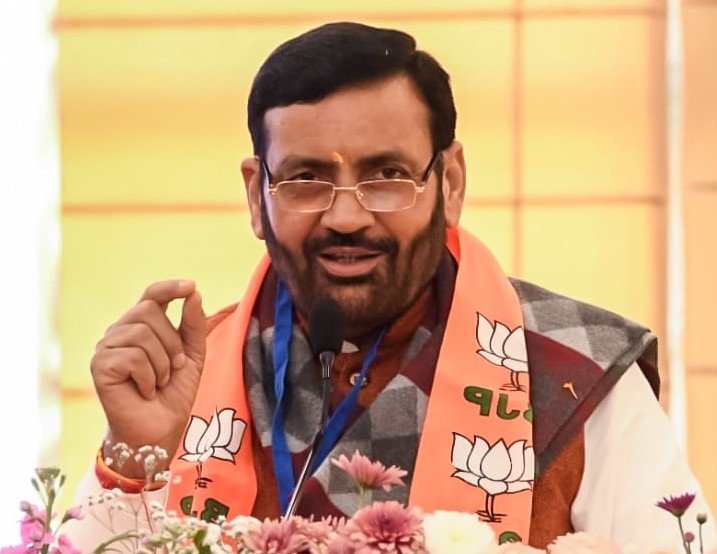
Haryana Chief Minister Nayab Singh Saini has underlined that the state government’s core focus will remain firmly anchored on the vision of “Developed Industry, Developed Workforce,” asserting that sustainable economic growth is impossible without the parallel progress of industries and the well-being of workers. Addressing the first meeting of the Industry–Labour Friendly Council in Chandigarh on Wednesday, the Chief Minister said Haryana aims to emerge as a national benchmark by ensuring harmony between industrial expansion and labour welfare.
Presiding over the landmark meeting, CM Saini, who also chairs the newly constituted council, described it as a pioneering initiative, noting that Haryana has become the first state in the country to institutionalise such a platform dedicated to balancing the interests of industry and labour. The meeting was attended by Chief Principal Secretary to the Chief Minister Rajesh Khullar, Additional Chief Secretary Home Department Sudhir Rajpal, Commissioner and Secretary Industries and Commerce Dr Amit Aggarwal, Principal Secretary Labour Rajiv Ranjan, Deputy Principal Secretary to the Chief Minister Yashpal, senior officials, and council members.
The Chief Minister emphasised that no state can achieve sustained economic progress unless its industries function smoothly and its workforce remains secure and satisfied. “Industry and labour are two sides of the same coin. Coordination, mutual trust and brotherhood between them are essential,” he said, adding that the Industry–Labour Friendly Council has been created precisely to foster this spirit of cooperation.
CM Saini explained that the Haryana government is working simultaneously on “Ease of Doing Business” for industries and “Ease of Living” for workers. The council will play a critical role in reviewing government announcements related to industry and labour, offering suggestions on worker safety, resolving industrial disputes, and upgrading skill development through institutions such as ITIs. He said the government wants to ensure that policy decisions are not only business-friendly but also worker-centric.
Highlighting the economic dimension of labour welfare, the Chief Minister said the council will focus strongly on enhancing productivity across industrial units in the state. Increased productivity, he noted, directly contributes to GDP growth, which remains the backbone of both state and national development. This approach, he said, aligns Haryana’s industrial strategy with broader economic goals.
CM Saini also addressed long-standing structural issues affecting micro, small and medium enterprises. He revealed that nearly two lakh MSMEs in Haryana were operating outside designated industrial areas, depriving them of several institutional benefits. To resolve this, the state government launched a dedicated portal on December 25, 2025, enabling such units to register, regularise their operations and gain access to government schemes and incentives.
He further informed that issues related to the transfer of industrial plots from Haryana Urban Development Authority (HUDA) to HSIIDC in certain industrial areas have been resolved. In a move aimed at strengthening social security infrastructure, the government has approved the allotment of land at concessional rates to industrialists for setting up ESIC hospitals. This step is expected to significantly improve healthcare access for industrial workers.
The Chief Minister also highlighted progress on worker housing, stating that the construction of dormitory-style accommodation for labourers at affordable rates in industrial areas is being fast-tracked. To address space constraints in industrial hubs across several districts, the government has also planned the development of multi-level parking facilities, which will ease congestion and improve logistics efficiency.
Reiterating the state’s commitment to attracting investment, CM Saini said Haryana is continuously working to make its industrial ecosystem more conducive and competitive. He stressed that increased investment will not only generate employment but also support Prime Minister Narendra Modi’s national vision of “Viksit Bharat 2047.”
With the establishment of the Industry–Labour Friendly Council and a clear policy emphasis on inclusive growth, the Haryana government is positioning itself as a state where economic ambition and social responsibility move forward together—an approach that could shape the political and industrial discourse ahead of future electoral and developmental milestones.