
Saptrishi Soni।
Whenever a major aviation incident occurs in India—particularly when it involves a political figure or a high-profile passenger—the focus often shifts rapidly from technical investigation to political interpretation. Instead of being treated as a complex aviation safety issue, the incident becomes a breeding ground for speculation, allegations, and conspiracy narratives. The recent aircraft crash linked to political circles has once again brought this troubling pattern into sharp focus.
Aviation experts consistently point out that most air accidents are not the result of sabotage or foul play, but a combination of environmental conditions, infrastructure limitations, and operational decisions. In the present case, dense fog significantly reduced visibility in the Pune–Baramati region, turning an already challenging landing environment into a high-risk operation. Baramati’s airstrip is relatively short and lacks advanced landing assistance systems such as the Instrument Landing System (ILS), which is crucial for safe landings during low-visibility conditions.
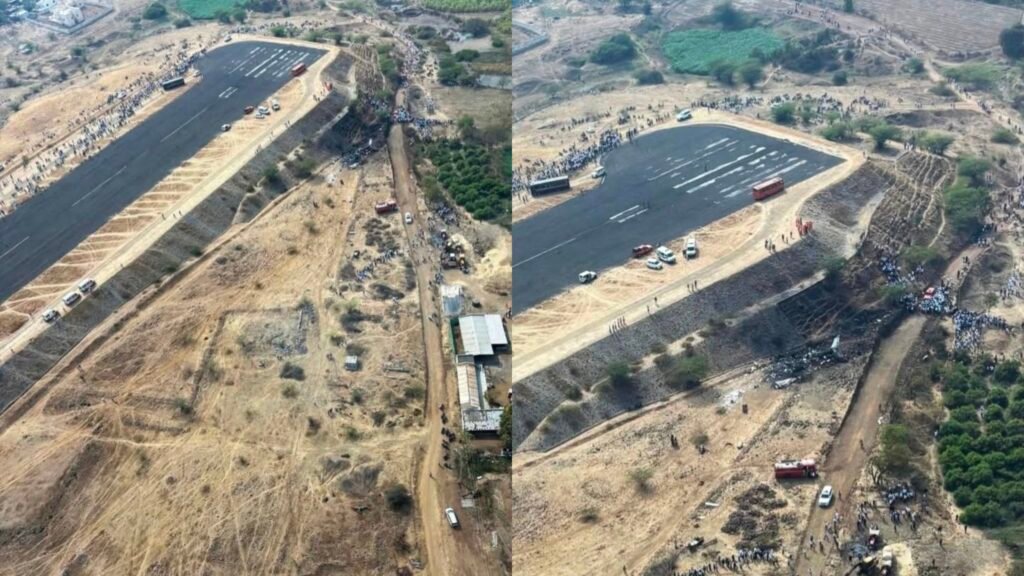
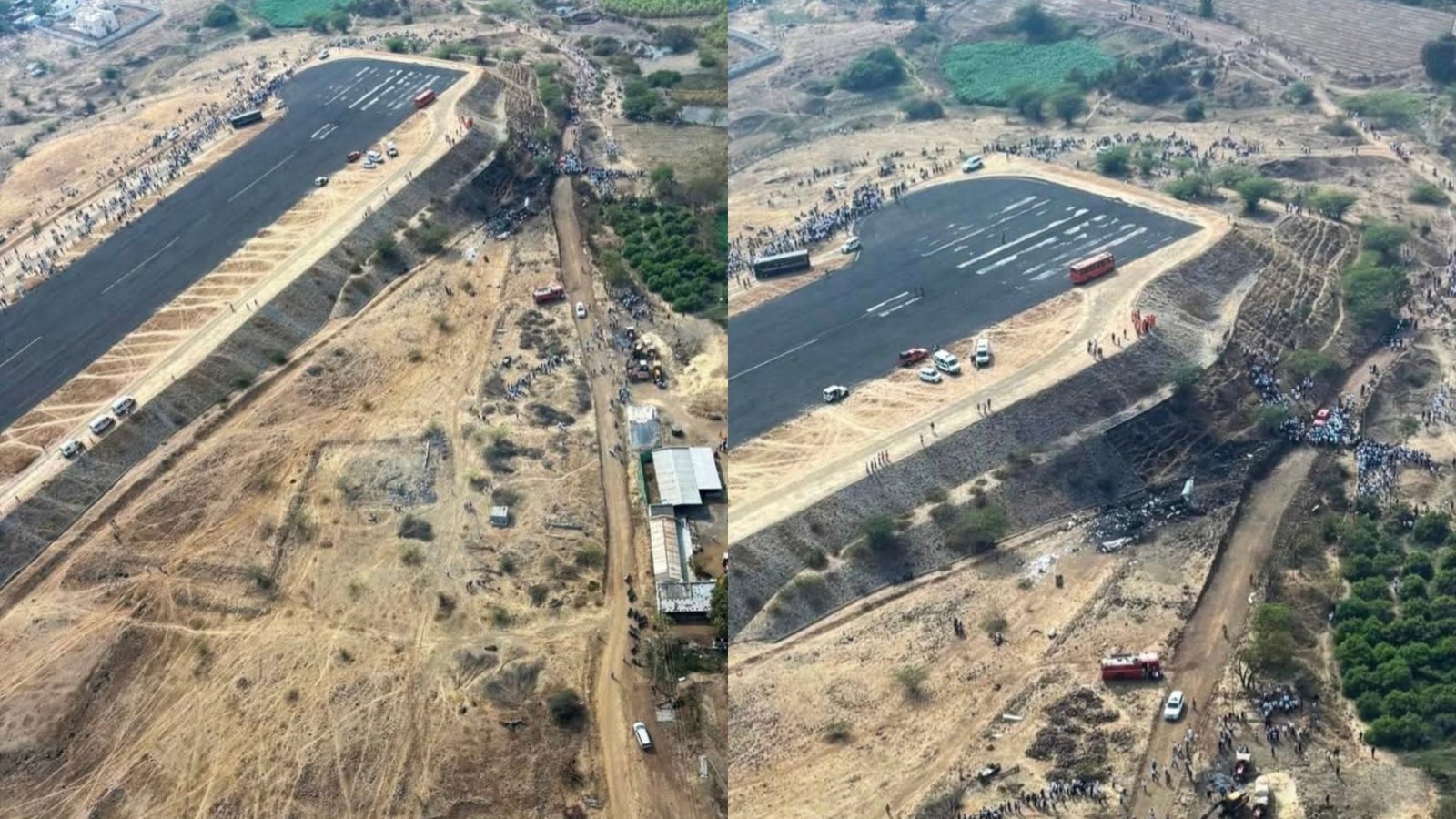
According to aviation norms, when visibility drops below permissible limits and an airfield is not equipped with precision landing aids, pilots are left with limited options. Visual landing attempts under such conditions rely heavily on human judgment, making even experienced pilots vulnerable to error. Reports indicate that the pilot attempted a first landing but had to abort due to poor visibility. During the second attempt, a distress call was issued, after which the aircraft struck the ground before reaching the runway, leading to a catastrophic crash near the edge of a tabletop runway.
Tabletop runways, commonly found in elevated or hilly regions, pose unique risks. Built on raised terrain with steep drops at the edges, these runways offer almost no margin for error. An aircraft that overshoots or fails to stabilize during landing can easily plunge into a gorge, often resulting in fire and complete destruction. India has witnessed similar tragedies before, most notably the 2010 Mangaluru crash and the 2020 Kozhikode accident. In both cases, poor visibility, challenging weather conditions, and tabletop runway constraints were identified as the primary causes after detailed investigations.
Despite these well-documented precedents, every new incident seems to trigger political outrage and conspiracy claims. Some political leaders have been quick to demand judicial inquiries, while others have linked the crash to alleged attacks on opposition figures. Such statements, made even before preliminary technical findings are released, risk misleading the public and undermining the credibility of established aviation safety mechanisms.
India’s aviation accident investigations are conducted under the supervision of the Directorate General of Civil Aviation (DGCA) and an independent statutory body, the Aircraft Accident Investigation Bureau (AAIB), which operates under the Ministry of Civil Aviation. These agencies follow internationally accepted protocols and examine every possible factor, including weather data, pilot training records, aircraft maintenance logs, airfield infrastructure, and operational decision-making. Initial assessments in the current case have reportedly highlighted dense fog, poor visibility, and the absence of ILS facilities as the primary contributors, with no indication of sabotage or external interference.
The incident has also raised serious questions about the use of small airstrips and chartered aircraft for VIP travel. While charter services offer flexibility and convenience, they must adhere to the same stringent safety standards as commercial operations. The responsibility does not rest solely with the operator or pilot; regulatory authorities and airport management must ensure that infrastructure is adequate for the conditions in which flights are permitted. Allowing operations at ILS-deficient airfields during heavy fog exposes passengers and crew to unnecessary risk.
Another critical concern is decision-making under pressure. In high-profile travel, time constraints, tight schedules, and external expectations can subtly influence operational choices. Aviation history has repeatedly shown that pressuring pilots to land despite adverse conditions is a dangerous practice. Safety protocols exist precisely to counter such pressures, and any deviation from them must be scrutinized seriously.
The real danger of politicizing aviation accidents lies in diverting attention from meaningful reform. When public discourse is dominated by conspiracy theories, essential questions are pushed aside. Why do several small and regional airfields still lack modern navigation aids? Why are clear, enforceable restrictions on low-visibility operations not uniformly implemented? Why are tabletop runways still used for critical flights without enhanced safety margins?
Each aviation accident carries hard-earned lessons. Ignoring those lessons in favor of political drama only increases the likelihood of repetition. Strengthening infrastructure, mandating advanced landing systems at vulnerable airfields, enforcing strict weather-based operational limits, and insulating pilots from non-operational pressure are the steps that genuinely enhance safety.
Aviation safety is built on evidence, accountability, and continuous improvement—not on speculation or rhetoric. Allowing professional investigators to complete their work and implementing their recommendations with sincerity is the only responsible way forward. Until that approach becomes the norm, every accident will continue to be followed by noise, controversy, and missed opportunities for reform.