

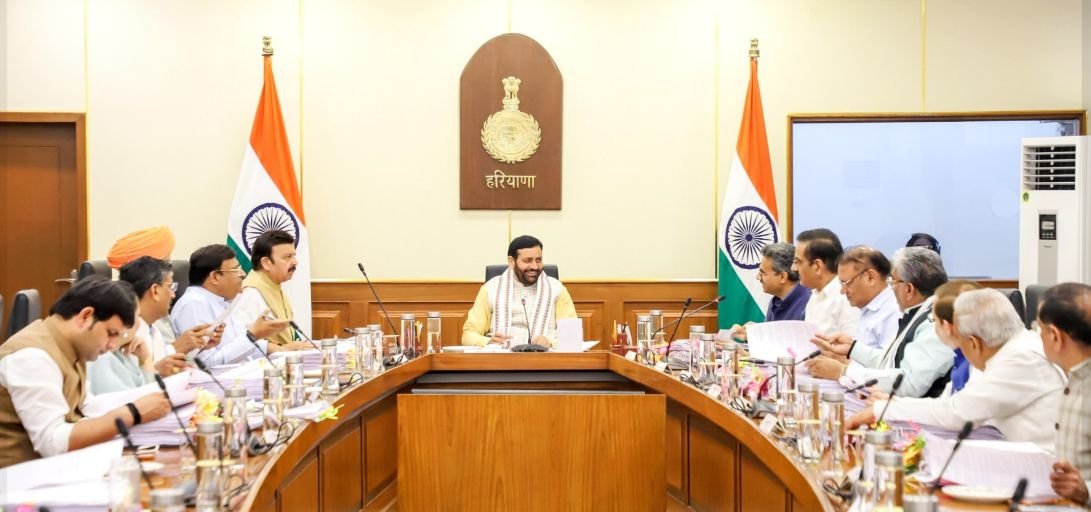
Chandigarh: In one of the most wide-ranging policy overhauls in recent months, the Haryana cabinet has approved a series of structural reforms spanning judicial services, healthcare recruitment, urban planning, financial governance and large-scale infrastructure development. The decisions, taken during a high-level cabinet meeting, signal a strong push toward administrative modernization, transparency and long-term economic growth, not only for Haryana but with implications across North India’s evolving governance framework.
A major highlight of the meeting was the approval of amendments to the Haryana Superior Judicial Service Rules, 2007, aligning the state’s judicial recruitment system with directions issued by the Supreme Court in landmark rulings concerning judicial reforms. The restructuring aims to improve transparency and efficiency in higher judicial appointments. Under the revised framework, the quota for promotion through merit-cum-seniority has been reduced from 65 percent to 50 percent, while the share of recruitment through limited competitive examination has been significantly increased from 10 percent to 25 percent. Direct recruitment will continue to account for the remaining 25 percent, but eligibility has been expanded to include not only practicing advocates but also qualified candidates from the subordinate judiciary. The move is expected to create a more competitive and merit-driven judicial ecosystem.
In the healthcare sector, the cabinet approved multiple reforms to address workforce shortages that have long affected public health delivery. The removal of the mandatory six-month training requirement for pharmacy officers is expected to expand the pool of eligible candidates and accelerate recruitment across hospitals and dispensaries. Additionally, the recruitment ratio has been significantly altered, with direct recruitment now accounting for 95 percent of positions, compared to the earlier 75 percent. Promotion quotas have been correspondingly reduced, reflecting an urgent need to fill vacancies quickly. Revised pay structures have also been incorporated, ensuring better compensation alignment with evolving professional standards.
Further strengthening healthcare infrastructure, the cabinet updated eligibility norms for operation theatre assistants to reflect modern medical education practices. With older diploma courses phased out, the revised criteria now mandate degree-based qualifications in medical technology, ensuring that technical staff are trained in line with contemporary clinical requirements. These changes are expected to improve operational efficiency in government hospitals and enhance patient care outcomes.
On the governance and financial accountability front, the cabinet introduced standardized formats for utilization certificates across all departments and institutions receiving government grants. This long-pending reform addresses inconsistencies in reporting and aims to ensure uniformity, transparency and strict audit compliance. Alongside this, revisions to the Last Pay Certificate system were approved, incorporating modern identifiers such as permanent retirement account numbers and detailed financial disclosures. These updates are expected to streamline inter-departmental financial processes and reduce administrative delays.
Urban development policy also saw a significant shift with the approval of a comprehensive framework governing mixed land use. The new policy removes earlier ambiguities by allowing flexible combinations of residential, commercial and institutional uses without rigid percentage caps, while still maintaining planning norms. However, industrial usage will remain restricted to existing limits, reflecting a cautious approach toward balancing urban expansion with environmental and infrastructural considerations. The policy is likely to unlock stalled projects and boost real estate development across key urban centres.
In a related move, amendments to the Affordable Housing Policy were cleared, allowing a moderate increase of around 10 to 12 percent in allotment rates for group housing units. This adjustment comes in response to rising construction and land costs, which had made affordable housing projects financially unviable for developers. By recalibrating pricing structures, the government aims to sustain housing supply while ensuring continued accessibility for middle- and lower-income groups.
One of the most strategically significant decisions was the approval of the revised cost for the Haryana Orbital Rail Corridor project, now pegged at approximately ₹11,709 crore, more than double its earlier estimate. The escalation reflects increased land acquisition costs, expanded project scope, higher taxation rates and upgraded technical specifications. Once completed, the corridor is expected to transform regional connectivity by linking major industrial hubs such as Sonipat, Manesar and Sohna, while integrating seamlessly with existing freight corridors. The project is being implemented through a joint venture model involving public agencies and private stakeholders, underscoring a collaborative approach to infrastructure development.
The cabinet also approved a major shift in employee financial management by restoring the earlier system of government-managed loans. Under the revised arrangement, loans will be directly disbursed from the state budget beginning June 2026, replacing the current bank-mediated model. This transition aims to simplify processes, reduce administrative complexities and offer employees more accessible credit options at regulated interest rates.
Additionally, the cabinet aligned state-level food and drug administration service rules with updated central regulations, ensuring that regulatory personnel meet contemporary qualification and experience standards. This step is expected to strengthen food safety enforcement and pharmaceutical oversight, both critical components of public health governance.
Collectively, these decisions reflect a broader governance philosophy focused on modernization, institutional efficiency and economic resilience. From judicial reforms and healthcare staffing to urban planning and mega infrastructure investments, Haryana is positioning itself as a state willing to recalibrate legacy systems in response to contemporary challenges. As these reforms begin to take shape on the ground, their impact is likely to extend beyond state boundaries, influencing administrative practices and development models across North India.