
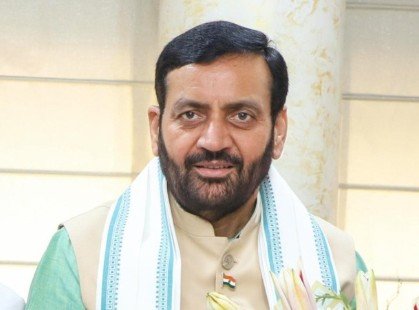
Haryana Chief Minister Nayab Singh Saini has directed officials to prepare an ambitious and time-bound roadmap aimed at ensuring clean drinking water and modern sewerage facilities for every household across the state, positioning the initiative as a key pillar of Haryana’s long-term development strategy under “Vision 2047”.
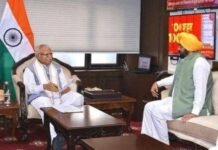
Chairing a high-level review meeting of the Public Health Engineering Department at the Haryana Civil Secretariat in Chandigarh, the Chief Minister stressed that access to safe drinking water and efficient sanitation infrastructure should not remain limited to urban centres alone, but must reach villages, newly regularised colonies, and beneficiaries of government-allotted residential plots as well.
The meeting focused on the department’s five-year action plan, which forms part of Haryana’s broader Vision 2047 framework — a long-term governance and infrastructure strategy aligned with India’s centenary of independence. Officials presented detailed proposals covering expansion of water supply networks, sewerage connectivity, centralised sewage treatment systems, reuse of treated wastewater, and the integration of artificial intelligence-enabled grievance monitoring systems.
During the review, the Chief Minister underlined that drinking water was not merely a utility service but a fundamental necessity linked directly to public health and quality of life. He instructed the department to formulate a plan to establish a water treatment plant for every population cluster of 5,000 people and to ensure canal-based water supply to all water works wherever feasible.
He also emphasised that basic civic facilities such as drinking water, sewerage, electricity, and roads must be provided on priority in all legalised colonies and in residential areas where economically weaker families have been allotted 100-square-yard plots under government welfare schemes.
Officials informed the Chief Minister that the department’s future roadmap includes strengthening the state’s water infrastructure through improved pipeline systems, expansion of sewerage networks, scientific wastewater management, and modern digital monitoring tools aimed at increasing efficiency and accountability.
In a significant policy direction, Nayab Singh Saini advocated the creation of future-ready “smart cities” capable of delivering uninterrupted 24-hour drinking water supply. He suggested that pilot projects be launched in one or two major cities, including Gurugram, where all households would be equipped with metered water connections to study consumption patterns and improve water management systems.
The Chief Minister also raised concerns over large-scale water wastage caused by evaporation in open canal systems. He directed officials to explore bringing canal water to treatment facilities through pipelines wherever possible in order to minimise losses and improve efficiency.
Apart from drinking water supply, the meeting placed strong emphasis on expanding sewerage infrastructure throughout Haryana. Saini instructed officials to ensure that every village, town, and residential colony receives proper sewerage connectivity. He also asked departments to identify ageing sewerage systems requiring urgent repair or replacement and to accelerate such works through mechanised construction methods in order to minimise public inconvenience caused by prolonged road digging.
Highlighting the importance of future planning, the Chief Minister noted that sewerage lines are generally designed to last for several decades and therefore must be constructed with adequate capacity to meet future population growth and urban expansion.
The government is also exploring plans for the reuse of treated wastewater in industrial operations and agricultural activities — an increasingly important issue as states across India face mounting pressure on freshwater resources amid climate change and rapid urbanisation.
One of the major governance concerns raised during the meeting was the repeated excavation of roads by different departments for laying pipelines, internet cables, gas lines, and utility infrastructure. The Chief Minister observed that the absence of coordination often leads to financial losses, traffic disruptions, and inconvenience for citizens. To address this, he proposed the creation of a dedicated coordinating authority or regulatory mechanism under which no road excavation work would be allowed without prior approval and integrated planning.
Senior bureaucrats, including Chief Secretary Anurag Rastogi and other top officials, attended the meeting along with representatives from departments linked to future planning, infrastructure, and urban development.
Political observers view the government’s renewed emphasis on drinking water, sewerage, and civic infrastructure as part of a broader effort to project Haryana as a model state focused on urban modernisation, rural connectivity, and public welfare ahead of the state’s long-term development goals.
The latest directives also come at a time when Indian states are increasingly being challenged by rapid urban growth, water scarcity, ageing civic infrastructure, and rising public expectations for better governance and service delivery.