

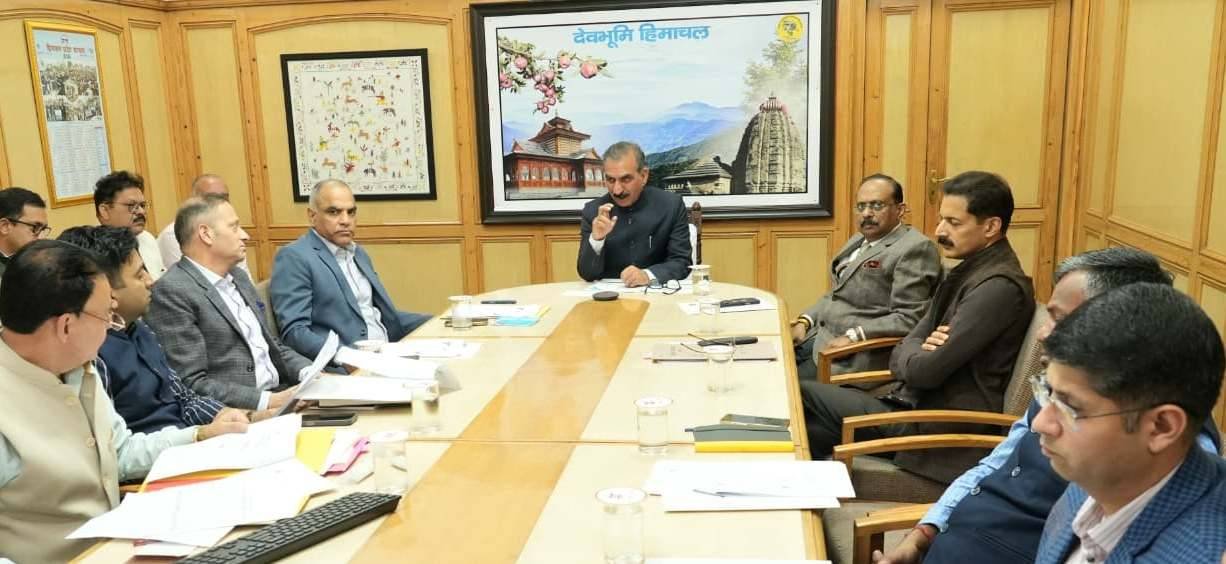
In a significant policy push aimed at strengthening disaster resilience in one of India’s most ecologically fragile regions, Himachal Pradesh Chief Minister Thakur Sukhvinder Singh Sukhu has reviewed the ambitious “Resilient Action for Development and Disaster Recovery – Himachal Pradesh (READY-HP)” project, a programme with a total outlay of ₹2,687 crore. The initiative is being positioned not merely as a recovery plan, but as a long-term strategy to safeguard infrastructure, livelihoods and public services against the growing frequency of natural disasters in the Himalayan state.
Chairing a high-level meeting, the Chief Minister underlined the urgency of such an intervention by pointing to the scale of recent environmental disruptions. Between 2023 and 2025, Himachal Pradesh witnessed 86 cloudbursts, 234 landslides and 121 flash floods—events that collectively inflicted losses exceeding ₹12,500 crore. These figures, he suggested, are not isolated incidents but part of an emerging pattern linked to the state’s geographical vulnerability and changing climatic conditions.
Nestled in the young and geologically unstable Himalayan belt, Himachal Pradesh has long been prone to natural hazards. However, the increasing intensity and frequency of such events have amplified risks for both infrastructure and communities. Roads, water supply systems, power networks and agricultural livelihoods—particularly horticulture, which forms the backbone of the state’s rural economy—have been repeatedly disrupted, exposing the need for a more resilient development framework.
The READY-HP project seeks to address this challenge through a multi-layered approach. At its core is the restoration of disaster-affected infrastructure, but with a crucial shift in emphasis—from simple reconstruction to resilient rebuilding. This includes designing and upgrading roads, water schemes and power systems in a manner that can withstand future shocks, thereby reducing recurring losses and ensuring continuity of essential services.
Equally important is the project’s focus on livelihoods. Recognising that disasters disproportionately affect rural communities, the initiative aims to strengthen economic resilience through targeted interventions. Concepts such as “green panchayats” are expected to promote sustainable local development, while also creating new opportunities for income generation. The government has also highlighted the need to build robust support systems for farmers and horticulturists, ensuring that their productivity and incomes are protected even in the face of climatic uncertainties.
Another key dimension of READY-HP is the strengthening of social safety nets and insurance mechanisms. By integrating risk-informed planning into welfare systems, the project aims to provide quicker and more effective support to affected populations. This approach reflects a broader shift in disaster management philosophy—from reactive relief to proactive preparedness and risk mitigation.
Senior officials present at the meeting, including Chief Secretary Sanjay Gupta and other top bureaucrats, reviewed the implementation framework and coordination mechanisms required to operationalise the project effectively. The involvement of multiple departments—from finance and planning to rural development and energy—highlights the cross-sectoral nature of the initiative.
Experts note that projects like READY-HP are increasingly critical in mountain states, where climate change is altering weather patterns and intensifying natural hazards. The challenge lies not only in mobilising financial resources but also in ensuring that scientific research, local knowledge and governance systems are aligned to deliver sustainable outcomes.
For Himachal Pradesh, the stakes are particularly high. Tourism, agriculture and hydropower—key pillars of the state’s economy—are all closely tied to environmental stability. Frequent disruptions not only strain public finances but also affect long-term development prospects.
The READY-HP initiative, therefore, represents more than a government programme; it is an attempt to redefine how the state responds to and prepares for disasters. By combining infrastructure resilience, livelihood protection and institutional strengthening, the project aims to create a model of development that is both adaptive and forward-looking.
As climate risks continue to escalate, the success of such initiatives will depend on timely execution, transparent governance and sustained community engagement. For now, the ₹2,687 crore READY-HP plan signals a clear recognition by the state government that resilience is no longer optional—it is essential for survival and sustainable growth in the Himalayan region.