

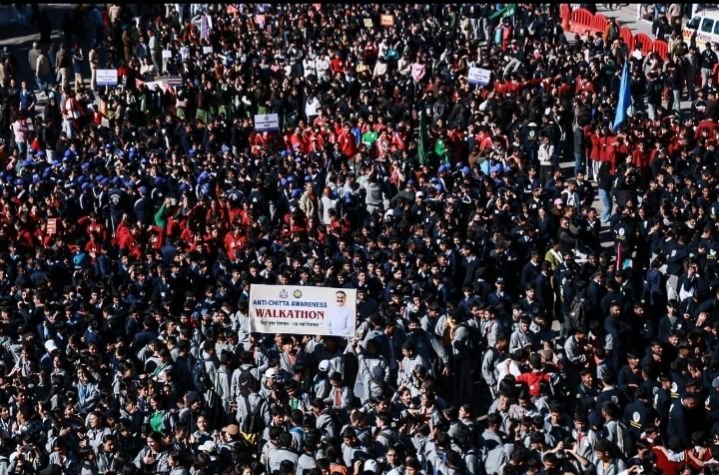
Himachal Pradesh is entering a decisive phase in its battle against drug addiction as the state prepares for an unprecedented three-month anti-drug movement, marked by the “Anti-Chitta Rally” in Shimla on November 15. Chief Minister Sukhvinder Singh Sukhu has repeatedly called the surge of synthetic drugs—particularly heroin, locally known as chitta—“the greatest social and economic threat to the Himalayan region.” The campaign intends not just to address the crisis but to set a long-term social reform in motion.
This initiative comes at a time when the drug problem has grown beyond isolated pockets and has seeped into classrooms, villages, college hostels, and urban neighborhoods. The rapid rise in heroin seizures over the past two years indicates a deeper crisis: Himachal is no longer just a consumer state; it is emerging as a transit corridor linking Punjab, Delhi, and international drug routes. For a small hill state known for its peace and high social indicators, this emerging pattern has caused visible social worry.
A Public Movement, Not Just a Government Campaign
Unlike previous anti-drug actions that leaned heavily on enforcement, the upcoming campaign is envisioned as a public movement with multiple layers of participation. Over the next three months, **schools, panchayats, NGOs, youth clubs, women groups, local committees, and civil society organisations** will form the core of this resistance.
Every panchayat will set up an Anti-Chitta Vigilance Team, designed to identify hotspots, report suspected peddling, monitor antisocial movement, and channel information to local police units. This marks a structural shift in Himachal’s anti-narcotics strategy: empowering the community to become the first line of alert.
Officials believe that this localised vigilance will be crucial. Until now, drug networks have survived because of weak social reporting and limited awareness. Families often hide addiction due to stigma, youth hesitate to seek help, and community groups have lacked institutional support. For the first time, the state is formally integrating community intelligence with police action.
Why the Movement Matters Now
The timing of the campaign is significant for several reasons:
1. Youth Vulnerability : Employment pressures, migration for jobs, and changing social environments have left youth susceptible to drug usage.
2. Rising Availability: Police investigations indicate the increased presence of organised networks trafficking heroin and synthetic drugs through Himachal’s border districts.
3. Collapsing Rehabilitation Capacity: De-addiction centres are overcrowded, and there is a shortage of trained counsellors and long-term rehabilitation frameworks.
4. Silent Spread in Rural Areas: Drugs are no longer limited to urban areas; rural pockets—once considered safe—are reporting growing cases of addiction among minors and young adults.
Medical specialists warn that drug addiction, if not addressed now, could lead to long-term demographic and economic consequences, affecting productivity, public health spending, and the social fabric of communities.
Administration and Police Support: Necessary but Not Enough
While the government has increased coordination between the State Police, Anti-Narcotics Task Force, and Special Drugs Units, authorities acknowledge that law enforcement alone cannot resolve the crisis. Past crackdowns led to temporary dips but were followed by fresh waves of trafficking.
The Chief Minister has emphasised that the real strength of the campaign will come from public participation, not police raids. For meaningful impact, three pillars must work together:
Community vigilance
Police enforcement
Government support systems
If any of these weaken, experts believe the entire initiative risks becoming symbolic rather than transformative.
The Role of Trust and Awareness
One of the most critical challenges is building public trust. Many families avoid approaching authorities due to fear of legal consequences or social embarrassment. Others do not believe that reporting will lead to substantial action.
For this reason, awareness workshops, school sensitisation programmes, village committees, and youth club involvement will form the backbone of the campaign. The objective is to assure families that reporting addiction or trafficking is not a matter of shame, but a contribution to saving lives.
Officials plan to launch a series of community dialogues addressing:
* Early signs of addiction
* How to seek help
* Ensuring confidentiality for whistleblowers
* Youth mental health support
* Role of parents and educators in prevention
Experts argue that unless this psychological barrier is broken, law enforcement will continue fighting a blind battle.
Can Himachal Sustain the Momentum?
Campaigns often begin with enthusiasm and end with slogans fading in a few weeks. But officials claim this initiative is designed for continuity. The three-month period is only the first phase. The long-term goal is to integrate anti-drug strategies into governance planning, school education modules, and grassroots institutions.
Civil society leaders believe the success of the movement will depend on:
* Consistent follow-up after the rally
* Inclusion of youth in leadership roles
* Strengthening rehabilitation and counselling facilities
* Quick action against big drug syndicates
* Transparent reporting of progress
If these elements fall in place, Himachal could become a model for other hill states facing similar challenges.
A Turning Point for the State
The upcoming Anti-Chitta Rally is not just a symbolic march through Shimla—it is a test of whether a coordinated social movement can stop a crisis that threatens an entire generation. Himachal’s fight against drugs now hinges on unity, vigilance, and collective responsibility.
If the people, administration, and police join hands with equal determination, this campaign could redefine the state’s social landscape and protect thousands of young lives. Otherwise, it risks becoming yet another well-intentioned effort overshadowed by ground realities.
Himachal stands at a crossroads — the direction it chooses now will define the future of its youth.