

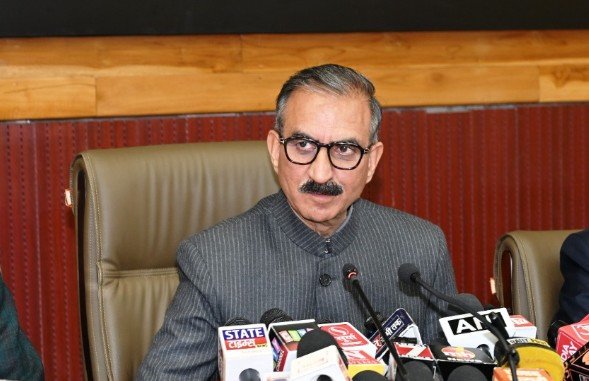
In a sweeping escalation of its fight against drug abuse, the Himachal Pradesh government has announced the second phase of its Anti-Chitta campaign, positioning it as both a law enforcement drive and a wider social movement. Chief Minister Thakur Sukhvinder Singh Sukhu, chairing a high-level meeting of the Narco-Coordination Centre (NCORD), said the campaign will run from June 1 to August 20, targeting educational institutions across the state in a bid to directly engage the youth.
The initiative reflects a growing recognition within the government that the spread of synthetic drugs—particularly ‘chitta’—has evolved beyond a law-and-order issue into a deeper societal crisis. Addressing the media after the meeting, the Chief Minister described the menace as “a direct attack on our youth, families and the social fabric of the state,” signalling a more aggressive and multi-dimensional policy response.
Under Phase-II of the campaign, administrative and police officers will be tasked with visiting at least ten schools and colleges each, where they will conduct awareness sessions on the harmful effects of drug abuse. The aim is to shift the narrative from reactive policing to preventive education, particularly among young people who are seen as the most vulnerable demographic.
At the same time, the government has reinforced its zero-tolerance stance on enforcement. Sukhu revealed that action has already been taken against more than 120 government employees found to be linked with drug-related activities, including the dismissal of 31 personnel, among them 21 police officials. The move sends a strong message about accountability within the system, particularly in departments expected to uphold the law.
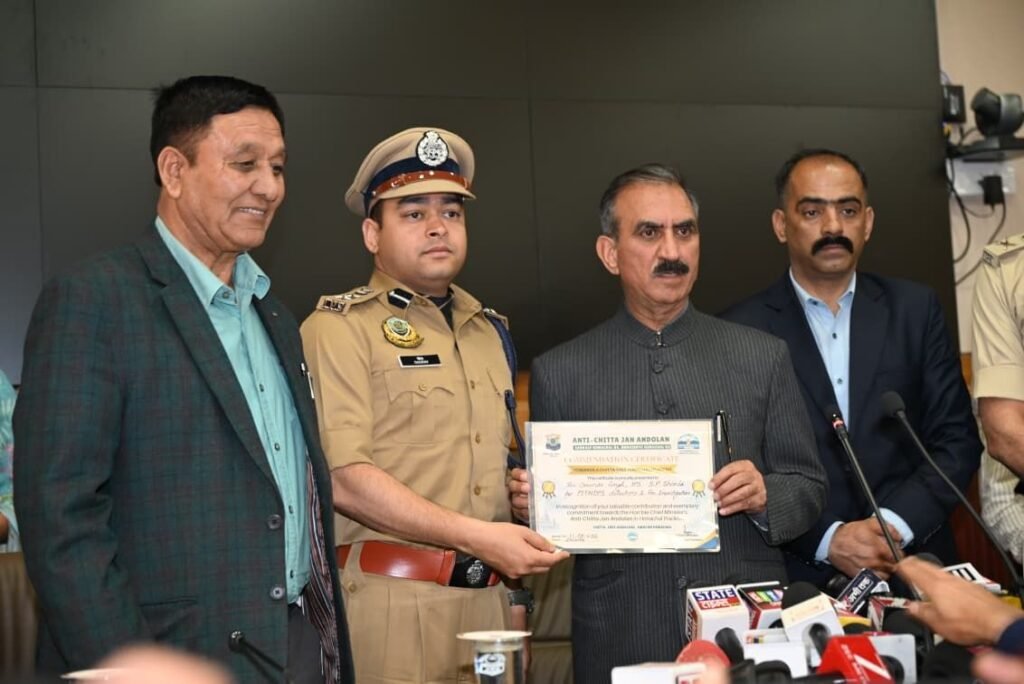
The administration is also tightening regulatory oversight on pharmaceutical supply chains. The Chief Minister warned that any diversion of medicinal drugs for illegal use would be treated as a serious offence, with licences of erring chemists liable to be cancelled. This step is seen as critical, given concerns that certain prescription drugs are being misused as substitutes or components in synthetic narcotics.
In a notable policy shift, the government has decided to introduce performance-based accountability for senior district officials. Deputy Commissioners and Superintendents of Police will now be graded in their Annual Confidential Reports based on their effectiveness in tackling the drug menace and implementing awareness campaigns. This administrative linkage is expected to institutionalise responsibility at the grassroots level.
The scale of the challenge is evident from official data shared during the meeting. Since 2023, Himachal Pradesh has registered 6,811 cases under the NDPS Act—a figure significantly higher than in the previous government’s tenure. During this period, over 10,300 individuals have been arrested and nearly 45,867 kilograms of narcotic substances seized. Authorities say these figures reflect intensified enforcement rather than merely an increase in drug activity.
The government has also focused on dismantling the financial backbone of drug networks. Investigations by the Special Task Force have identified hundreds of cases for financial scrutiny, leading to the seizure of illegal assets worth around ₹51 crore. In several instances, properties linked to drug traffickers have been demolished or confiscated, marking a shift towards targeting the economic incentives behind the trade.
Surveillance has been significantly expanded, particularly in identified “red zone” areas. Around 12,000 individuals have been flagged for suspected involvement in drug trafficking, while special police and CID monitoring has been deployed across 234 sensitive panchayats. These include regions in districts such as Shimla, Kullu, Mandi, Kangra and Sirmaur, indicating that the issue is geographically widespread rather than confined to isolated pockets.
Beyond enforcement, the government has emphasised rehabilitation as a central pillar of its strategy. Sukhu highlighted that efforts are underway to connect individuals seeking to quit drugs with counselling, treatment and recovery services. New rehabilitation centres are being set up, including one in Mashobra near Shimla and another at Dr Rajendra Prasad Government Medical College in Tanda, aimed at strengthening institutional support for recovery.
In a controversial but significant move, the government has also made drug testing mandatory for candidates seeking government jobs, as well as for students applying to professional colleges. While the policy is intended to act as a deterrent, it also reflects the seriousness with which the administration views the crisis.
Officials argue that the Anti-Chitta campaign has evolved into a broader जन आंदोलन—a people’s movement—since its launch in November 2025. The government’s approach now integrates enforcement, prevention, rehabilitation and community participation, reflecting a more holistic strategy.
Yet, challenges remain. Experts caution that sustained success will depend on consistent implementation, inter-agency coordination and community engagement. The social stigma surrounding addiction, gaps in rehabilitation infrastructure and the adaptability of drug networks are all factors that could complicate the effort.
For now, the Sukhu government’s intensified campaign signals a clear political and administrative commitment to confront the issue head-on. As Phase-II unfolds, its effectiveness will likely be judged not only by arrests and seizures, but by whether it can bring about a lasting shift in awareness, behaviour and public trust across Himachal Pradesh.