
Arvind Sharma , Dharmasthala
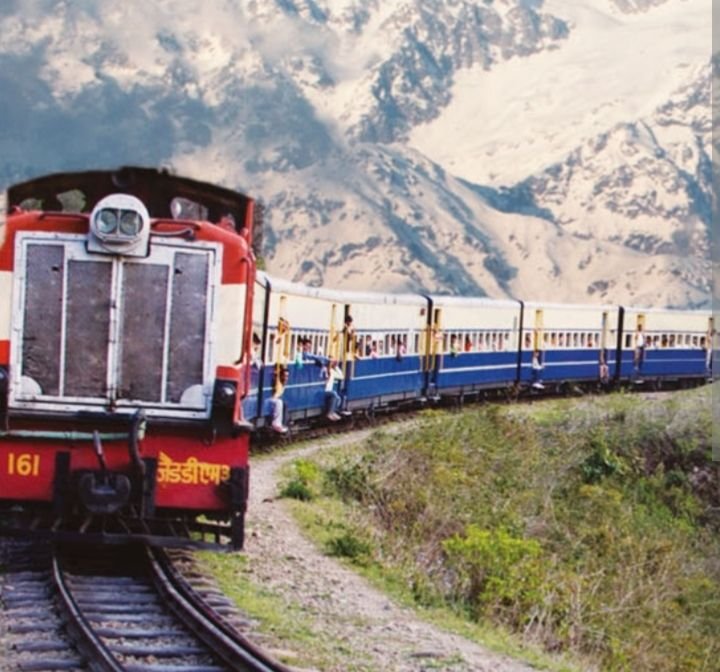
Despite the completion of major repair works—including the reconstruction of the Chakki River bridge, which was washed away in the sudden floods of August 2022—rail services on the historic Pathankot-Joginder Nagar railway line remain suspended, sparking widespread anger among the people of the Kangra Valley.
Last month, railway officials successfully conducted trial runs on this route, safety inspections were cleared, and a revised timetable for the resumption of trains between Pathankot and Joginder Nagar was even issued. Yet, the long-awaited full restoration of rail services has still not materialized, leaving residents frustrated and questioning this inexplicable delay.
Recently, public anger spilled onto the streets when a large number of residents staged a protest at Koparlahar, near Kangra. The protesters termed the continued suspension of services as “unjustified” and accused officials of negligence and apathy toward a vital public lifeline. This prolonged disruption has severely impacted daily commuters, students, traders, and the tourism sector, resulting in—and continuing to cause—significant economic losses across the entire region.
The persistent delays have also sparked a major debate: If the infrastructure is ready and the necessary approvals have been secured, why have services not yet resumed? While some attribute this to administrative lethargy or procedural hurdles, others suspect that a lack of political will to address the concerns of a relatively less influential region may also be a contributing factor.
Operational since 1929, the Pathankot-Joginder Nagar narrow-gauge railway is not merely a mode of transport; it serves as a vital socio-economic and cultural lifeline for the Kangra Valley. Following questions raised by Anurag Singh Thakur, the Railways have initiated a survey for a proposed gauge conversion of the line. However, local residents insist that restoring the existing service must be an immediate priority.
From a tourism perspective, this suspension has dealt a severe blow to local livelihoods. This picturesque railway route has long served as a magnet for tourists, providing sustenance to hotels, small businesses, and transport operators. Its closure has disrupted this entire ecosystem, further exacerbating the challenges facing the local economy.
This situation of delay underscores the urgent need for better coordination and decisive action. For the people of the Kangra Valley, the “Toy Train” is not merely a mode of transport—it is an enduring symbol of the region’s identity and heritage. Residents are now demanding that authorities take steps to restore this vital rail link without any further delay—not only to resume connectivity and economic activity but also to uphold public trust and sentiments.
The people of the region remain fully confident that this train will soon be back on the tracks and that work on its broad-gauge conversion will also commence shortly.