


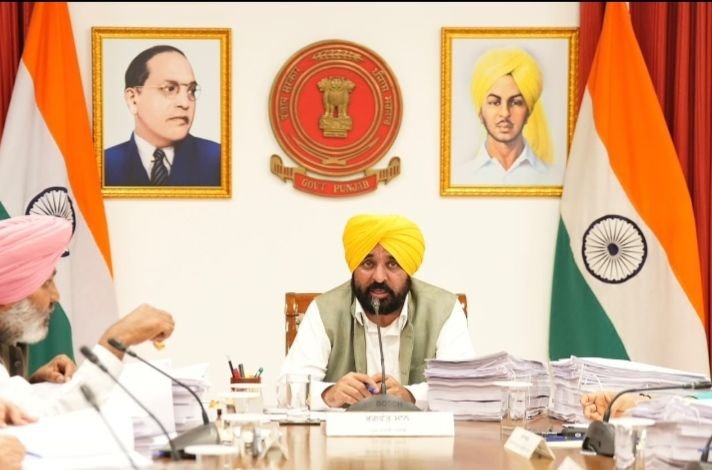
Mann Government allocates approximately ₹75 crore for dedicated courts as Punjab battles a backlog of 52,577 drug-related cases; average disposal time stands at nearly eight years
Chandigarh, In a major move to strengthen the judicial response to drug-related offences, the Punjab Cabinet, chaired by Chief Minister Bhagwant Singh Mann, has approved the establishment of 35 exclusive Special NDPS Courts across the state. The initiative aims to accelerate trials under the Narcotic Drugs and Psychotropic Substances (NDPS) Act, reduce the substantial backlog of pending cases and ensure that proceedings against those accused of drug trafficking and related offences are concluded without prolonged delays.
The decision was taken during a meeting of the Council of Ministers on Saturday. Along with the approval for the new courts, the Cabinet sanctioned 385 posts, including 35 Additional District and Sessions Judges, 315 supporting staff members and 35 Assistant District Attorneys. An estimated expenditure of around ₹75 crore, including infrastructure costs, has also been approved for the first phase of the project.
The urgency of the decision is reflected in the figures presented by the Chief Minister’s Office. Punjab registers approximately 20,000 NDPS cases and makes around 27,000 arrests every year. Of these cases, nearly 12,000 are tried by Sessions Courts, while only about 5,700 cases are disposed of annually. Consequently, 52,577 NDPS cases were pending in the state as of August 31, 2026, with the average time taken for disposal estimated at approximately eight years.
The government believes that dedicated courts will help bridge the gap between the number of cases entering the judicial system and those being decided. The proposal follows an assessment by the Registrar General of the Punjab and Haryana High Court, which examined the requirement for additional exclusive NDPS courts to clear the accumulated backlog over the next five to seven years. Based on this assessment, the Cabinet has approved 35 courts in the first phase.
The new judicial infrastructure is expected to provide focused attention to drug-related cases, improve the scheduling and management of hearings, reduce procedural delays and ensure better utilisation of government witnesses. A dedicated arrangement could also help prosecutors and investigating agencies coordinate more effectively, allowing cases to progress through the judicial process in a more systematic manner.
The Cabinet has clarified that existing designated courts will continue to hear NDPS cases until the newly approved exclusive courts become fully operational. This arrangement is intended to prevent disruption to ongoing proceedings while the new courts are established and the sanctioned personnel are appointed.
The decision marks an important addition to Punjab’s broader campaign against drug trafficking and substance abuse. While police action, arrests and seizures remain essential to tackling the illegal drug trade, the effectiveness of enforcement also depends on the ability of the justice system to conduct timely and fair trials. Prolonged pendency can weaken the overall impact of enforcement and place additional pressure on witnesses, prosecutors and courts.
The establishment of 35 exclusive NDPS courts is therefore aimed at strengthening the judicial side of the state’s anti-drug strategy. However, the success of the initiative will ultimately depend on how quickly the courts become functional, whether adequate staff and infrastructure are provided and whether the backlog begins to decline at a measurable pace. The objective will be to ensure speedy justice while safeguarding due process and the legal rights of all parties.
With more than 52,000 NDPS cases awaiting disposal, Punjab faces a considerable judicial challenge. The Mann government’s decision to create a dedicated court structure represents a significant institutional step towards addressing that challenge and ensuring that the fight against drugs is supported by a stronger and more responsive justice delivery system.