
Praveen Soni:
Indira Gandhi Pyari Behna Yojna: Sukhu Government Moves to Fulfil Key Election Promise to Women in Himachal Pradesh
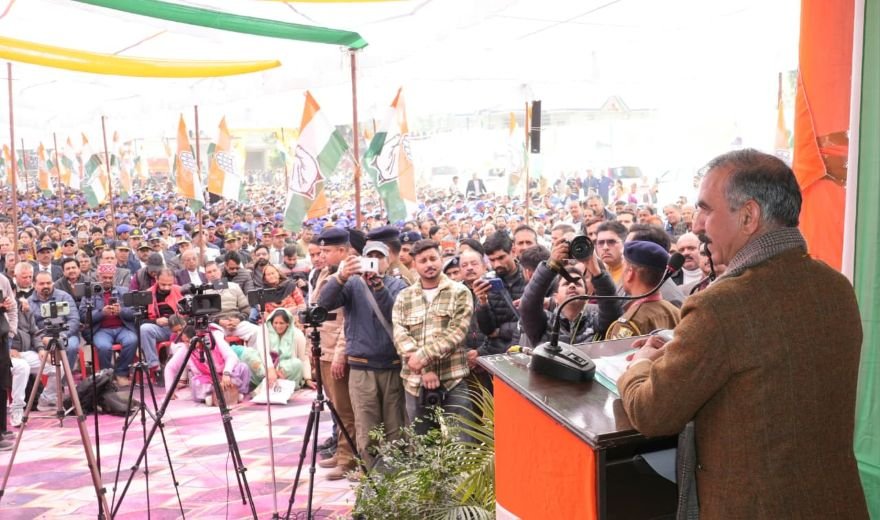
The announcement by Chief Minister Thakur Sukhvinder Singh Sukhu to extend financial assistance of Rs. 1,500 per month to all eligible women of the Sulah Assembly constituency under the Indira Gandhi Pyari Behna Sukh Samaan Nidhi Yojna is being seen as a significant step in fulfilling one of the major promises made by the Congress party during the Assembly elections. The scheme, which was projected as a cornerstone of the party’s welfare agenda, has become a central pillar of the Sukhu government’s approach to social security, women’s empowerment and household-level economic support in Himachal Pradesh.
At the time of the elections, the Congress had assured women voters that direct financial assistance would be provided to help them cope with rising living costs and to strengthen their role within the family economy. The promise resonated strongly across rural and urban areas, where women often manage household expenses, children’s education and healthcare needs with limited independent income. The implementation of the Pyari Behna Yojna is therefore being viewed not only as a welfare measure but also as a political and social commitment to restore trust and credibility in governance.
By announcing the extension of the scheme to eligible women in Sulah, the Chief Minister has signalled that the government intends to ensure that the benefits of the programme reach grassroots levels and are not limited to select pockets. Officials say that the focus is on identifying genuine beneficiaries through proper verification so that the assistance reaches women who need it the most. The Rs. 1,500 monthly support, while modest, is expected to make a meaningful difference for many families by helping to cover essential expenses such as food, school-related costs, transport and basic healthcare.
The Sukhu government has repeatedly stated that implementing such welfare commitments has not been easy, especially in the face of financial constraints and what it describes as fiscal stress inherited from the previous regime. The Chief Minister has publicly pointed out that despite limited resources, his government has prioritised social sector spending and direct benefit schemes to protect vulnerable sections. The Pyari Behna Yojna is part of this broader strategy, which also includes support for widows, orphans, persons with disabilities and economically weaker families.
In Sulah, the announcement has been welcomed by women’s groups and local residents, many of whom see the scheme as recognition of women’s unpaid labour and their central role in sustaining households. For many rural women, who may not have regular salaried jobs, the monthly assistance provides a sense of financial independence and dignity. It also gives them greater say in small household decisions, which can have a long-term impact on family welfare and children’s education.
From a political perspective, the scheme reflects the Congress party’s attempt to translate electoral promises into tangible outcomes. During the campaign, women-centric guarantees formed a major part of the party’s narrative, aimed at addressing inflation, unemployment and economic uncertainty at the family level. By moving ahead with implementation despite economic pressures, the Sukhu government is seeking to demonstrate that its commitments are not merely symbolic but are intended to be delivered on the ground.
The Chief Minister has also used the occasion to underline that his government is working “against all odds” to honour these promises. He has frequently referred to what he calls limited fiscal space, reduced central support and the burden of pending liabilities. Despite these challenges, the state government has chosen to protect and expand welfare schemes that directly impact everyday lives. This approach, according to government leaders, reflects a policy choice to put people-first spending ahead of politically less visible capital projects.
Administratively, the rollout of the Pyari Behna Yojna requires coordination across departments to ensure accurate identification of beneficiaries, timely disbursement and grievance redressal. Officials say efforts are being made to streamline processes so that eligible women do not face unnecessary delays or bureaucratic hurdles. The emphasis, they say, is on transparency and accountability to prevent leakages and ensure that public money is used effectively.
The announcement in Sulah also fits into the government’s broader messaging on women’s empowerment. Alongside financial assistance, the Sukhu government has highlighted initiatives related to education, health, nutrition and rural livelihoods, all of which have a direct bearing on women’s quality of life. By linking welfare with development, the government is attempting to create a narrative in which social security is seen as an investment in human capital rather than merely a subsidy.
For the Congress party, the Pyari Behna Yojna is also politically significant as it serves as a visible marker of its governance priorities. Delivering on this promise helps reinforce the party’s image as one focused on social justice and inclusive growth. In constituencies like Sulah, where local issues and household economics play a major role in voting behaviour, such schemes can shape public perception of government performance.
As the scheme expands and more women begin to receive the monthly assistance, its real impact will be measured not only in financial terms but also in how it influences household stability, women’s confidence and community well-being. For now, the Sukhu government’s move in Sulah is being projected as a clear message that election commitments are being translated into action, even in a challenging financial environment, with women placed at the centre of the state’s welfare and development agenda.