
Ludhiana has taken a significant leap in urban policing and traffic management, emerging as the third city in Punjab to deploy an Intelligent Traffic Management System, following similar implementations in Jalandhar and Mohali. The initiative reflects a broader push by the state government to modernise policing infrastructure and enhance public safety through technology-driven solutions.
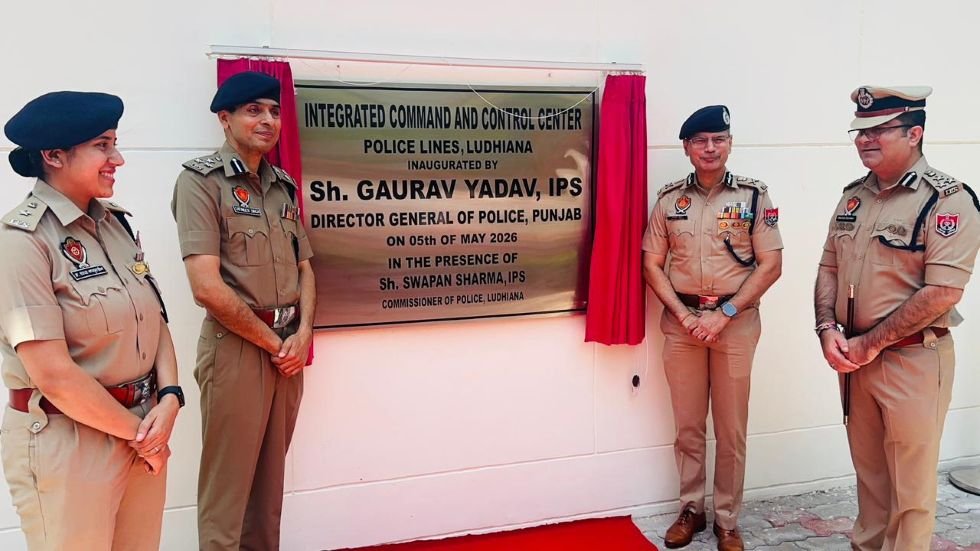
The system was formally launched alongside a state-of-the-art Integrated Command and Control Centre, marking a pivotal shift toward data-led, preventive policing. Senior officials described the development as a transformative upgrade that consolidates multiple operational units under a unified digital framework, enabling faster decision-making and real-time monitoring.
At the core of the project is an extensive surveillance network comprising nearly 1,700 high-definition cameras strategically installed across 259 locations in the city. This expansive grid is designed to strengthen situational awareness, deter criminal activity, and improve incident response efficiency. Officials noted that the camera network forms the backbone of a broader “safe city” architecture aimed at creating a more secure urban environment.
Complementing this system is the Intelligent Traffic Management System, operational at 46 key points across Ludhiana. The platform is equipped to automatically detect a wide range of traffic violations, including signal jumping, stop-line breaches, helmet non-compliance for riders and pillion passengers, triple riding, overspeeding, improper parking, zebra crossing violations, and wrong-side driving. By automating enforcement, authorities expect to reduce manual intervention, improve compliance, and ensure greater accountability on the roads.
Senior police leadership emphasised that the integration of various units—including traffic management, police control room operations, wireless communication, and safe city monitoring—within the command centre has significantly improved coordination. One of the most notable outcomes cited was the reduction in emergency response time, which has reportedly been cut nearly in half, enabling quicker assistance during critical situations.
During the visit, top officials also engaged directly with field officers, holding detailed discussions on operational challenges and strategies to improve public service delivery. There was a clear emphasis on adopting a citizen-centric approach, with instructions to prioritise prompt and effective resolution of public grievances. The interaction underscored the administration’s focus on blending technological advancement with responsive governance.
In a parallel effort to strengthen internal cohesion within the police force, a large-scale community meal was organised at the Police Lines, bringing together more than 550 personnel across ranks. The initiative was described as an important step toward fostering unity, morale, and a shared sense of purpose among officers, reinforcing the human dimension of policing alongside technological upgrades.
The occasion also served as a platform to recognise excellence within the force. High-performing officers and personnel were honoured for their service, with officials expressing hope that such recognition would further motivate the workforce to uphold professional standards and public trust.
The rollout of the Intelligent Traffic Management System and the Integrated Command and Control Centre in Ludhiana signals a broader transformation underway in Punjab’s law enforcement ecosystem. By combining surveillance, automation, and institutional coordination, the state is positioning itself to address the complex demands of urban policing in a rapidly evolving environment.
As cities expand and mobility challenges grow, initiatives like these are expected to play a crucial role in enhancing safety, streamlining traffic regulation, and building a more responsive and resilient policing framework.