
Saptrishi Soni
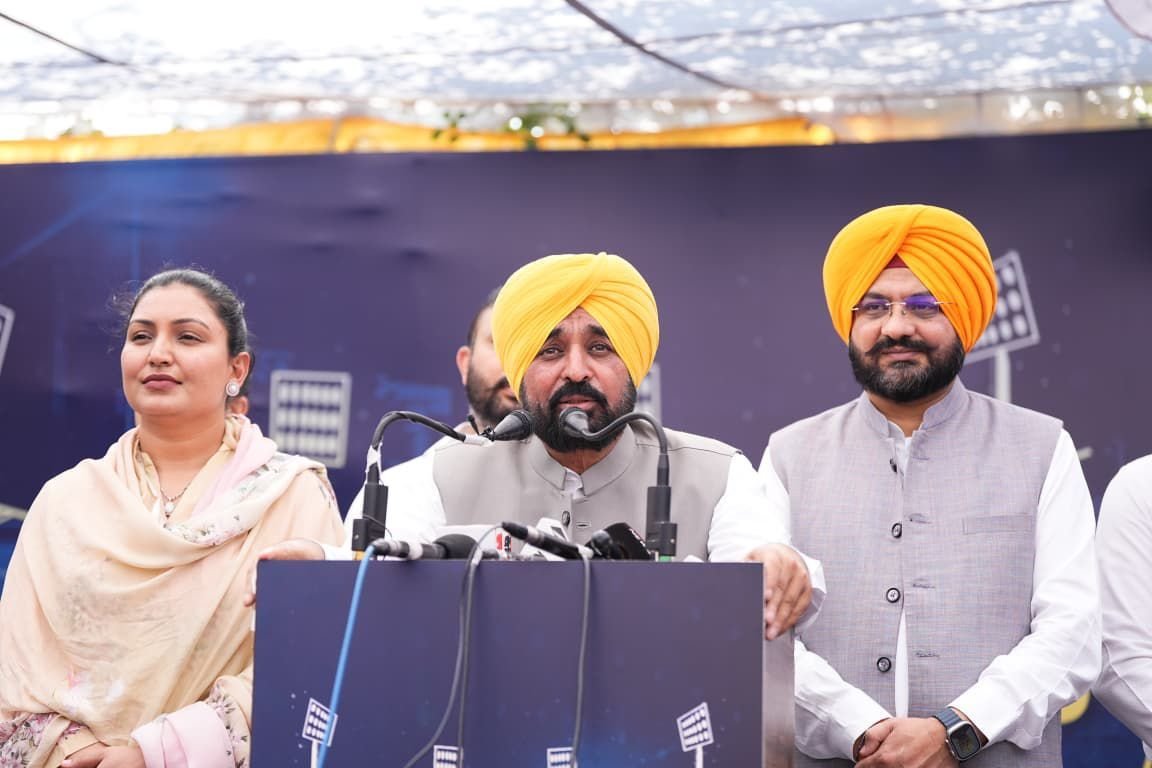
In a sweeping push to reshape Punjab’s social and athletic landscape, Chief Minister Bhagwant Singh Mann has launched an ambitious rural sports infrastructure programme, positioning it as both a developmental milestone and a strategic response to the state’s long-standing drug challenge. The initiative, marked by the inauguration of 250 fully equipped rural sports grounds, signals a decisive shift in governance—one that places villages at the centre of a broader transformation aimed at youth engagement, public health, and international sporting excellence.
The project, described by officials as one of the most extensive grassroots sports interventions in the state’s history, envisions the creation of 3,100 such facilities across Punjab in a phased rollout scheduled for completion by mid-July. These grounds, locally termed ‘Pendu Khed Maidans,’ are designed not merely as recreational spaces but as structured training hubs equipped with modern amenities and professional coaching support. The scale and speed of execution underscore the government’s intent to institutionalise sports as a core pillar of public policy.
At the heart of the initiative lies a clear socio-political objective: to redirect the energy of Punjab’s youth away from substance abuse and towards constructive, achievement-oriented pursuits. Addressing the gathering during the launch, the Chief Minister framed sports as a powerful antidote to the drug menace, arguing that disciplined engagement in athletics can create both physical resilience and psychological focus among young people. The administration believes that by embedding sports infrastructure within village ecosystems, it can foster a culture where participation becomes habitual rather than exceptional.
The financial commitment backing this vision is equally significant. The state’s sports budget has witnessed a dramatic escalation, rising from modest allocations in previous years to nearly ₹1,800 crore in the current fiscal cycle. This increase reflects a broader recalibration of priorities, with the government seeking to align fiscal policy with long-term social outcomes. Officials emphasise that the investment is not limited to construction but extends to training, maintenance, and talent development—areas often overlooked in earlier initiatives.
Each of the newly inaugurated grounds has been designed with a comprehensive set of facilities aimed at supporting both amateur and competitive sports. These include multi-sport courts for disciplines such as volleyball, football, and hockey, along with running tracks, lighting systems for extended use, and basic infrastructure such as seating, sanitation, and equipment storage. The inclusion of walking tracks and children’s play areas also suggests an effort to broaden the appeal of these spaces beyond competitive athletes, integrating them into the daily lives of local communities.
Equally central to the programme is the emphasis on accessibility and inclusivity. The government has announced that professional coaches will be deployed across these facilities, offering free training to young participants. This approach seeks to eliminate financial barriers that often prevent rural talent from accessing quality coaching. In addition, local committees are being formed to oversee the upkeep and functioning of the grounds, thereby embedding community ownership into the project’s framework.
The initiative also dovetails with the revival of Punjab’s sporting heritage. The return of traditional events such as the Kila Raipur rural games—often referred to as the ‘Pind Olympics’—is being positioned as a cultural complement to the new infrastructure. By reconnecting with indigenous sporting traditions while introducing modern facilities, the government aims to create a hybrid model that resonates with both heritage and aspiration.
Punjab’s growing ambitions on the national and international stage are evident in its plans to host major sporting events, including a prominent Asian-level hockey tournament. Such developments are being framed as indicators of the state’s re-emergence as a sporting powerhouse, capable of producing athletes who can compete at the highest levels. The government’s narrative suggests that grassroots investment today will translate into global representation tomorrow.
Beyond infrastructure and competition, the programme carries a deeper political message about governance and accountability. By channeling public funds into visible, community-oriented projects, the administration seeks to demonstrate a model where development is both tangible and inclusive. The emphasis on transparency, coupled with the promise of measurable outcomes, reflects an attempt to build public trust in state-led initiatives.
The Chief Minister’s engagement with local athletes during the launch—distributing sports kits and participating in on-ground activities—added a symbolic dimension to the event, reinforcing the government’s commitment to direct interaction and encouragement. Such gestures, while largely ceremonial, play a role in shaping public perception and fostering a sense of collective participation in the state’s developmental journey.
As Punjab moves forward with this expansive plan, the success of the initiative will likely depend on sustained implementation and community engagement. While infrastructure can provide the foundation, the real challenge lies in maintaining momentum and ensuring that these facilities remain active, accessible, and impactful over time.
For now, the state’s strategy marks a bold experiment in linking sports policy with social reform. By placing villages at the forefront and investing heavily in youth-centric development, Punjab is attempting to redefine its future—one playing field at a time.