
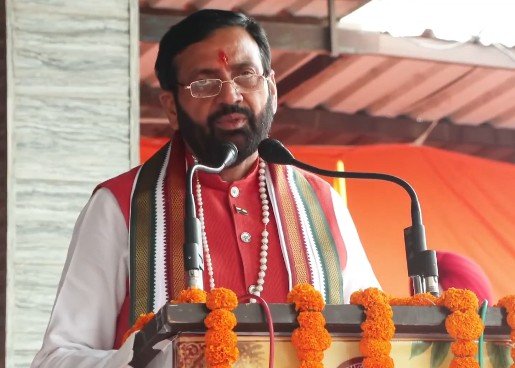
In a significant organisational development, Nayab Singh Saini has been entrusted with a crucial responsibility by the Bharatiya Janata Party, marking his growing prominence within the party’s national framework. The leadership has appointed him as co-incharge for overseeing the process of electing the legislative party leader in Assam, a move seen as both strategic and indicative of the party’s confidence in his administrative and organisational capabilities.
The decision comes as part of the BJP’s broader effort to ensure a smooth and consensus-driven leadership transition within the state unit. To further strengthen the process, the party’s parliamentary board has appointed Jagat Prakash Nadda as the central observer, tasking him with supervising the proceedings and ensuring alignment with the party’s national leadership vision.
Sources within the party suggest that Saini’s appointment is rooted in his reputation as a disciplined organiser and a leader capable of navigating complex political dynamics. Since assuming office in Haryana, he has been actively involved in strengthening the party’s grassroots structure while maintaining administrative stability, a balance that has drawn attention from the central leadership.
Notably, Saini’s role is not confined to Haryana alone. He has also been actively engaged in political outreach and organisational consolidation efforts in Punjab, where the BJP has been working to expand its footprint. His increasing involvement in neighbouring states reflects the party’s strategy of deploying trusted leaders beyond their home turf to build cohesion and electoral momentum.
The selection of a legislative party leader in Assam carries considerable political weight, as it sets the tone for governance and internal coordination within the state. In this context, Saini’s role will involve facilitating dialogue among senior leaders, ensuring transparency in the decision-making process, and working towards a consensus that reflects both organisational priorities and regional considerations.
Political observers view this development as part of the BJP’s evolving approach to leadership management, where regional leaders are being integrated into national-level responsibilities. This not only strengthens internal cohesion but also creates a pipeline of leaders with cross-state experience.
For Saini, the assignment represents both an endorsement and a test — an opportunity to demonstrate his effectiveness in a politically distinct environment while reinforcing his standing within the party’s central leadership structure.
As the process unfolds in Assam, attention will remain on how effectively the party manages internal alignment and whether this structured approach to leadership selection translates into long-term political stability in the state.