

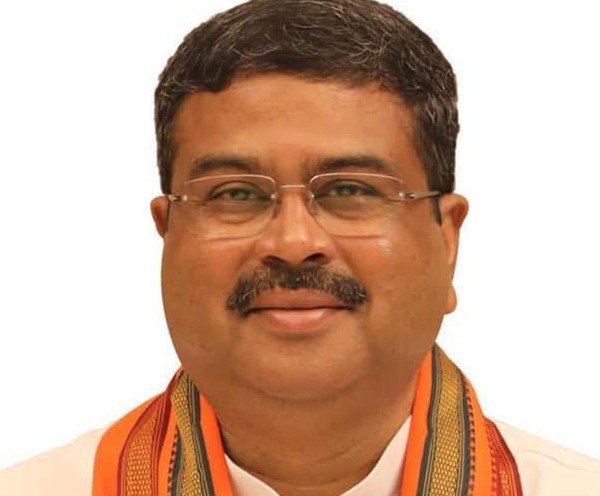
Union Education Minister Dharmendra Pradhan resigned from the Union Cabinet on Saturday amid mounting nationwide protests over the NEET-UG 2026 paper leak controversy, bringing one of the country’s most politically charged education crises to a dramatic turning point.
Pradhan announced his resignation after weeks of sustained demonstrations led by student groups and the Cockroach Janta Party (CJP), which had demanded that he accept moral responsibility for the alleged examination irregularities. The resignation follows growing public pressure over concerns about the credibility of one of India’s most competitive entrance examinations and the government’s handling of the crisis.
Addressing the media, Pradhan said the decision was guided by the larger interests of students rather than personal or political considerations. He maintained that the issue was never about individual prestige and acknowledged that the developments of the past several days had deeply disturbed him.
“I took responsibility for the NEET paper leak from day one,” Pradhan said, confirming that he had submitted his resignation to Prime Minister Narendra Modi.
The former minister also cautioned against attempts to exploit the situation for political or anti-national purposes. Referring to the continuing protests at Jantar Mantar and demonstrations in different parts of the country, he appealed for restraint and said genuine student concerns should not be overshadowed by elements seeking to create unrest.
The NEET-UG 2026 controversy erupted after allegations of large-scale paper leaks and examination malpractice surfaced following the examination conducted in May. In response, the Union Government cancelled the examination, ordered a Central Bureau of Investigation (CBI) probe and announced that future NEET examinations would be conducted in Computer-Based Test (CBT) mode to strengthen security and minimise the possibility of leaks.
The Centre has also initiated broader reforms aimed at restoring public confidence in the examination system. These include the preparation of a stringent anti-paper leak law, the proposed establishment of Special Fast-Track Courts for swift disposal of examination fraud cases and the creation of a dedicated Special Task Force to combat organised examination malpractice.
Pradhan’s resignation has drawn varied political reactions. Opposition parties described it as an acknowledgment of accountability, while student organisations termed it a significant victory for sustained public mobilisation.
The Cockroach Janta Party, which has spearheaded the nationwide agitation, welcomed the resignation as the first major success of its 36-day protest campaign. However, party leaders made it clear that the movement would not end with the minister’s exit. They said their agitation would continue until broader reforms were implemented and all those responsible for the alleged paper leak were brought to justice.
The resignation marks a significant political development in the ongoing NEET-UG controversy, which has sparked a nationwide debate on examination integrity, institutional accountability and the need for stronger safeguards to protect the future of millions of students. While the minister’s departure represents an important milestone in the unfolding crisis, attention is now expected to shift toward the government’s promised reforms and the outcome of the ongoing investigation into the paper leak allegations.
This is a web-generated news report.