
New Delhi। — A Supreme Court hearing on the pricing of medicines has brought an uncomfortable question back into focus: how much should a patient have to pay for a life-saving drug when the price at which a retailer obtains it can be dramatically lower than the Maximum Retail Price printed on the pack?
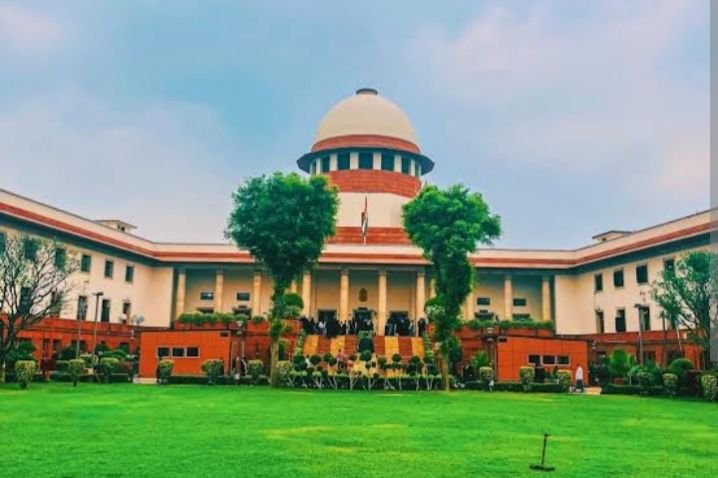
During Tuesday’s hearing, a bench of Justices Vikram Nath and Sandeep Mehta referred to an example in which an essential cancer medicine was reportedly available to a retailer at a Price to Retailer (PTR) of ₹2,700 while carrying an MRP of ₹27,000 — a ten-fold difference. Justice Mehta described the situation in exceptionally strong terms, calling it “broad daylight dacoity” involving patients.
The case, Kishan Chand Jain v. Union of India, concerns demands for stronger regulation of medicine prices, including mandatory generic prescriptions, controls on the initial prices of non-scheduled medicines and limits on the maximum retail prices of medical devices. The hearing has also brought attention to the large part of India’s medicine market that is outside direct ceiling-price regulation. The matter has been listed for further hearing on September 29.
Why the PTR-MRP gap matters to patients
PTR is essentially the price at which a medicine reaches the retailer, while MRP is the maximum price at which it can legally be sold to the consumer, subject to applicable rules.
A difference between the two does not automatically mean that the entire difference becomes a retailer’s profit. The pharmaceutical supply chain can include manufacturers, distributors, stockists, retailers, hospitals, taxes and other costs.
That distinction was also raised in court. Senior Advocate Kapil Sibal, appearing for the Indian Pharmaceutical Alliance, argued that pharmaceutical manufacturers do not necessarily retain the very large margins suggested by some MRP-PTR comparisons and said the prices at which stockists and retailers receive medicines need to be examined.
But the Supreme Court’s concern was about what happens to the patient at the end of that chain.
The bench pointed to situations in which patients may be forced to sell property or jewellery to finance treatment and questioned how very large price differences could be justified when the medicine is essential for survival.
For a poor family dealing with cancer, the issue is not simply a question of commercial margins. A medicine costing several thousand rupees can mean a week’s, month’s or even longer period of household income. If the treatment involves repeated cycles or long-term therapy, even a seemingly small difference in the price of each prescription can accumulate into a substantial financial burden.
The government already has a price-control system — but it does not cover everything in the same way
India is not without a drug-price regulatory framework.
The National Pharmaceutical Pricing Authority (NPPA), under the Department of Pharmaceuticals, operates under the Drugs (Prices Control) Order, 2013. Medicines included in the National List of Essential Medicines and placed in the scheduled category are subject to ceiling prices. The NPPA says the current system covers 388 medicines in NLEM 2022 and that ceiling prices are calculated using market-based methodology, with a prescribed margin added to the average Price to Retailer.
The government told Parliament in March 2026 that effective ceiling prices existed for 131 anti-cancer formulations. According to that response, the revision under NLEM 2022 had reduced their ceiling prices by about 21% compared with the earlier NLEM 2015 ceiling prices, with estimated annual savings of about ₹294 crore for patients.
The government has also previously used trade-margin regulation for some non-scheduled cancer medicines. In 2019, the NPPA introduced a pilot Trade Margin Rationalisation mechanism covering 42 non-scheduled anti-cancer medicines. Government data says the measure reduced MRPs of 526 brands and generated substantial estimated savings for patients.
So the issue raised in court is not accurately described as though there were no government regulation whatsoever. The more difficult question is whether the existing framework is sufficiently broad and effective to prevent unusually high initial prices and large margins in parts of the market that remain outside direct ceiling-price control.
The 82% problem
This is where the Supreme Court hearing and a recent parliamentary committee report intersect.
The petitioner in the Supreme Court case argued that roughly 82% of medicines are non-scheduled and therefore are not subject to the same upfront ceiling-price mechanism as scheduled medicines. The petitioner said manufacturers can set the initial price of a non-scheduled medicine and that this can create very large margins further down the supply chain.
The distinction is important.
Under the current framework, non-scheduled medicines are not simply allowed to increase prices without any restriction. The government has said that manufacturers of non-scheduled formulations cannot increase the MRP by more than 10% over the preceding 12 months. But that rule does not amount to the government fixing the starting price of every non-scheduled medicine.
That gap — between regulating subsequent increases and controlling an unusually high initial price — has become one of the central policy questions.
## Parliament’s own committee has identified similar weaknesses
The issue is not confined to the Supreme Court.
A Standing Committee on Chemicals and Fertilizers presented its report on the functioning of the NPPA on August 6, 2026. The committee identified the absence of a permanent Trade Margin Rationalisation framework as one of the major problems in India’s medicine-pricing system. It recommended that the government finalise such a framework within a defined timeline.
The committee also pointed to the fact that non-scheduled formulations account for about 82% of the market and can have arbitrary or unjustified initial prices. It called for a review of the classification of medicines to address possible pricing loopholes.
The findings go beyond the MRP issue.
The committee said that as of 2025, about ₹8,526 crore, or 85% of the total amount demanded by the NPPA as recovery for overcharging, remained unrecovered. Around 70% of that amount was under litigation, with some cases pending for more than two decades. The committee recommended a faster dispute-resolution mechanism and a dedicated legal cell within the NPPA.
It also found limitations in the data used for price monitoring. According to the committee’s findings, the sales data available to the NPPA covers about 70% of the pharmaceutical market and does not adequately capture areas such as hospital sales, Jan Aushadhi stores, trade generics and direct e-commerce supplies.
These findings suggest that the problem is not merely about the printed MRP on a single medicine pack. It concerns how India’s entire medicine-pricing system gathers information, identifies abnormal margins, fixes prices, monitors compliance and recovers money when companies are found to have overcharged.
What about cancer patients?
Cancer makes the issue particularly serious because many treatments are expensive even before questions of retail margins arise.
A 2026 analysis of access to medicines noted that some targeted cancer therapies continue to cost patients several lakh rupees a year. It cited examples including ribociclib, where annual treatment costs can approach ₹9-10 lakh under standard dosing, and other advanced therapies where annual costs can be substantially higher.
The distinction between different medicines is crucial, however. Some cancer medicines fall under statutory ceiling-price controls, while others are non-scheduled or are regulated through different mechanisms. Therefore, the fact that one medicine is expensive does not by itself establish illegal overcharging.
The patient’s problem is nevertheless straightforward: cancer treatment often requires repeated purchases, and even legitimate prices can create severe financial pressure for families without comprehensive insurance or public coverage.
The Ayushman Bharat question
The Supreme Court also raised another important issue: who ultimately pays when an inflated medicine price is reimbursed under a government health scheme?
The bench observed that if hospitals buy medicines at high prices and those costs are subsequently reimbursed under schemes such as Ayushman Bharat, the financial burden can move from the individual patient to the public exchequer. The Court described this as a concern involving taxpayers’ money.
This creates a second layer to the pricing problem.
An excessive price paid directly by a patient can cause household financial distress. The same excessive price, when reimbursed through a publicly funded health scheme, can increase government expenditure. In either case, the economic consequences ultimately affect the public.
The question for policymakers is therefore not only how to make medicines cheaper for individuals, but also how to ensure that public healthcare funds purchase medicines at prices that are transparent and justifiable.
Is the government doing nothing?
The available record does not support that conclusion.
The Union government told Parliament in February 2026 that oncology medicines are covered under the DPCO framework either through ceiling or retail-price fixation or through restrictions on price increases for non-scheduled formulations. It said NPPA had fixed ceiling prices for 131 scheduled anti-cancer formulations and retail prices for 54 new anti-cancer drugs as of January 27, 2026.
The government has also previously used trade-margin rationalisation for selected cancer medicines and has said that the mechanism generated significant savings for patients.
At Tuesday’s Supreme Court hearing, Additional Solicitor General KM Nataraj said the Union government did not regard the matter as adversarial and remained committed to affordable medicines. He pointed to Jan Aushadhi Kendras as one part of the government’s response and said improvements would be considered where necessary.
But the parliamentary committee’s August report makes clear that the government still faces unresolved structural issues, particularly regarding permanent trade-margin regulation, non-scheduled medicines, data gaps and recovery of overcharged amounts.
Where does JP Nadda fit into this?
Union Health and Family Welfare Minister and Chemicals and Fertilizers Minister J.P. Nadda is politically responsible for ministries that cover major parts of the healthcare and pharmaceutical policy architecture. However, drug-price regulation is implemented through the Department of Pharmaceuticals and the NPPA, while health policy and access to treatment involve several government departments and schemes.
It would therefore be inaccurate to attribute every individual medicine price directly to the minister or to say that he has “no clue” about the issue without evidence.
The more relevant public-policy question is whether the government, including the concerned ministries, will act on the gaps identified by Parliament and the concerns now being examined by the Supreme Court.
The Standing Committee has already proposed a permanent Trade Margin Rationalisation framework, better data coverage, a review of medicine categorisation and examination of cost-based pricing where abnormal mark-ups are detected.
The larger question: who protects the patient?
The Supreme Court hearing has put the patient at the centre of a debate that normally takes place in technical terms — scheduled versus non-scheduled drugs, PTR, MRP, trade margins, market-based pricing and price ceilings.
For a patient, the calculation is much simpler.
A medicine is either affordable or it is not.
India has a substantial generic pharmaceutical industry and an established price-regulation mechanism. The government has demonstrated that it can intervene when it chooses to regulate particular medicines or trade margins. But the evidence placed before Parliament this year indicates that significant gaps remain in the system.
The court’s intervention therefore comes at a consequential moment. It has not yet ruled that all large differences between PTR and MRP constitute illegal overcharging, nor has it ordered a universal price ceiling for all medicines. The proceedings remain ongoing, with the next hearing listed for September 29.
What is now under scrutiny is whether India’s pricing architecture can keep pace with a medicine market in which a large share of products is outside direct ceiling-price fixation, while patients — particularly those dealing with life-threatening diseases — have little bargaining power.
For a family facing cancer, the difference between ₹2,700 and ₹27,000 is not an accounting dispute. It can determine whether treatment is continued, delayed or abandoned.
That is why the Supreme Court’s question has significance beyond the courtroom: when medicine is essential to preserving life, where should the line be drawn between a legitimate commercial margin and a price structure that places an unreasonable burden on the patient?