
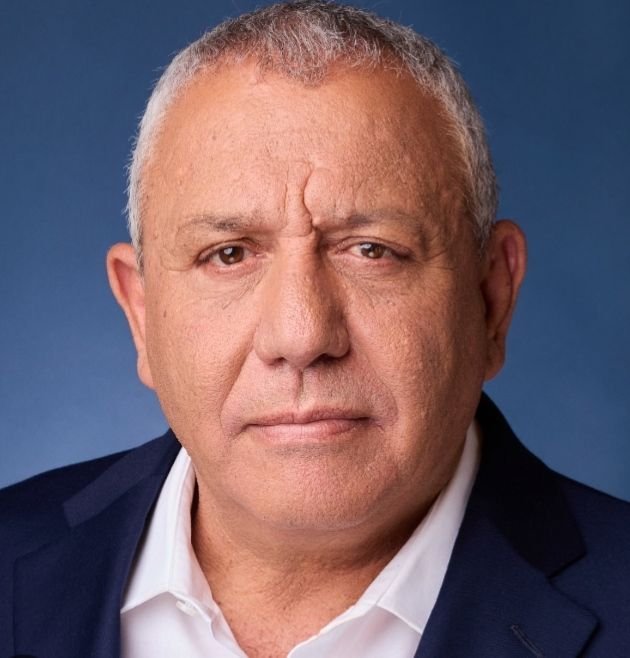
Israel is heading towards a significant parliamentary confrontation, with the political bloc led by Gadi Eisenkot preparing to reshape the leadership of the Knesset and revisit controversial judicial reforms introduced by the previous government. The proposed moves could mark an important shift in the country’s legislative direction following last month’s election, which left Prime Minister Benjamin Netanyahu without a parliamentary majority.
At the centre of the unfolding political developments are two major initiatives: an effort to replace Knesset Speaker Amir Ohana and a legislative push to repeal key provisions of the earlier government’s judicial overhaul. Both moves carry considerable political significance, as they could influence the balance of power inside Israel’s parliament and determine the future course of a deeply contested debate over the country’s judicial system.
Eisenkot bloc seeks control of parliamentary agenda
The immediate political test will be a vote scheduled for Tuesday on replacing Amir Ohana, a member of Netanyahu’s Likud party, as Knesset Speaker. The Eisenkot-led bloc has proposed Yashar lawmaker Matan Kahana for the position.
A change in the speakership would carry significance beyond the parliamentary post itself. The Speaker plays an important role in managing the Knesset’s proceedings, and a leadership change could give the new parliamentary majority greater influence over the legislative agenda even before a new government is formally established.
The bloc has also moved to secure influential parliamentary committee positions. Avigdor Liberman of Yisrael Beytenu is set to head the Foreign Affairs and Defense Committee, while Liran Avisar Ben-Horin of B’Yachad is designated for the Finance Committee. These appointments would give the bloc an important role in overseeing national security matters, defence-related legislation and financial policy.
Judicial overhaul becomes a major battleground
Another central element of the proposed parliamentary agenda is the reversal of controversial judicial changes introduced during Netanyahu’s previous tenure.
The proposed legislative action includes restoring powers curtailed from the Attorney General’s Office and reversing changes to the Judicial Selection Committee, which determines appointments to Israel’s courts. The earlier reforms increased the political influence of elected representatives in judicial appointments and altered the relationship between the government, legal authorities and the judiciary.
These changes had triggered widespread protests and a prolonged national debate over judicial independence, democratic checks and balances, and the limits of executive authority. Supporters of the overhaul had argued that the reforms were necessary to correct an imbalance in the judicial system, while opponents warned that they could weaken institutional independence and concentrate excessive power in the hands of the government.
The Eisenkot-led bloc has submitted proposals seeking to undo key parts of the legislation. A special parliamentary committee is also expected to take up the repeal process, although the proposals will have to pass through the required legislative stages before becoming law.
Unity government talks continue amid political deadlock
Despite preparations for a major parliamentary offensive, negotiations over the formation of a new government remain an important part of Israel’s political uncertainty.
Representatives of Eisenkot’s Yashar party and Netanyahu’s Likud held discussions on November 15, with representatives of Naftali Bennett’s B’Yachad party also participating. The parties described the meeting as businesslike and said dialogue would continue, but did not announce any concrete agreement or breakthrough.
Netanyahu has been making renewed efforts to persuade Eisenkot to consider a unity arrangement. However, the central question remains who would lead such a government. Eisenkot has maintained that any arrangement under discussion should involve him serving as prime minister, while Netanyahu’s reported willingness to reconsider his earlier position on a rotating premiership has yet to bridge the political divide.
The negotiations are taking place against the backdrop of the October 27 election, after which Netanyahu’s bloc was left with 53 seats in the 120-member Knesset, while parties aligned with the effort to replace him secured a combined 67 seats, including Arab parties. This parliamentary arithmetic has given Eisenkot’s camp an advantage in legislative votes, even though assembling a stable governing coalition remains difficult.
A wider agenda beyond judicial reform
The new parliamentary bloc is also seeking to advance proposals on other major issues, including the establishment of a state commission of inquiry into the October 7, 2023, Hamas-led attacks, possible term limits for prime ministers and changes to legislation affecting the media and law-enforcement institutions.
The demand for an independent state inquiry into the October 7 attacks is particularly politically sensitive. Netanyahu’s government had resisted calls for a state commission, arguing that an inquiry process should not be shaped by what it considers political pressure. Opposition parties, meanwhile, have insisted that a comprehensive and independent investigation is necessary to establish responsibility for the security and intelligence failures surrounding the attacks.
The proposed parliamentary agenda therefore extends beyond changing the Knesset’s leadership or reversing judicial legislation. It reflects a broader attempt by the new majority to revisit policies and institutional decisions taken during Netanyahu’s previous government.
Israel enters a decisive phase of political transition
The coming parliamentary developments could shape the direction of Israeli politics well before the formation of a new government. If Eisenkot’s bloc succeeds in replacing Ohana and securing control of key parliamentary committees, it will be better positioned to advance its legislative priorities and exert pressure on Netanyahu’s caretaker administration.
However, the ability to win parliamentary votes does not automatically guarantee the formation of a stable coalition. Differences over the participation of Arab parties, the role of ultra-Orthodox factions, military service exemptions and the distribution of political power continue to complicate negotiations.
For Netanyahu, the immediate challenge is to prevent his political opponents from consolidating their parliamentary advantage while keeping open the possibility of a unity arrangement. For Eisenkot, the task is to turn the electoral mandate into a functioning government while demonstrating that his bloc can deliver on its promises of institutional reform.
The coming days will therefore be an important test of whether Israel’s emerging parliamentary majority can translate its numbers into lasting political authority.
This is a web-generated news report, prepared by compiling and independently rewriting information available from the above-mentioned sources.